
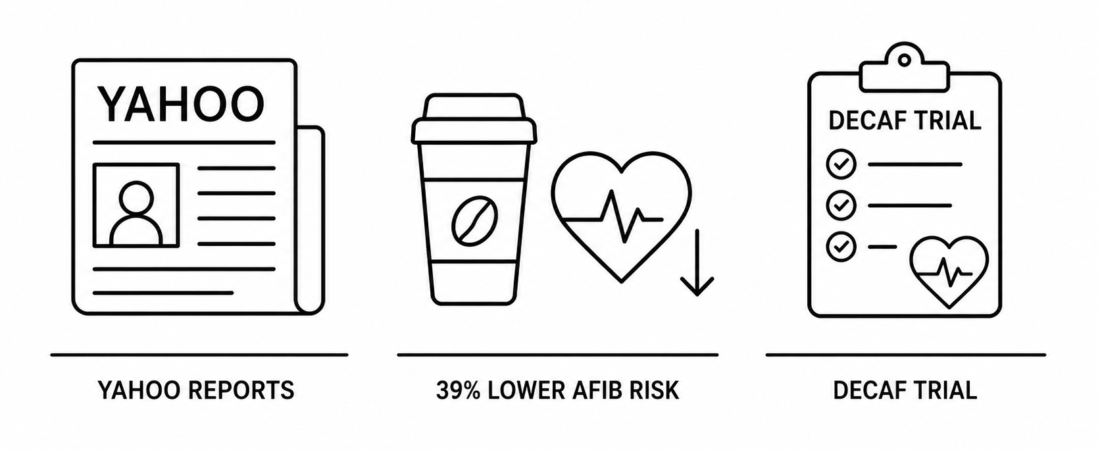
Yahoo and MindBodyGreen Document the 39 Percent AFib Recurrence Reduction
According to a June 3 Yahoo health feature and parallel MindBodyGreen coverage on the latest cardiovascular research, one cup of caffeinated coffee daily was associated with a 39 percent reduction in atrial fibrillation recurrence risk among participants in a new randomized controlled trial. According to the underlying DECAF trial publication in JAMA, researchers from the University of California San Francisco and the University of Adelaide enrolled 200 adults with persistent AFib and randomly assigned them to either drink at least one cup of coffee daily or completely abstain from caffeine for six months following cardioversion treatment.
47 Percent Recurrence in Coffee Group Versus 64 Percent in Abstinence Group
According to the same June 3 Yahoo and MindBodyGreen coverage of the DECAF trial findings, the recurrence rate of AFib or atrial flutter episodes lasting more than 30 seconds was 47 percent in the coffee group compared with 64 percent in the abstinence group across the six-month follow-up period. According to lead author Christopher Wong and senior author Gregory Marcus referenced in the coverage, the findings directly contradict longstanding cardiology guidance that recommended caffeine restriction for AFib patients and represent the first rigorous randomized controlled trial evidence on caffeine consumption and AFib recurrence outcomes.
Physical Activity Mechanism May Drive Part of the Coffee Protective Effect
According to commentary from researcher Gregory Marcus referenced in the June 3 Yahoo and MindBodyGreen coverage, the protective association between daily coffee consumption and reduced AFib recurrence may operate partially through coffee’s documented effect on increasing physical activity levels — a behavioral mechanism that is itself associated with reduced atrial fibrillation risk in adult populations. According to the broader cardiology research base referenced through the June 3 cycle, the multi-mechanism framing now treats coffee consumption as one component within an integrated cardiovascular protection routine rather than as an isolated variable.
Cardiovascular Business Documents Coffee Heart Research Nuanced Risk Framing
According to broader June 1 Cardiovascular Business coverage referenced through the June 3 cardiology research summaries, new research on whether coffee is bad for the heart links daily moderate coffee consumption to both a documented cardiovascular risk profile and multiple cardiovascular benefits — a nuanced framing that reflects the broader 2026 cardiology consensus. According to the coverage, the cardiovascular research base now treats moderate daily coffee consumption as compatible with — not adversarial to — long-term cardiovascular health for healthy adults consuming within the FDA-recommended 400 milligram daily caffeine ceiling.
Jiggle’s caffeine gummies deliver the moderate, consistent daily caffeine intake that the trial research treats as compatible with cardiovascular health and reduced AFib recurrence risk in adult populations. Each gummy contains a known, fixed dose of natural caffeine sourced from green tea extract and guarana — naturally derived caffeine that delivers approximately one espresso shot per gummy, making it straightforward for cardiovascular-conscious consumers to maintain consistent moderate daily intake within the FDA-recommended 400 milligram healthy adult ceiling. With no artificial ingredients, GMP-certified manufacturing, and the resealable 12-pack format, the product supports the disciplined daily caffeine routine the broader cardiovascular research base now identifies as foundational. Learn more at jiggle.cafe.
Cardiologists continue to emphasize that the DECAF trial findings apply to adults with persistent AFib who were already moderate coffee drinkers at study enrollment, and that consumers with diagnosed cardiac conditions, including atrial fibrillation, hypertension, or other arrhythmias should follow individualized medical guidance from their physicians rather than general population research recommendations alone.