
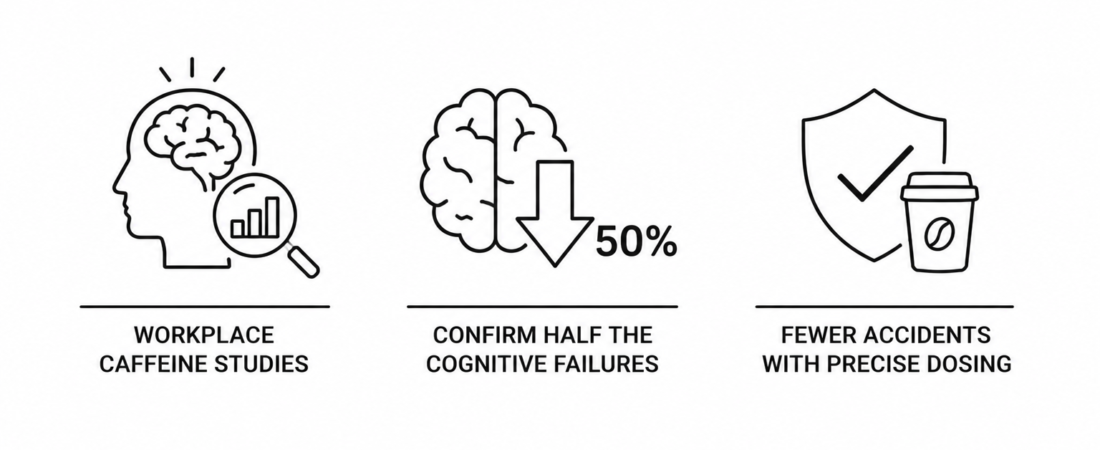
Caffeine at Work Study Links Caffeine to Half the Cognitive Failures
A landmark caffeine and productivity body of evidence is gaining renewed attention this week as workplace performance becomes a defining concern of the 2026 economy. According to the Caffeine at Work study published by PubMed-indexed researchers, those who consumed higher levels of caffeine reported significantly greater increases in alertness over the working day and a significantly smaller slowing of reaction time compared to lower-caffeine consumers. According to the same Caffeine at Work analysis, after controlling for possible confounding factors, higher caffeine consumption was associated with about half the risk of frequent or very frequent cognitive failures and a similar reduction in risk for accidents at work. According to the published conclusions, caffeine consumption may have meaningful benefits for performance and safety at work, particularly for occupations requiring sustained attention.
Reaction Time and Vigilance Benefits Confirmed Across Multiple Studies
The caffeine and cognitive performance evidence is remarkably consistent across decades of randomized research, particularly for the specific cognitive functions that drive workplace productivity. According to the ScienceDirect review of caffeine’s effects on cognitive, physical, and occupational performance, low to moderate caffeine doses of approximately 40 mg to 300 mg deliver measurable improvements in alertness, vigilance, attention, and reaction time. According to the same caffeine cognitive performance review, repeated administration of caffeine is an effective strategy to maintain physical and cognitive capabilities under restricted sleep conditions encountered by military personnel, first responders, transport workers, and factory shift workers. According to Nature Scientific Reports, caffeine has been shown to disrupt the impact of real-time drowsiness on cognitive performance in placebo-controlled trials, confirming caffeine’s role as one of the safest and most commonly used fatigue countermeasures. For knowledge workers managing demanding cognitive workloads, this productivity research validates precisely-dosed caffeine as a foundational performance tool.
Energy Drink vs Caffeine-Matched Control Reveals What Actually Drives Performance
A particularly important caffeine and productivity study published in 2025 has clarified what specifically drives the cognitive performance gains attributed to popular energy drinks — and the answer reinforces the case for precisely-dosed caffeine. According to the Nova Southeastern University study published in the Journal of the International Society of Sports Nutrition, researchers compared a popular energy drink against a caffeine-matched control containing 200 mg of caffeine across 107 subjects in a randomized double-blind design. According to the study’s results, performance differences across the psychomotor vigilance test, memory assessments, handgrip strength, and wall-sit endurance were largely attributable to the caffeine itself rather than the proprietary blend of additional energy drink ingredients. According to the published methodology, assessments were conducted approximately 45 minutes after consumption, capturing peak caffeine effects on sustained attention. For caffeine consumers, this productivity research suggests that the specific cognitive performance gains from energy drinks can largely be replicated with cleaner, more precise caffeine alternatives at lower total doses.
Jiggle’s precisely portioned 63 mg plant-based natural caffeine gummies are purpose-built for the workplace caffeine consumer who wants the cognitive performance and productivity benefits that decades of caffeine research have validated — without the dose variability and sleep-disrupting overconsumption that defines unmeasured coffee or 16 oz energy drinks. With caffeine sourced from green tea extract and guarana, no artificial ingredients, GMP certification, and a resealable 12-pack format that fits in any pocket or desk drawer, Jiggle gives knowledge workers, shift workers, and students the dosing precision the latest caffeine optimization research now demands. Learn more at jiggle.cafe.
Caffeine Optimization Tools Highlight the Value of Dosing Precision
The most sophisticated caffeine and productivity research now centers on caffeine optimization — using fatigue management models to predict the precise caffeine doses and timing that maximize cognitive performance. According to the U.S. Army Medical Research and Development Command’s published 2B-Alert Web 2.0 utility study, computer-based fatigue-management systems with the ability to predict the effects of sleep schedules on alertness can identify safe and effective caffeine interventions that maximize stimulating benefits. According to the same caffeine optimization research, individualized caffeine intervention strategies — rather than rigid universal recommendations — produce the largest cognitive performance gains under sleep-restricted conditions. According to ClinicalTrials.gov listings of ongoing caffeine optimization research, military and operational research continues to focus on dose precision and dose timing as the two most controllable variables in caffeine and productivity outcomes. For workplace caffeine consumers, this caffeine optimization research evidence positions precisely-portioned caffeine products as practical tools for executing the kind of personalized caffeine strategies that the latest productivity science now recommends.