
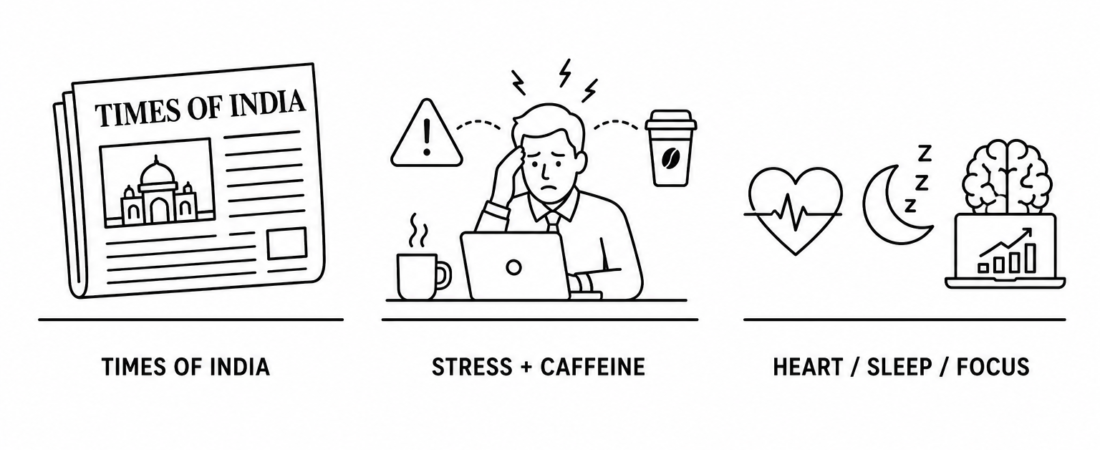
Times of India Documents Workplace Stress Effects on Brain Heart and Sleep
According to a May 27 Times of India health feature on workplace stress and its physiological effects, sustained occupational stress is now being framed as a major contributor to elevated blood pressure, sleep disruption, and reduced cognitive function across professional adult populations. According to the coverage, caffeine consumption interacts with workplace stress in complex ways — providing short-term cognitive lift while potentially amplifying the cardiovascular and sleep effects of the underlying stress load. The report adds to a growing body of mainstream coverage framing daily caffeine intake as an input that must be calibrated to overall stress and recovery context.
Medical Dialogues Documents Caffeine’s Short-Term Blood Pressure Effect
According to a May 25 Medical Dialogues Medical Bulletin referenced through May 27 cardiovascular coverage, scientists continue to document that caffeine can briefly raise blood pressure following acute consumption — particularly in caffeine-naive consumers or in those with elevated baseline blood pressure. According to the broader cardiology research base, the acute blood pressure effect typically resolves within several hours and does not appear to contribute to sustained hypertension in healthy adults consuming moderate caffeine within the established 400 milligram daily limit recommended for healthy adults by the U.S. Food and Drug Administration.
BoxLife Magazine Documents Afternoon Caffeine Diurnal Fat Oxidation Advantage
According to a May 26 BoxLife Magazine report on caffeine and exercise timing, the diurnal variation in caffeine’s fat oxidation effect remains one of the most actionable findings for performance-oriented consumers. According to the underlying Journal of the International Society of Sports Nutrition publication, 3 milligrams of caffeine per kilogram of body weight produces a 10.7 percent fat oxidation increase when consumed before morning exercise and a 29 percent increase when consumed before afternoon exercise. The diurnal advantage informs broader pre-workout caffeine timing recommendations for fat-loss-oriented training protocols.
Practical Implications for Performance-Oriented Adult Consumers
According to combined May 27 Times of India, Medical Dialogues, and May 26 BoxLife Magazine coverage, the practical takeaway for performance-oriented adult consumers is that caffeine input is most effective when calibrated to overall stress context, time of day, and intended outcome. According to the broader 2026 sports nutrition and cardiology research base, moderate caffeine intake within the 400 milligram daily limit remains compatible with cardiovascular health for healthy adults, while time-of-day timing can be optimized to specific performance outcomes including fat oxidation, cognitive performance, or aerobic capacity.
Jiggle delivers dose-precise daily caffeine. Each gummy contains a known, fixed dose of natural caffeine sourced from green tea extract and guarana — approximately one espresso shot per gummy — making it straightforward for professional consumers to maintain consistent daily intake within the FDA-recommended 400 milligram healthy adult ceiling while supporting deliberate pre-workout timing for performance outcomes. With no artificial ingredients, GMP certification, and the portable 12-pack format, the product fits the integrated daily routine architecture the broader cardiology and sports nutrition research base now identifies as foundational. Learn more at jiggle.cafe.
Cardiologists continue to emphasize that the cardiovascular framework for moderate caffeine intake applies to healthy adults consuming within established daily limits, and that consumers with diagnosed cardiac conditions, hypertension, or pregnancy considerations should follow individualized medical guidance from their physicians rather than general population research recommendations alone.