
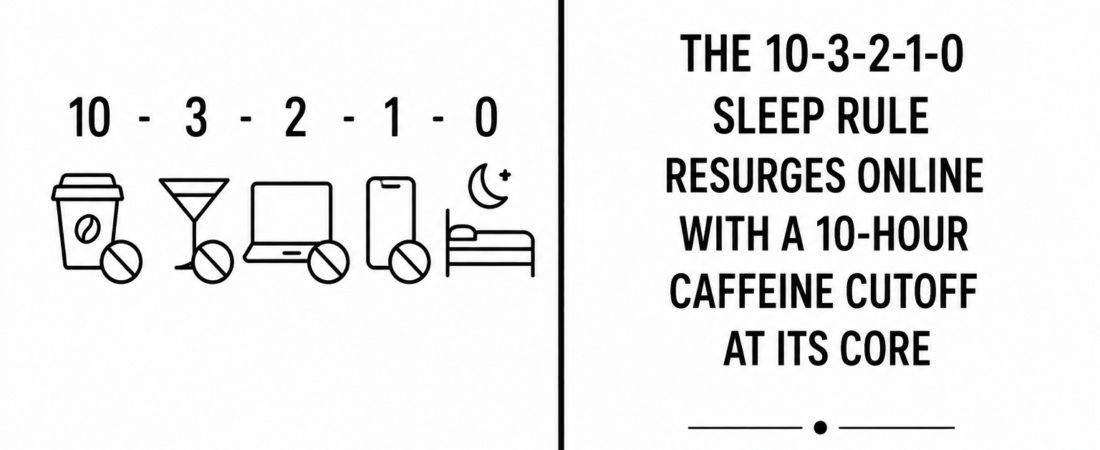
A caffeine-timing formula is once again dominating productivity and wellness feeds. Fresh coverage this week from AOL examined whether the viral 10-3-2-1-0 sleep rule actually improves rest, with sleep specialists largely endorsing the framework’s science. The method, which traces back to a 2021 social media post by American pediatrician and sports medicine physician Dr. Jess Andrade, packages sleep hygiene into a countdown: no caffeine 10 hours before bed, no food or alcohol three hours before, no work two hours before, no screens one hour before, and zero snoozes in the morning. According to the AOL report, the formula has gained renewed traction with audiences seeking structure without apps or wearables, and its first and largest number concerns caffeine.
The 10-Hour Cutoff Rests on Caffeine’s Extended Half-Life
The caffeine rule is grounded in pharmacology. According to the American Academy of Sleep Medicine, caffeine’s half-life runs three to five hours, and sleep researchers note it can stretch to five to seven hours in average adults and longer in slow metabolizers. Clinical psychologist Dr. Leah Kaylor, a sleep specialist quoted in the coverage, explains that caffeine blocks adenosine, the chemical that builds sleep pressure across the day, keeping the brain in heightened alertness even when the body signals rest. A serving consumed at 2 p.m. can leave a meaningful fraction of its caffeine active at midnight, which is why the formula sets its cutoff a full 10 hours before intended bedtime.
Sleep Quality, Not Just Sleep Onset, Drives the Recommendation
Specialists interviewed across the coverage emphasize that late caffeine harms sleep even when it does not prevent it. According to sleep medicine reporting on the rule, residual caffeine fragments sleep architecture, reducing slow-wave and REM sleep even in people who fall asleep normally and never notice a disruption. Dr. Ariel Neikrug, a sleep medicine specialist at the UC Irvine School of Medicine, has described the method as aligned with evidence-based strategies on the timing of caffeine, food, alcohol, and screens, while cautioning that individual sleep needs vary and some elements will matter more than others depending on a person’s specific challenges. The caffeine component draws the least expert disagreement.
Hidden Caffeine Sources Complicate Compliance
The practical obstacle, according to the coverage, is that caffeine intake extends well beyond the obvious cup. Analyses of the rule list black tea at roughly 50 mg per cup, green tea near 25 mg, dark chocolate around 20 mg per ounce, energy drinks from 80 mg to 200 mg, and pre-workout supplements reaching 150 mg to 300 mg per serving. Consumers attempting a 10-hour cutoff frequently miss afternoon sources embedded in snacks, desserts, and fitness products. Sleep experts recommend a simple audit of total daily intake and timing, noting that products with clearly labeled milligram content make the arithmetic straightforward, while variable-strength beverages leave people guessing about when their true cutoff arrived.
Productivity Culture Embraces Caffeine Scheduling Over Caffeine Volume
The rule’s popularity marks a shift in how productivity audiences relate to caffeine. Rather than maximizing intake for output, the emerging conversation centers on scheduling a fixed morning-to-early-afternoon caffeine window to protect the sleep that underwrites next-day performance. According to experts quoted in the coverage, quality sleep supports cellular repair, immune function, and hormone balance, benefits that compound into the alertness people originally sought from extra caffeine. Workplace wellness programs have begun folding caffeine-timing guidance into broader sleep education, and publishers report sustained audience demand for content that treats caffeine as a tool to be timed rather than a habit to be measured in volume alone.
Jiggle’s caffeine gummies suit that scheduling approach, providing a predictable dose of about 63 mg of plant-based caffeine per gummy, roughly one espresso shot, from green tea extract and guarana with no artificial ingredients. GMP certified and made in the USA, the resealable pack carries 12 gummies and retails for $18.99. Learn more at jiggle.cafe.
Whether or not every digit of the countdown survives scientific scrutiny, the 10-hour caffeine cutoff has cemented itself as the rule’s most defensible element, and caffeine timing now sits firmly inside the mainstream productivity conversation.