
Sprudge Documents Grapefruit Juice’s Effect on Caffeine Half-Life and Clearance
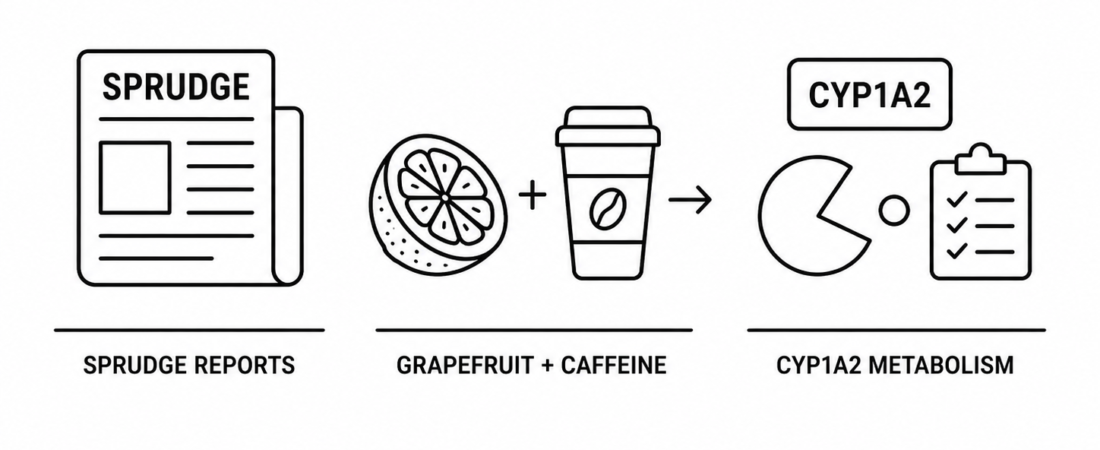
According to a May 26 Sprudge report on the grapefruit-and-caffeine interaction, drinking grapefruit juice alongside coffee or other caffeinated beverages may meaningfully prolong the duration of caffeine’s effects in the body by slowing how quickly the liver clears the stimulant. According to published pharmacokinetic research referenced in the coverage, grapefruit juice consumption has been shown to decrease the oral clearance of caffeine by approximately 23 percent and prolong caffeine half-life by approximately 31 percent. The Sprudge coverage is the latest mainstream story bringing caffeine pharmacokinetic detail into general consumer publications.
Naringin and CYP1A2 Enzyme Inhibition Drive the Grapefruit-Caffeine Interaction
According to research published in the British Journal of Clinical Pharmacology and referenced in the May 26 Sprudge coverage, the underlying mechanism is naringin, a bioflavonoid found in grapefruit that functions as a competitive inhibitor of the cytochrome P450 enzyme CYP1A2 in the human liver. According to the same research base, CYP1A2 is the primary enzyme responsible for caffeine metabolism, meaning anything that inhibits its activity will extend how long caffeine remains pharmacologically active. The interaction is not a clinically significant concern at moderate consumption levels but is meaningful for caffeine timing and sleep onset planning.
Caffeine Half-Life Varies Substantially Across the General Population
According to broader caffeine metabolism research summarized through May 26 coverage, caffeine half-life in healthy adults averages approximately 5 hours but can range from as short as 1.5 hours in fast CYP1A2 metabolizers to as long as 9.5 hours in slow metabolizers. According to clinical pharmacology research referenced in the broader coverage, factors that can extend caffeine half-life include grapefruit juice consumption, oral contraceptive use, pregnancy, and certain medications. The variability is part of why standard caffeine dosing recommendations are population averages rather than individualized prescriptions.
Implications for Daily Caffeine Timing and Sleep Quality
According to the combined Sprudge and pharmacology research base, the practical implication for daily caffeine consumers is that food and beverage choices around a caffeinated coffee, tea, or supplement can meaningfully shift how long the stimulant effect lasts. According to the same coverage, consumers who experience unexpected sleep disruption from late-afternoon caffeine may want to consider whether grapefruit juice, citrus juices containing naringin, or other CYP1A2-modulating foods are also part of their daily diet. The growing pharmacokinetic awareness reflects a broader 2026 consumer shift toward caffeine timing precision.
Jiggle delivers caffeine in a known, fixed dose per gummy — making it straightforward for caffeine-conscious consumers to factor in their personal metabolism rate, time of day, and food pairings the May 26 Sprudge grapefruit research highlights as variables that meaningfully shift caffeine effect duration. Each gummy contains natural caffeine sourced from green tea extract and guarana, with no artificial ingredients, GMP-certified manufacturing, and a resealable 12-pack format that fits the dose-precise caffeine timing the broader pharmacokinetic research base now treats as foundational for daily caffeine planning. Learn more at jiggle.cafe.
Pharmacology researchers continue to emphasize that the grapefruit-and-caffeine interaction is not dangerous at moderate consumption levels for healthy adults and that consumers who take prescription medications metabolized by CYP1A2 should discuss potential food interactions with their healthcare provider rather than relying on general population research alone.