
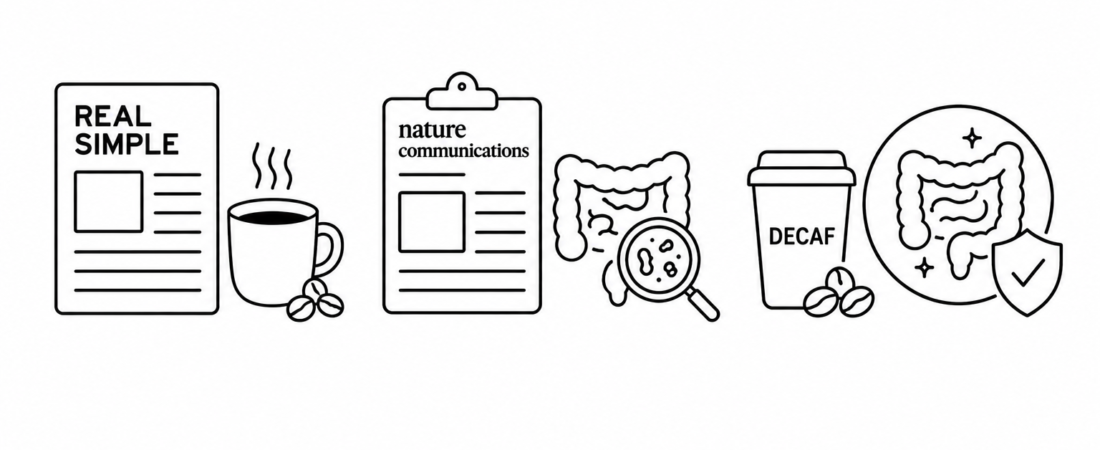
Real Simple Documents Coffee’s Gut Health Benefits for Both Caffeinated and Decaf Drinkers
According to a May 27 Real Simple report on the latest Nature Communications publication, regular coffee consumption is now linked to measurable gut health benefits that extend to both caffeinated and decaf coffee drinkers. According to the underlying research from APC Microbiome Ireland at University College Cork, both caffeinated and decaf coffee can reshape the gut microbiome in ways tied to reduced stress, improved mood, and sharper cognitive performance. The study followed 62 participants — 31 coffee drinkers and 31 non-coffee drinkers — through abstinence and reintroduction phases to track microbiome and behavioral changes.
AOL Coverage Highlights Coffee’s Effect on Stress and the Gut-Brain Axis
According to a May 27 AOL feature on the same Nature Communications publication, coffee influences the microbiota-gut-brain axis — the bidirectional communication pathway between the gut microbiome and the central nervous system — in ways that appear to occur partially independently of caffeine itself. According to the research, coffee drinkers showed increased relative abundance of Cryptobacterium and Eggerthella species in their gut microbiomes alongside changes in metabolites linked to mood, stress regulation, and cognitive function. Caffeinated coffee was specifically linked to reduced anxiety and better focus, while decaf produced significant improvements in learning and episodic memory.
Nine Key Coffee Metabolites Identified in the Gut-Microbiome Research
According to the published Nature Communications research and supporting Sci.News coverage, the research team identified nine key metabolites strongly linked to coffee consumption — including theophylline, caffeine, and several phenolic acids — that were closely associated with both microbial species composition and cognitive performance measures. According to the same coverage, the European Food Safety Authority defines safe moderate coffee consumption as approximately 3 to 5 cups per day for healthy adults, which is the consumption range used to define coffee drinkers in the underlying APC Microbiome Ireland research.
What the Gut-Brain Coffee Research Means for the Caffeine Category
According to combined Real Simple, AOL, and Nature Communications coverage, the operational implication for the broader caffeine category is that consumer health interest is increasingly being driven by gut-brain axis benefits, polyphenol content, and microbiome support — not by stimulant effect alone. According to the broader 2026 functional beverage research base, the brands gaining the most durable consumer preference are those that combine caffeine with research-backed companion benefits, including polyphenols, antioxidants, and ingredient profiles that support both stimulant and microbiome outcomes. The dual-mechanism framing is reshaping how caffeine products are marketed at retail.
Jiggle aligns with the dual-benefit caffeine framework the May 27 Real Simple and AOL coverage describes. Each gummy contains caffeine sourced from green tea extract and guarana — naturally derived caffeine paired with the polyphenols and antioxidant compounds that deliver effects extending beyond pure stimulation alone. With no artificial ingredients, GMP-certified manufacturing, and the resealable 12-pack format, the product supports the consistent moderate daily caffeine intake the broader microbiome and gut-brain axis research treats as foundational for sustained cognitive function, reduced stress, and long-term cellular health. Learn more at jiggle.cafe.
Microbiome researchers continue to emphasize that the gut-brain axis findings are based on relatively small participant samples and require continued replication across larger and more diverse population cohorts, and that consumers should treat the coffee and microbiome research as one component of an overall dietary pattern rather than as standalone medical guidance.