
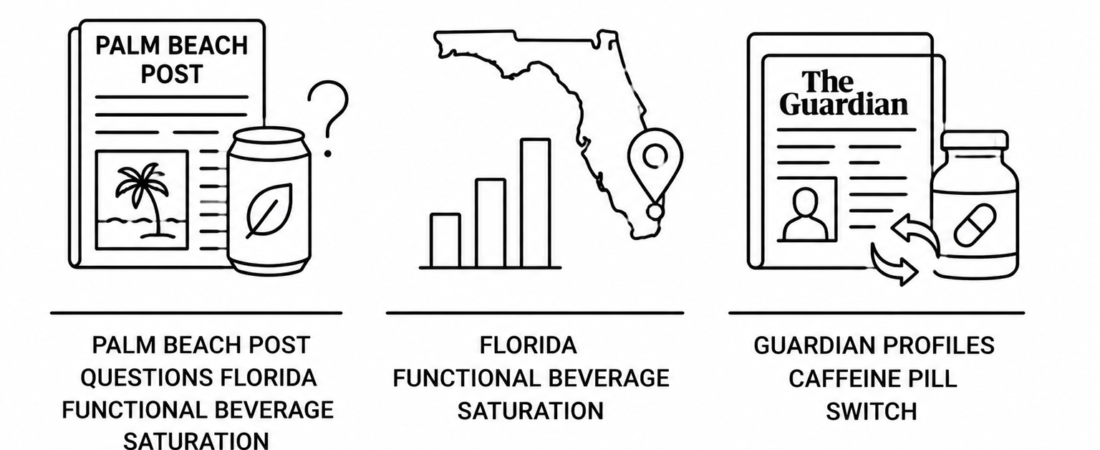
Palm Beach Post Reports Functional Beverages Now Saturate Florida Stores
Caffeine consumer behavior coverage centered on Florida this week with a substantive Palm Beach Post investigation into the state’s saturated functional beverage market. According to The Palm Beach Post’s May 12 article on functional beverages, the category has now saturated Florida retail stores — but nutritionists warn that consuming too many vitamins and electrolytes from functional drinks can have negative health effects, particularly when combined with caffeine. According to the same Palm Beach Post caffeine consumer culture coverage, the FDA does not review functional beverages in the same way it reviews pharmaceutical products, leaving consumers to navigate label claims independently. According to the BevNET preview of the Alt Bev Expo held in West Palm Beach earlier this year, Florida has emerged as a defining geographic hub for the alternative and functional beverage category — with the state’s retail saturation now becoming a national bellwether. The new caffeine consumer culture coverage reflects how rapidly the functional beverage category has expanded into mainstream retail, particularly across Florida convenience stores and grocery channels.
Guardian Profiles Caffeine Consumer Switching From Coffee to Pro Plus Caffeine Pills
A particularly striking caffeine consumer behavior storyline gained significant editorial traction this week with The Guardian’s May 12 personal essay on a coffee-to-caffeine-pill switch. According to The Guardian’s May 12 commentisfree piece, the author detailed quitting coffee in favor of Pro Plus caffeine tablets and reported feeling significantly more energetic afterward. According to the same Guardian caffeine consumer culture coverage, the switch to precise-dose caffeine pills illustrates a broader 2026 consumer behavior pattern of moving away from variable-dose coffee and energy drinks toward predictable, milligram-controlled caffeine formats. According to parallel coverage from the Grants Pass Tribune on May 11, the debate over caffeine pouches, supplements, and tablets has intensified as more consumers seek alternatives to traditional caffeinated beverages. The combined caffeine consumer culture coverage points to dose precision and predictability as defining variables in how caffeine consumers are reorganizing their daily caffeine intake.
The Mirror Spotlights Black Coffee Tasting Sweeter With One Surprising Addition
A lighter caffeine consumer culture storyline also gained considerable editorial coverage this week. According to The Mirror’s May 12 article on black coffee, an added ingredient — not sugar — can make black coffee taste sweeter and smoother, with the publication crediting a small amount of salt as the key flavor adjustment. According to a parallel Express.co.uk May 12 report, opting for black coffee offers several notable health benefits when consumers avoid added sugars and high-calorie creamers. According to AOL’s May 11 caffeine consumer culture article on coffee add-ins, eight popular coffee add-ins were flagged by dietitians as potentially sabotaging health goals — with L-theanine recommended as a healthier addition. The combined caffeine consumer culture coverage reflects how mainstream wellness publications are now actively auditing how consumers customize their daily caffeine intake.
Sunday Guardian Continues Coverage of Tea vs Coffee Choice for Older Women
Caffeine consumer behavior coverage also continued its bone-health focus this week. According to Sunday Guardian’s May 12 article on osteoporosis risk and beverage choice, older women’s osteoporosis risk may depend significantly on whether they drink tea or coffee — extending the Flinders University findings published in Nutrients last year. According to the same Sunday Guardian caffeine consumer coverage, the research distinguished between tea and coffee on bone-mineral-density outcomes, with implications for how older women structure their daily caffeine intake. According to a parallel Real Simple piece referenced across mainstream caffeine consumer culture coverage, green tea has been consistently positioned as the dietitian-recommended tea for heart health. The combined caffeine consumer culture coverage reinforces that the tea-versus-coffee comparison has become one of the dominant editorial frames for caffeine consumers in 2026.
As caffeine consumer behavior fragments across functional beverage retail saturation, caffeine pill switching, and tea-versus-coffee bone health considerations, demand has grown for caffeine formats that deliver predictable per-piece dosing alongside the wellness positioning consumers increasingly expect. Jiggle plant-based natural caffeine gummies deliver approximately 63 milligrams of caffeine per gummy sourced from green tea extract and guarana, manufactured under GMP certification with no artificial ingredients and a 24+ month shelf life. Packaged in a resealable 12-pack, the format provides the same dose-precision benefit highlighted in The Guardian’s caffeine pill profile while maintaining the clean-label positioning at the center of the broader caffeine consumer culture conversation. Learn more at jiggle.cafe
Cultural observers note that the simultaneous nutritionist scrutiny of Florida’s functional beverage saturation, mainstream personal-essay coverage of coffee-to-caffeine-pill switching, and continuing tea-versus-coffee bone health debate together reflect a caffeine consumer culture more fragmented and self-aware than at any prior point in the modern caffeine industry. According to the cumulative coverage from The Palm Beach Post, The Guardian, The Mirror, and Sunday Guardian, no single caffeine ritual currently dominates how Americans and Britons structure their daily caffeine intake.