
OnlyMyHealth Documents Caffeine’s Capacity to Reverse Sleep Deprivation Memory Loss
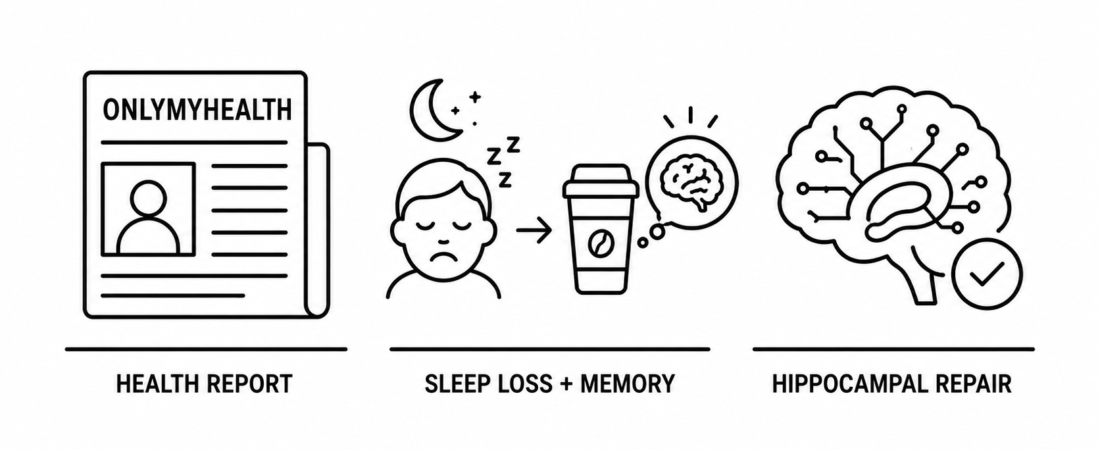
According to a June 1 OnlyMyHealth feature on new caffeine and memory research, a study published in Neuropsychopharmacology by researchers from the National University of Singapore Yong Loo Lin School of Medicine has demonstrated that caffeine can restore social memory function impaired by sleep deprivation by targeting a defined brain pathway. According to the underlying NUS Medicine publication, the research used electrophysiological recordings to measure synaptic plasticity in the CA2 region of the hippocampus — the brain area known to be essential for social memory formation and the ability to recognize familiar individuals.
Caffeine Repairs Brain Synaptic Plasticity After Five Hours of Sleep Deprivation
According to the same June 1 OnlyMyHealth coverage and the NUS Medicine press release referenced in the reporting, researchers induced five hours of sleep deprivation in laboratory subjects and then provided caffeine mixed into drinking water for unrestricted consumption for seven days. According to the underlying research led by Associate Professor Sreedharan Sajikumar and Dr. Lik-Wei Wong, caffeine restored the synaptic plasticity that sleep deprivation had disrupted — strengthening the connections between neurons in the hippocampus and reversing the memory impairment at both the molecular and behavioral levels.
Adenosine Receptor Signaling Mechanism Drives the Caffeine Memory Effect
According to the broader caffeine pharmacology research base referenced through the June 1 cycle, caffeine functions at the molecular level by blocking adenosine receptor signaling pathways that accumulate during wakefulness and dampen brain activity. According to Dr. Lik-Wei Wong’s commentary cited across multiple May 31 and June 1 publications, sleep deprivation increased brain signaling related to adenosine, which both encourages sleep and can dial down memory-making circuits — and caffeine’s adenosine receptor antagonism appears to reverse these specific disruptions, suggesting caffeine’s cognitive benefits extend beyond simply helping consumers stay awake.
AOL Reports Coffee Could Be Doing Your Brain a Solid Through Multiple Mechanisms
According to a June 1 AOL.com feature on coffee and brain health, the latest research suggests that the everyday morning cup may be doing the brain a solid through multiple mechanisms — including the dementia risk reduction documented in the 43-year Harvard cohort study, the gut-brain axis benefits documented in the Nature Communications publication, the sleep-deprivation memory protection now documented in the NUS Medicine research, and the Parkinson’s protective effects documented through caffeine’s adenosine A2A receptor antagonism. The combined mechanisms continue to reshape consumer understanding of caffeine and long-term brain health.
Researchers continue to emphasize that the NUS Medicine sleep deprivation and caffeine memory findings are based on laboratory mouse studies and require continued replication in human research before clinical recommendations can be made, and that the most reliable long-term cognitive performance outcomes still come from combining moderate consistent caffeine intake with adequate sleep, regular exercise, and the foundational lifestyle inputs the research repeatedly identifies as essential.