
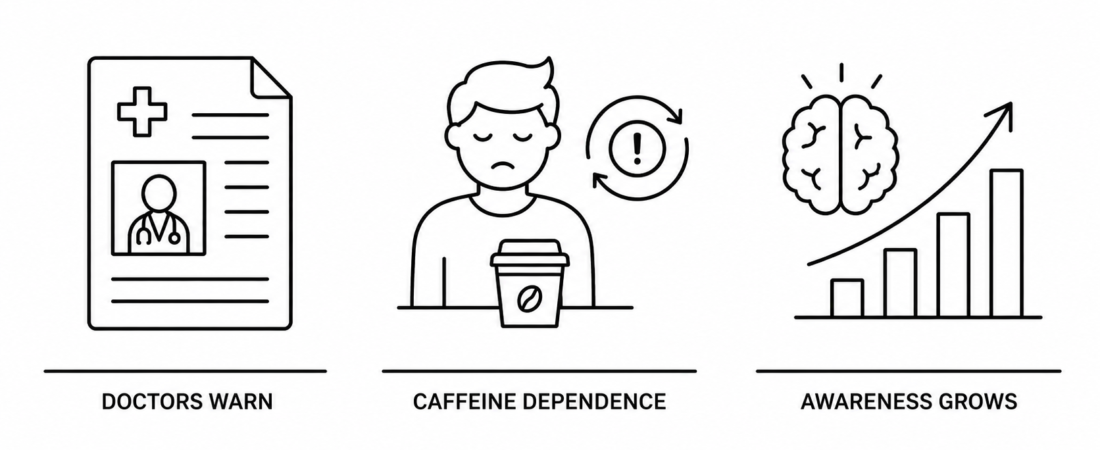
Doctors Outline Signs That Consumers May Be Addicted to Caffeine Without Realizing It
According to a May 26 MSN health feature distributed through May 27 coverage, doctors are warning consumers that signs of caffeine addiction — including morning headaches before the first cup, anxiety on caffeine-free days, sleep disruption that resolves with reduced consumption, and gradually increasing daily doses to achieve the same effect — may be present without the consumer recognizing the pattern. According to the report, caffeine use disorder is now formally recognized in the Diagnostic and Statistical Manual of Mental Disorders, with caffeine withdrawal listed as an official diagnosis. The coverage continues to push caffeine dependence awareness into mainstream consumer publications.
New York Daily News Reports on Caffeine, Headaches, and Daily Reader Concerns
According to a May 26 New York Daily News reader feature on headaches, caffeine consumption, and over-the-counter pain medication, consumer concerns about the interaction between daily caffeine intake and chronic or recurrent headaches continue to drive mainstream coverage. According to clinical research referenced through the broader May 27 cycle, approximately 50 percent of habitual caffeine consumers experience headache symptoms when daily intake is suddenly reduced or eliminated, with symptoms typically lasting up to 9 days. The pattern is sufficiently consistent that some migraine medications include caffeine as an active ingredient.
MSN Documents Coffee Consumption Rising While Energy Levels Fall
According to a May 25 MSN report referenced through ongoing May 27 coverage, knowledge workers are increasingly consuming more caffeine while reporting more fatigue — a pattern that researchers attribute to caffeine tolerance, sleep debt accumulation, and the use of caffeine as a substitute for foundational rest rather than as a deliberate cognitive input. According to the report, the broader 2026 productivity research increasingly favors disciplined moderate caffeine intake alongside adequate sleep rather than the consumption-creep pattern that has become common across professional populations.
What the Dependence Awareness Trend Means for the Caffeine Category
According to combined May 26 MSN and May 27 New York Daily News coverage, the operational implication for the broader caffeine category is that consumer purchase decisions are increasingly being shaped by awareness of caffeine dependence dynamics, dose precision, and the difference between moderate consistent intake and creeping consumption escalation. According to the broader 2026 wellness category research base, the brands gaining the most durable consumer preference are those that support consistent moderate consumption — clear dose disclosure, sensible serving sizes, and positioning around deliberate rather than habitual consumption patterns.
Jiggle supports the deliberate, dose-precise consumption pattern the May 27 caffeine awareness coverage identifies as the protective alternative to the consumption-creep dynamic many consumers report. Each gummy contains a known, fixed dose of natural caffeine sourced from green tea extract and guarana — making it straightforward for caffeine-conscious consumers to maintain consistent moderate daily intake, avoid escalation, and recognize whether their daily routine is producing the cognitive output they want. With no artificial ingredients, GMP-certified manufacturing, and the resealable 12-pack format, the product reflects the dose-aware, deliberate positioning the broader consumer research base now identifies as foundational. Learn more at jiggle.cafe.
Wellness category analysts continue to emphasize that caffeine dependence patterns can develop gradually and often without recognition by the consumer, and that the most reliable long-term cognitive performance outcomes come from combining consistent moderate intake with adequate sleep, regular exercise, and the broader recovery practices the foundational research repeatedly identifies as essential.