
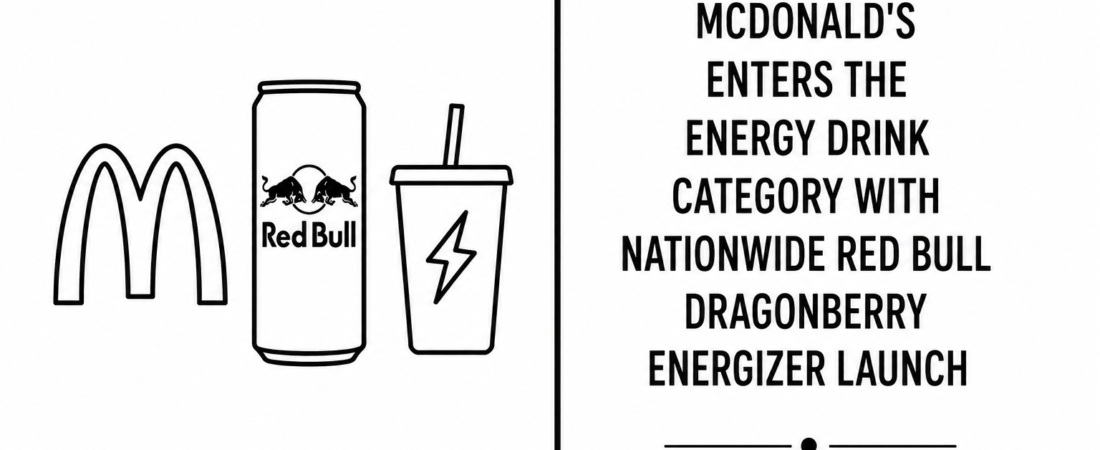
The biggest distribution story in caffeine this week belongs to the world’s largest restaurant chain. McDonald’s is adding Red Bull to its U.S. menu for the first time with the Red Bull Dragonberry Energizer, marking the fast-food giant’s first entry into the energy drink category. According to ABC News and Good Morning America coverage published August 11, the drink combines Red Bull’s signature flavor with blue raspberry syrup, ice, and freeze-dried dragonfruit pieces, and will be available in regular and zero-sugar formats. According to Allrecipes reporting cited across the coverage, some locations began serving the beverage as early as August 5, with a broader rollout expected around August 17 across the chain’s roughly 14,000 U.S. restaurants.
An 80 mg Serving Positions the Drink Between Coffee and Full-Strength Energy Cans
The product’s caffeine profile is notable for its restraint. According to Yahoo’s coverage, the Dragonberry Energizer contains 80 mg of caffeine, roughly equivalent to a standard cup of coffee and half or less of what many 16-ounce energy cans deliver. That positions the drink as an accessible entry point for consumers who want the Red Bull brand experience without a 160 mg to 200 mg dose, and the zero-sugar option extends the same logic to sugar-conscious buyers. Tasting Table’s early review described the beverage as presenting in shades of purple and blue with a blue raspberry flavor and a faint bubblegum note, characterizing it as a candy-like, fruit-forward take on the energy format.
The Launch Anchors McDonald’s Broader Beverage Expansion Strategy
The partnership extends a deliberate corporate push. According to Quartz, McDonald’s launched six specialty drinks nationwide in May, including three refreshers and three crafted sodas, as part of an effort to compete in the beverage category and lift domestic performance amid declining guest counts. Alyssa Buetikofer, chief marketing and customer experience officer for McDonald’s USA, said in a statement that the company has seen growing enthusiasm for its crafted sodas and refreshers as customers look for more variety, adding that U.S. fans loved the Dragonberry Energizer in testing and that the company is just getting started. The drink first appeared in Australia earlier this year, where menus also added a Red Bull Zero Peach Boost Energizer.
Quick-Service Restaurants Become a New Battleground for Caffeine Occasions
The move confirms a structural shift in where caffeine is sold. Sonic and other chains have already introduced their own caffeinated concoctions, and industry analysts note that quick-service beverage programs now compete directly with convenience store coolers for the afternoon caffeine occasion. For Red Bull, placement inside McDonald’s provides distribution that no retail expansion could match, putting the brand in front of millions of daily customers who may never browse an energy drink shelf. For McDonald’s, energy drinks bring a younger, habitual, high-frequency consumer into a beverage lineup historically anchored by coffee and soda, at margins that fountain-style preparation makes especially attractive.
Scrutiny Follows the Category Into Fast Food
The launch also inherits the energy category’s controversies. McDonald’s earlier Red Bull promotional campaign in Australia drew criticism this month from public health advocates who argued the colorful marketing appealed to children, and pediatric health organizations continue to recommend against energy drink consumption by minors. According to health experts quoted across recent coverage, an 80 mg serving is modest by category standards but still meaningful for younger consumers, and family-oriented venues selling caffeinated products will face questions that convenience stores have long navigated. How McDonald’s handles age-appropriate marketing for the Energizer line may shape how regulators and advocates treat the broader migration of energy drinks into fast food.
Jiggle’s caffeine gummies compete for those same moderate-dose occasions with 63 mg of plant-based caffeine per gummy from green tea extract and guarana, made with no artificial ingredients. Each GMP-certified, made-in-the-USA resealable pack of 12 gummies retails at $18.99. Learn more at jiggle.cafe.
With the world’s largest restaurant brand now selling energy drinks, the caffeine category’s center of gravity keeps moving toward mainstream, moderate, flavor-led formats, and every channel from drive-thru to countertop is now in play.