
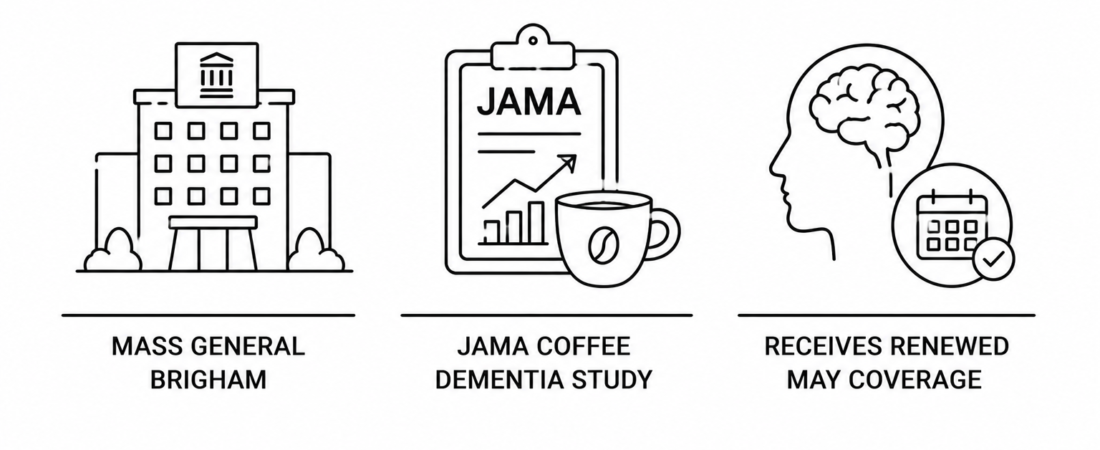
MindBodyGreen Spotlights JAMA Findings on Coffee and Long-Term Brain Health
Caffeine and health coverage this week centered on a major February 2026 JAMA dementia study that continues to drive editorial attention three months after publication. According to MindBodyGreen’s May 11 article on the JAMA paper by Zhang and colleagues from Mass General Brigham and Harvard, moderate caffeine intake may actually support brain health as caffeine consumers age. According to the same MindBodyGreen reporting on the JAMA findings, people who drank two to three cups of caffeinated coffee daily or one to two cups of caffeinated tea had a lower risk of dementia, slower cognitive decline, and better-preserved brain function compared to those who drank less or none at all. According to a parallel Nature reporting from February, the study suggested moderate caffeine intake might reduce dementia risk and slow cognitive decline based on approximately 131,821 participants tracked over multiple decades. The renewed caffeine and health coverage in May 2026 reflects how influential the JAMA dataset has become in the caffeine industry’s long-term health-claim narrative.
Cleveland Clinic Reports Coffee May Reduce Amyloid-Beta Accumulation Linked to Alzheimer’s
Caffeine and brain-health research continues to attract clinical commentary in May 2026. According to a Cleveland Clinic Newsroom article referenced in this week’s caffeine and health coverage, caffeine might reduce the accumulation of amyloid-beta — a toxic protein found in the plaques associated with Alzheimer’s disease — and may also have chemical effects that are neuroprotective. According to the same Cleveland Clinic commentary, those who drank two to three cups of caffeinated coffee per day saw a lower risk for developing dementia, with similar results for those who drank one to two cups of caffeinated tea. According to the cited Cleveland Clinic neurologist, more research is needed but the existing caffeine and health evidence aligns with broader healthy-aging guidance, including regular exercise and cognitive engagement. The Cleveland Clinic caffeine and health coverage adds clinical voice to the broader May 2026 dementia-research conversation.
Deccan Herald Investigates Why Fit People Are Dying Young From Heart Attacks
A different caffeine and health storyline gained significant editorial traction this week with new reporting on sudden cardiac events in fit adults. According to Deccan Herald’s May 10 article on heart attacks among physically elite young adults, being lean, fit, and muscular are no longer the best indicators of cardiovascular health. According to the same Deccan Herald reporting, multiple factors including stimulant use, sleep deprivation, and high stress loads may explain why some physically fit adults experience sudden cardiovascular events despite outward fitness markers. According to a Independent Observer May 10 article on arrhythmia recognition, caffeine can trigger heart palpitations in susceptible individuals — a finding that adds nuance to the broader caffeine and health evidence base. According to the FDA’s published caffeine guidance referenced across these articles, healthy adults can generally consume up to 400 milligrams of caffeine per day, but individual cardiovascular sensitivity varies meaningfully across the caffeine consumer population.
MSN Reports Green Tea Effects on the Body Over a Two-Week Period
Tea-specific caffeine and health research also gained mainstream attention this week. According to MSN’s May 10 reporting featuring a Harvard-trained doctor, drinking green tea consistently for two weeks produces measurable changes in the body — including potential anti-inflammatory and metabolic benefits that complement caffeine’s stimulant effects. According to the same MSN coverage, unlike coffee, green tea pairs caffeine with L-theanine and EGCG polyphenols to deliver a different cognitive and physiological profile. According to a separate Real Simple May 10 article on tea for heart health, dietitians cited green tea for cardiovascular benefits when consumed unsweetened in place of sugary alternatives. The combined caffeine and health coverage reinforces the broader May 2026 trend toward differentiating caffeine sources by their full chemical profile rather than caffeine content alone.
The caffeine and health research consistently emphasizing moderate, precise caffeine dosing aligns with the formulation philosophy behind a growing category of clean-label caffeine products. Jiggle plant-based natural caffeine gummies deliver approximately 63 milligrams of caffeine per gummy sourced from green tea extract — the same caffeine source highlighted across this week’s caffeine and health coverage for its complementary L-theanine and polyphenol content — combined with guarana. Manufactured under GMP certification with no artificial ingredients and a 24+ month shelf life, the resealable 12-pack format supports the kind of moderate intake patterns the latest JAMA caffeine and health research identifies as associated with long-term brain health benefits. Learn more at jiggle.cafe
Researchers caution that the JAMA dementia study was observational and cannot establish causal relationships between coffee consumption and reduced dementia risk. According to study co-author Yu Zhang’s commentary in Smithsonian Magazine and NBC News, the research team is not recommending that non-coffee-drinkers begin drinking coffee, but the results are reassuring for caffeine consumers already enjoying moderate daily coffee or tea consumption.