A New Functional Mushroom Energy Drink Enters the U.S. and Canadian Market
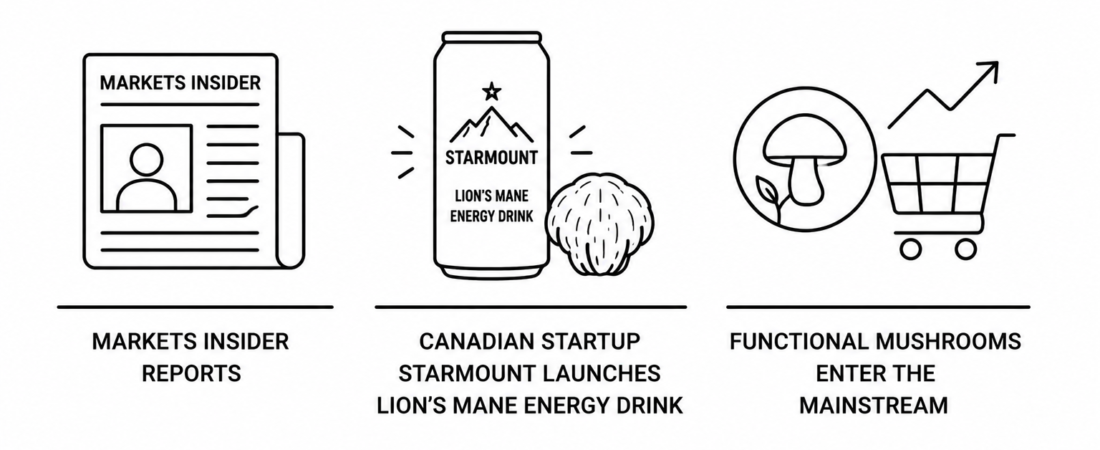
According to a May 19 Markets Insider report distributed through Business Insider, Canadian startup Starmount has launched an all-natural energy drink built around functional mushroom ingredients. According to the report, each serving of Starmount contains 1,500 milligrams of dried lion’s mane mushroom paired with 110 milligrams of naturally sourced caffeine — a dose roughly equivalent to a strong cup of coffee. The launch positions Starmount within a fast-growing functional beverage subcategory in which mushroom-based ingredients, formerly confined to wellness retail, are now entering mainstream energy drink shelves alongside conventional caffeine-only formulations.
Mushroom Coffee Alternatives Continue Mainstream Coverage
According to a May 18 Slate report titled “Don’t Talk to Me Before My Mud Water,” mushroom-based coffee alternatives have moved from niche wellness to broadly distributed retail, with adaptogenic blends from brands including Rasa Original now retailing at roughly $29.99 for a 30-serving format. According to a separate May 18 Lifecykel review, the mushroom coffee category in 2026 has expanded well beyond original entrants, with reishi, chaga, lion’s mane, and cordyceps appearing in single-mushroom and stacked formulations. According to a related May 18 functional beverage analysis, three new functional teas were spotted at the 2026 Restaurant Association Show, signaling foodservice adoption.
Forbes Reports the Energy Drink Boom Is About More Than Caffeine
According to a May 19 Forbes report by contributor Jess Cording, the new energy drink boom is being driven by ingredients beyond caffeine itself. According to the report, companies are increasingly positioning naturally sourced caffeine from green tea, zero-sugar formulations, and added functional ingredients — adaptogens, nootropics, electrolytes — as the primary purchase drivers. The analysis frames the shift as a generational change in the caffeine consumer: where the prior decade’s energy drink category was defined by maximum stimulant dosing, the 2026 category is defined by ingredient transparency and functional layering.
What the Functional Mushroom Wave Signals to Operators
According to coverage across Markets Insider, Forbes, and Lifecykel, the functional-mushroom and caffeine-alternative segment is one of the most-watched growth areas in the broader beverage industry. According to FoodNavigator-USA, functional beverages are reshaping the wider health category, with supplements holding firm and beverages becoming the primary delivery format for ingredients consumers previously consumed in pill form. The takeaway for caffeine operators: combinations of natural caffeine with research-backed functional ingredients are now the competitive baseline, and single-ingredient stimulant-only products face increasing pressure to differentiate.
Jiggle delivers the natural-caffeine positioning the Forbes report identifies as a primary purchase driver in the 2026 energy category, paired with the format precision the functional-beverage wave now demands. Each gummy contains caffeine extracted from green tea and guarana — the same naturally sourced ingredient class Forbes highlights — at a known, fixed dose per serving. With no artificial ingredients, GMP certification, and the 12-pack resealable format that fits desk drawers and gym bags, the product offers the transparency and dosing precision that mushroom-energy and adaptogen drinks have made the category default. Learn more at jiggle.cafe.
The functional mushroom category remains in an evidence-gathering phase, with researchers noting that human clinical data on lion’s mane cognitive claims is still building and that consumers should evaluate functional energy drinks based on caffeine content as carefully as they evaluate any other stimulant beverage.