
Loma Linda University Publishes Updated Pediatric Guidance
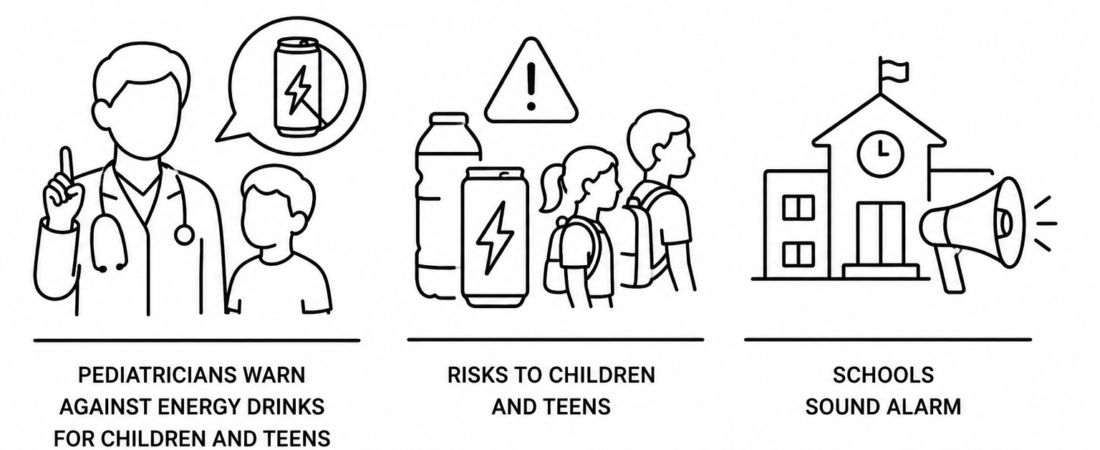
According to a May 20 Loma Linda University News report, pediatric specialists are reiterating that children and adolescents should not consume energy drinks under any circumstances. According to Dr. Marc Mazor, quoted in the Loma Linda coverage, energy drink ingredients can trigger restlessness, shaking hands, stomachaches, headaches, nervousness, and — more seriously — irregular heart rhythms in pediatric consumers. According to the report, children with diagnosed heart disease or high blood pressure face additional risk, and the medical bottom line cited is that children and adolescents should never consume energy drinks. The guidance aligns with longstanding American Academy of Pediatrics policy.
KUNR and Local Pediatricians Echo the Warning
According to a May 20 KUNR report, an Abilene-area pediatrician has independently issued public warnings about rising energy drink use in middle and high schools. According to the report, energy drink consumption among teens has become a documented driver of sleep disruption, academic performance issues, and emergency department visits in adolescents. According to the broader May 20 coverage tracked through MSN, the pediatric concern is no longer confined to specialty publications but is now appearing in mainstream local news, suggesting the public-health conversation around youth caffeine consumption is reaching a wider audience than it has in prior years.
Montana Approved to Restrict SNAP Purchases of Sugary Drinks and Energy Drinks
According to a May 19 Western Ag Network report, Montana has received federal approval to restrict SNAP food assistance program purchases on sugary drinks, candy, junk food, and energy drinks. According to the report, the approval places Montana among the first U.S. states to use the SNAP program as a public-health lever against high-caffeine and high-sugar beverages. The policy change is significant for the broader caffeine industry because SNAP eligibility has historically functioned as an implicit subsidy for the energy drink category, and the Montana approval may signal similar policy moves in other states through 2026 and 2027.
Combined Regulatory Pressure Reshapes the Energy Drink Category
According to coverage across Loma Linda, KUNR, Western Ag Network, and the UK, Spain, and South Korea regulatory tracking from earlier May briefings, the energy drink category is now facing pressure from three distinct directions: pediatric and adolescent restrictions, public-assistance program limits, and international age-gating rules. According to industry analysts referenced through FoodNavigator coverage, the combined regulatory environment will likely accelerate the shift toward lower-dose, ingredient-transparent caffeine products. Operators selling primarily to adult professional segments and avoiding youth-coded marketing remain best positioned for the regulatory environment now consolidating.
Jiggle is positioned squarely outside the regulatory pressure zones the May 20 Loma Linda University, KUNR, and Montana SNAP coverage describe. The product is marketed to adult professionals — knowledge workers, shift workers, and active adults — not to children or adolescents, and delivers a known, fixed dose of natural caffeine sourced from green tea extract and guarana rather than the high-stimulant, often-undisclosed formulations driving the pediatric concern. With no artificial ingredients and clear dose disclosure per gummy, the product reflects the consumer-protection direction the regulatory environment is moving toward. Learn more at jiggle.cafe.
Public health analysts note that the pediatric-focused regulatory pressure is unlikely to extend to moderate, adult-targeted caffeine products in the near term, but operators across the broader caffeine category should expect intensified scrutiny on marketing claims, ingredient disclosure, and youth-facing distribution channels through the remainder of 2026.