
Caffeine Sensitivity Drives a Documented Behavioral Shift
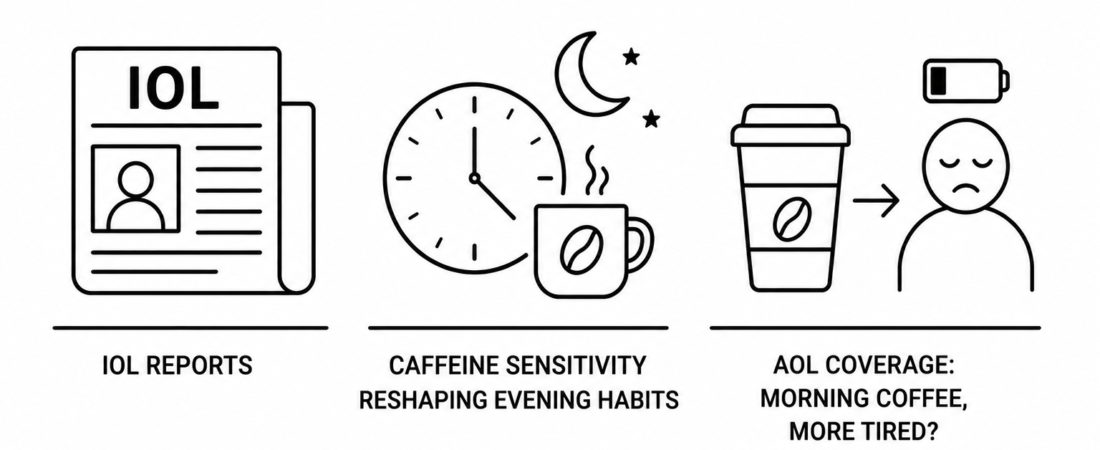
According to a May 19 IOL Lifestyle Health report, growing consumer awareness of caffeine sensitivity is prompting a measurable shift in when people consume caffeinated drinks. According to the report, the change is particularly visible in evening drinking habits, with consumers increasingly opting to stop caffeine consumption in the late afternoon to preserve sleep quality. The article documents that small adjustments — moving the daily cutoff earlier, switching to lower-dose options later in the day, or substituting decaf — are becoming common across wellness-engaged demographics. The shift is described as consumer-driven rather than regulatory, suggesting durable behavioral change rather than a temporary trend.
AOL Reports on Why Morning Coffee Can Backfire
According to a May 19 AOL.com health feature titled “Why a Cup of Morning Coffee Can Leave You Feeling More Tired,” the timing and tolerance dynamics of regular caffeine consumption can produce paradoxical fatigue even when intake patterns feel consistent. According to the article, cortisol curves, adenosine rebound, and individual metabolic rate combine to determine whether morning caffeine genuinely boosts alertness or temporarily masks underlying tiredness that returns more sharply. The piece reinforces a year-over-year trend in mainstream health journalism: consumers are now reading caffeine content as a function of timing and biology, not as a binary stimulant question.
Evening Caffeine Continues to Surface in Performance Research
According to a 2025 Frontiers in Nutrition study summarized in May 19 coverage, evening caffeine ingestion at doses above roughly 2 milligrams per kilogram of body weight has been shown to decrease sleep duration and efficiency while increasing sleep onset latency. According to a related Sports systematic review and meta-analysis cited in the same period, caffeine consumed after 4 p.m. consistently shows negative impacts on sleep duration and quality across athletic and general populations. The combined research base now supports what consumer behavior has already started doing: shifting caffeine intake earlier in the day.
What the Behavioral Shift Means for the Category
According to the IOL report and adjacent FoodNavigator functional beverage coverage, the consumer shift toward earlier caffeine cutoffs and more deliberate dosing has direct commercial implications. Products that allow precise dose control, clear timing, and easy cutoff are gaining preference over products that encourage open-ended consumption. The behavioral pattern documented across May 19 reporting suggests that brands optimizing for end-of-day stopping behavior — not just first-drink purchase — are positioned to capture share as the wellness-driven consumer segment continues to grow.
Jiggle is engineered for exactly the cutoff-timing behavior the IOL report and AOL coverage document. Because each gummy is a discrete, fixed-dose unit, consumers can count exactly how many they have chewed in a day and know precisely when they reached their personal afternoon cutoff — a level of dose-and-timing control that is structurally difficult with coffee or open-pour energy drinks. With caffeine sourced from green tea extract and guarana, no artificial ingredients, and a resealable 12-pack format that fits in a desk drawer, the product supports the deliberate intake behavior wellness-oriented consumers are now reporting. Learn more at jiggle.cafe.
Consumer researchers note that the evening-cutoff shift is most pronounced in adults aged 25 to 44 and that the behavioral pattern is correlated with broader sleep-tracking adoption, suggesting the trend will continue to compound as wearable sleep data becomes more widely available.