
NutraIngredients Reports PharmaLinea Riding Surge in Functional Hydration Demand
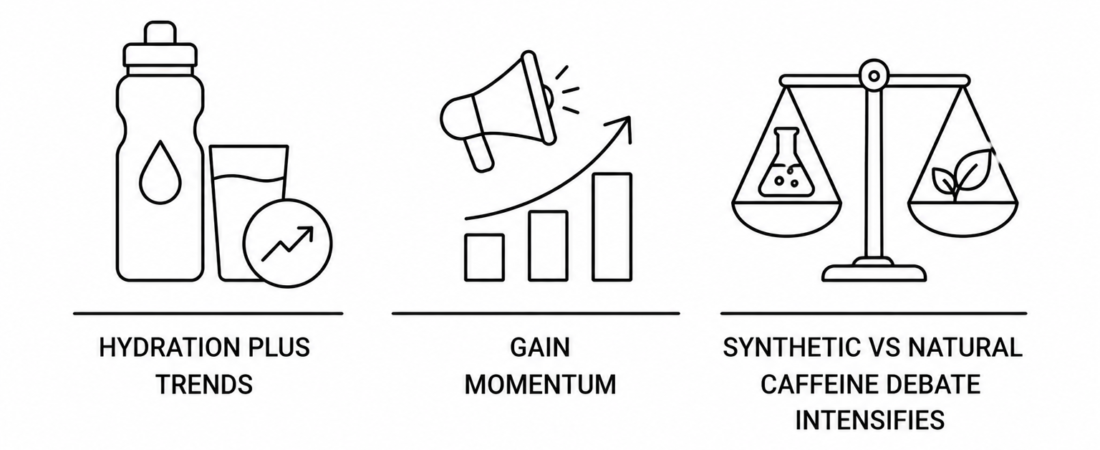
The caffeine industry’s adjacent functional-hydration category produced a notable strategic signal this week as ingredient supplier PharmaLinea announced it is riding a surge in demand for hydration-plus formulations. According to NutraIngredients.com’s May 12 coverage, hydration-plus trends are gaining momentum across the global caffeine industry and broader functional beverage market. According to the same NutraIngredients reporting, the category combining electrolyte hydration with functional ingredients including caffeine, vitamins, and adaptogens has become one of the fastest-growing segments inside the broader functional beverage space. According to the foundational Sourceready US functional beverage market analysis covered earlier this year, the US functional beverage market is projected to reach approximately $67 to $70 billion in 2026, growing at a 7% to 9% compound annual growth rate. The new caffeine industry signals reinforce that hydration-paired caffeine formats are no longer a niche subcategory but a core competitive lane.
Rutland Herald and Joplin Globe Spotlight Synthetic Caffeine vs Natural Sources Debate
A pointed caffeine industry storyline received parallel May 12 coverage in regional US newspapers focused on the difference between synthetic and naturally sourced caffeine. According to the Rutland Herald and Joplin Globe May 12 reports, synthetic caffeine used in top-selling energy drinks has been linked to an increasing number of health concerns documented by a panel of physicians at Euroky Vitality Drink. According to the same caffeine industry coverage, the contrast between synthetic caffeine — typically manufactured in chemical plants — and naturally sourced caffeine from green tea, guarana, or coffee continues to shape consumer purchasing decisions and brand positioning. According to broader caffeine industry market data referenced in the openPR.com global caffeine market analysis covered earlier this month, natural caffeine is one of the two main caffeine subdivisions tracked by analysts, alongside synthesized caffeine. The new caffeine industry coverage reinforces that source transparency is becoming a defining differentiation lever across the energy drink and functional beverage categories.
IndexBox Publishes US and Europe Caffeine-Free Coffee Pods Forecasts
Caffeine industry research firms continued publishing geographic market analyses this week. According to IndexBox market analyses published May 11, the Europe Caffeine Free Coffee Pods market and the United States Caffeine Free Coffee Pods market are both projected to grow through 2035. According to a parallel IndexBox May 11 report, the United States Caffeine Free Espresso Beans market is also tracking sustained growth. According to a separate Allied Market Research analysis published via openPR.com on May 11, the global coffee maker market is expected to develop at a 6.3% compound annual growth rate through 2027 — adding hardware support for the broader caffeine industry expansion. The combined caffeine industry market research reinforces that decaffeinated and caffeine-free formats are growing in parallel to the broader caffeine market, with consumers increasingly using both formats throughout the day.
Foodservice Coffee Industry Report Highlights Cafe Culture and Cold Brew Resilience
Caffeine industry market intelligence also continued to track the foodservice coffee segment’s long-term trajectory. According to a May 11 openPR.com press release covering DataM Intelligence’s Foodservice Coffee Industry 2026-2033 report, cafe culture and cold brew formats remain primary growth vectors through the next decade. According to coverage from World Coffee Portal earlier this month, climate volatility has become a daily reality for the coffee industry, with supply chain reinforcement now central to operator strategy. According to a Global Coffee Report May 11 article, illycaffè President Andrea Illy met this week with Brazil’s Minister of Agriculture to discuss the EU-Mercosur trade agreement, which entered into force earlier in May. The combined caffeine industry signals point to a market simultaneously contending with supply chain stress, consumer category expansion, and format innovation across both caffeinated and caffeine-free product lines.
Within the same caffeine industry ecosystem driving hydration-plus growth, synthetic-versus-natural source debates, and caffeine-free format expansion, alternative caffeine products with transparent natural sourcing are gaining significant retail momentum. Jiggle plant-based natural caffeine gummies deliver 63 milligrams of caffeine per piece from green tea extract and guarana — the same natural caffeine source profile being prioritized across the industry transparency conversation. With no artificial ingredients, GMP certification, a 24+ month shelf life, and a resealable 12-pack format, the product fits the convenience-store and on-the-go retail channels expanding most rapidly in 2026. Learn more at jiggle.cafe
Industry analysts note that the simultaneous expansion of functional hydration formats, scrutiny over synthetic caffeine sourcing, and caffeine-free coffee growth signals a caffeine industry undergoing meaningful structural diversification rather than zero-sum competition. According to the cumulative reporting from NutraIngredients, the Rutland Herald and Joplin Globe, IndexBox, and DataM Intelligence, the next several quarters are expected to bring continued category fragmentation across the global caffeine industry.