
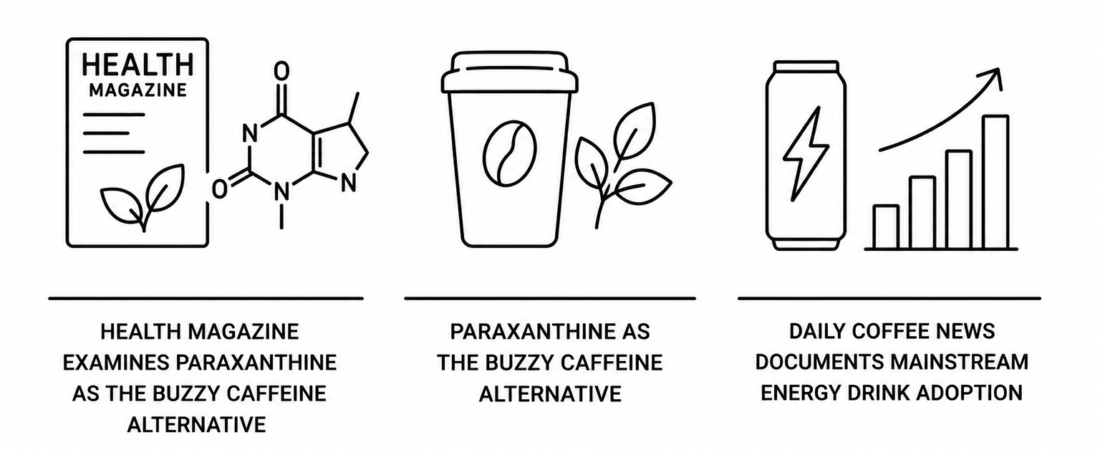
Health Magazine Examines Paraxanthine vs Caffeine in Energy Drinks
According to a May 21 Health magazine analysis, paraxanthine — the primary metabolite the body produces when it breaks down caffeine — has become the buzzy energy ingredient now appearing in caffeine-free energy drinks and functional beverages. According to the report, paraxanthine accounts for more than 70 percent of caffeine metabolism in the human liver and acts on many of the same adenosine signaling pathways as caffeine itself. The May 21 coverage frames paraxanthine as a potential alternative for consumers sensitive to caffeine’s jitters and crash pattern, while noting that long-term human research remains limited.
Daily Coffee News Reports on Paraxanthine Entering Mainstream Beverages
According to a May 18 Daily Coffee News analysis distributed through May 21 coverage, paraxanthine is now appearing in commercial energy drinks, caffeine-free coffee products, and pre-workout supplements at scale — driven in part by celebrity-backed launches including Kim Kardashian’s Update beverage line, which uses paraxanthine in place of caffeine. According to the broader analysis, paraxanthine’s stimulant effects on attention and alertness reportedly last several hours, broadly consistent with the timings documented in small experimental trials. However, large independent head-to-head trials comparing paraxanthine to caffeine in humans are still lacking.
Caffeine Retains Decades of Documented Safety and Performance Research
According to the same May 21 Health magazine analysis and a parallel Healthline interview with registered dietitians, caffeine retains an extensive multi-decade record of human safety and performance research that paraxanthine does not yet match. According to research cited through the coverage, one published comparison documented that caffeine produced a greater increase in blood pressure than paraxanthine at comparable doses, while a separate study reported paraxanthine performed marginally better on certain cognitive tests. The directional evidence is interesting but the human research base on paraxanthine remains far smaller than caffeine’s.
What the Paraxanthine Debate Means for the Caffeine Category
According to the combined Health magazine, Daily Coffee News, and Healthline coverage, the operational implication for the broader caffeine category is that consumer attention is bifurcating along two parallel paths: dose-precise natural caffeine on one side, and emerging caffeine-free metabolite alternatives like paraxanthine on the other. According to the broader industry pattern, the brands gaining the most retail traction are those that clearly disclose ingredient sourcing, dose precision, and intended use cases — regardless of whether they sit on the caffeine or caffeine-alternative side of the consumer ledger.
Jiggle delivers the dose-precise natural caffeine the May 22 Health magazine coverage identifies as one of the two consumer-preferred pathways in the modern energy category. Each gummy contains a known, fixed dose of caffeine sourced from green tea extract and guarana — naturally derived caffeine that metabolizes through the same paraxanthine pathway the May 22 research describes, but with the multi-decade human safety record that caffeine itself retains. With no artificial ingredients, GMP certification, and the portable 12-pack format, the product sits squarely in the natural-caffeine consumer segment, continuing to grow alongside the caffeine-alternative emergence. Learn more at jiggle.cafe.
Beverage industry analysts note that paraxanthine’s emergence as a commercial caffeine alternative is likely to develop in parallel with — rather than as a replacement for — the natural caffeine category, and that the long-term consumer landscape will likely include both sourcing pathways serving different sensitivity profiles, use cases, and product format preferences.