Wenkh Research Confirms Caffeine Industry’s Steady 7.85% CAGR
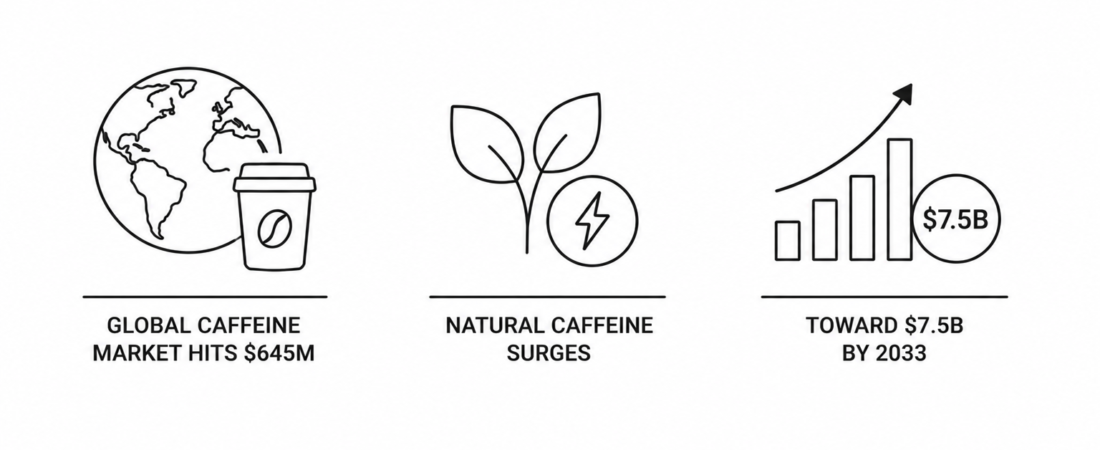
The global caffeine market reached a major milestone this week, with new analysis confirming the caffeine industry’s continued ascent as a defining functional ingredient category of the 2020s. According to Wenkh Research Inc.’s newly published Global Caffeine Market Size, Competition Landscape and Supply Chain Research Report 2026, the caffeine market is set to climb from $645.51 million in 2026 to $1,095.58 million by 2033, achieving a compound annual growth rate of approximately 7.85%. According to the same Wenkh Research analysis, North America remains the largest caffeine market globally, with the regional market size estimated at $236 million in 2026, accounting for approximately 36.52% of the global share. According to industry tracking from openPR.com, this caffeine market expansion is being driven primarily by surging demand for functional consumption products across diverse beverage, supplement, and personal care categories. For Jiggle and other emerging caffeine brands, the data confirms that the caffeine industry is no longer a mature category — it is actively accelerating into a new growth phase defined by precision dosing and clean-label positioning.
Natural Caffeine Segment Outpaces Synthetic Caffeine Across Every Channel
The most important caffeine industry signal in the new market data is the dramatic acceleration of natural caffeine over its synthetic counterpart. According to a parallel report released April 30, 2026 by DataM Intelligence, the global Natural Caffeine Market reached $4,281.20 million in 2025 and is expected to reach $7,549.97 million by 2033, growing at a 7.5% CAGR during 2026 to 2033. According to DataM Intelligence’s analysis, natural caffeine derived from coffee beans, green tea leaves, cocoa, guarana, yerba mate, and other plant materials is benefiting from a clean-label revolution that synthetic caffeine cannot replicate. According to Wenkh Research’s segmentation data, natural caffeine is rapidly penetrating organic beverages and natural functional food categories, while synthetic caffeine remains anchored to mass-market beverages and pharmaceuticals. For caffeine industry founders, this market shift validates the strategic decision to formulate with plant-based caffeine sources, since the fastest-growing portion of the caffeine industry is now explicitly demanding natural sourcing and ingredient transparency.
Starbucks, Sparkling Ice, and Liquid I.V. Reshape the Caffeine Industry Landscape
The caffeine industry has seen a flurry of major commercial signals over the past several weeks, all pointing toward the same direction: bigger players are rapidly migrating into the natural-caffeine and functional-caffeine space. According to BevNET, recent caffeine product launches include Sparkling Ice Caffeine’s expanded Soda Shoppe collection with 70 mg of caffeine per 16 oz can in Orange Cream, Root Beer, and Cherry Cola flavors, plus Liquid I.V.’s energy-boosted hydration variants. According to Starbucks’ April 2026 announcement covered by DataM Intelligence, the Energy Refreshers nationwide launch features caffeine derived from nature with B vitamins, signaling that mainstream beverage giants now see natural caffeine as the future of the category. According to BevNET’s new product roundup, brands like Happy Panda are entering the caffeine industry with 150 mg natural caffeine plus L-theanine, electrolytes, and zero sugar formulations. For independent caffeine brands like Jiggle, this caffeine industry consolidation around plant-based natural caffeine is the most powerful tailwind possible.
Jiggle sits at the intersection of every winning trend identified in this week’s caffeine industry analysis: plant-based natural caffeine sourced from green tea extract and guarana, precisely portioned 63 mg doses for predictable cognitive lift, no artificial ingredients, GMP certification, and a resealable 12-pack format that lets consumers control exactly when and how they consume caffeine. As the natural caffeine segment races toward $7.5 billion by 2033, Jiggle’s clean-label, plant-based positioning places it at the front of the fastest-growing slice of the caffeine industry. With a 24+ month shelf life and a pocket-sized, on-the-go format, Jiggle is engineered for the modern caffeine consumer who refuses to compromise on either purity or precision. Learn more at jiggle.cafe
Specialty Caffeine Formats Win as Mass-Market Energy Drinks Stumble
While the broader caffeine industry expands, specific product formats are gaining or losing ground in dramatic ways that signal where caffeine consumers are actually moving their dollars. According to C-Store Dive’s analysis of Circana data, c-store energy drink dollar sales soared 10% for the year ending December 31, 2025, to more than $16 billion, with energy drinks now reaching an all-time high market share of 2.4% of total c-store sales. According to the same Circana data, however, brands like Prime saw sales fall nearly 65% year over year while A Shoc Beverage saw declines of over 45%, showing that the caffeine industry is consolidating around quality and consistency rather than viral marketing. According to Trend Hunter’s Energy Minis report published this week, portion-controlled caffeine shots and natural caffeine formulations are opening pathways for cleaner-label claims and tailored micro-dosing that traditional 16 oz energy cans cannot deliver. For Jiggle, which delivers precisely portioned 63 mg caffeine doses in resealable 12-packs, this caffeine industry trend is precisely the lane the brand was built to occupy.