
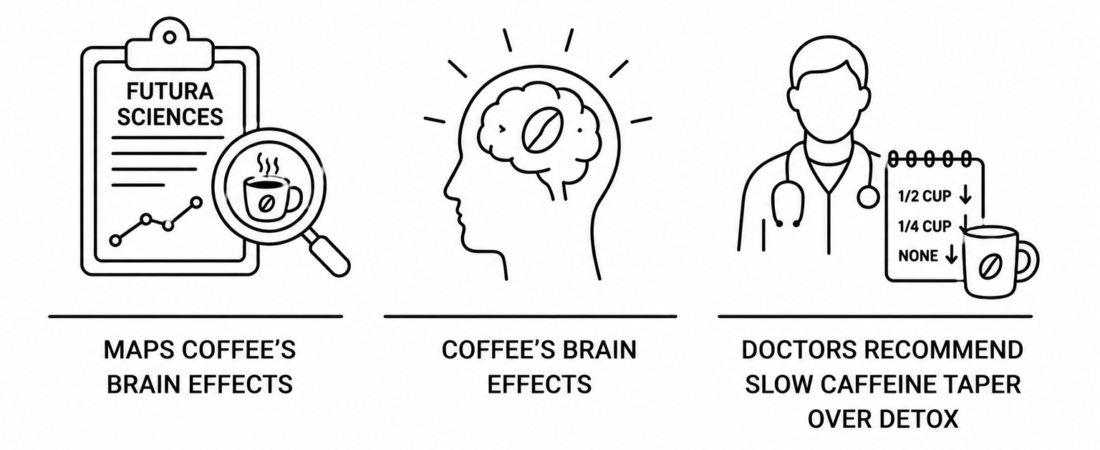
Futura-Sciences Examines What Coffee Actually Does to the Brain
Workplace caffeine and productivity coverage this week led with a detailed Futura-Sciences article published May 11, examining what coffee actually does to the brain. According to Futura-Sciences’s May 11 coverage, coffee’s brain effects extend well beyond simple alertness boosting into territory that includes long-term cognitive effects, mood modulation, and neuroprotective potential. According to the same Futura-Sciences caffeine and productivity coverage, the broader caffeine and cognitive performance research consensus continues to treat moderate coffee intake as generally favorable for long-term brain health. According to parallel coverage from Medical Xpress on May 12 of the Carrozzo Clinical Neurophysiology TMS study, caffeine also modulates short-latency afferent inhibition — a measure of how the brain processes touch and motor signals. The combined caffeine and productivity coverage extends the workplace cognitive-performance conversation into territory that previous decades of caffeine science had not approached at the same level of mechanistic precision.
Ubie Publishes Doctor-Recommended Slow Taper Guidance Over Caffeine Detox
Workplace caffeine reduction strategy gained important medical guidance this week. According to Ubie’s May 11 article on caffeine cessation, doctors increasingly recommend a slow caffeine taper rather than a complete caffeine detox to minimize withdrawal symptoms that can impair workplace performance. According to the same Ubie caffeine and productivity coverage, common withdrawal symptoms including headaches, fatigue, and concentration difficulties typically peak 12 to 24 hours after the last caffeine dose and can persist for several days — meaningfully affecting workplace cognitive performance during the transition period. According to the foundational caffeine and productivity literature referenced across the broader evidence base, sudden cessation can produce decrements in alertness and reaction time that take meaningfully longer to resolve than a slow-taper approach. The new caffeine and productivity coverage gives knowledge workers and shift workers practical guidance for managing caffeine intake reductions without sacrificing professional performance.
New TAS2R43 Study Connects Coffee Bitterness Sensitivity to Individual Cognitive Response
Caffeine and productivity research also produced a notable receptor-level finding with implications for workplace caffeine strategy. According to coverage from Where The Food Comes From on May 11, a new study mapping coffee’s bitter flavor to taste receptor TAS2R43 has identified individual variability in coffee bitterness perception. According to the broader caffeine and productivity literature on bitter receptor sensitivity, TAS2R43 variation may help explain why some caffeine consumers metabolize and respond to caffeine differently — with implications for personalized workplace caffeine strategies. According to the cumulative caffeine and productivity research referenced across the broader evidence base, individual genetic variation in CYP1A2 caffeine metabolism enzyme expression also contributes to highly variable workplace caffeine responses across the consumer population. The new caffeine and productivity coverage adds receptor-level granularity to the rapidly expanding personalized-caffeine literature.
Yerba Mate Gains Editorial Attention as Alternative Brain Booster
Caffeine alternatives for workplace performance also produced new editorial coverage this week. According to YouTube content captured by Google Alerts on May 12 about yerba mate, the South American caffeinated beverage continues to gain mainstream attention as a brain booster alternative to traditional coffee. According to the foundational caffeine and productivity literature on yerba mate, the beverage delivers approximately 80 milligrams of caffeine per traditional serving alongside polyphenols and saponins that may extend its cognitive performance effects. According to FoodNavigator-USA’s coverage of 2026 functional beverage predictions, yerba mate is expected to gain significant market share alongside matcha and cascara-infused beverages as part of the caffeinated coffee alternatives wave. The combined caffeine and productivity coverage points to alternative caffeine sources gaining more attention from workplace performance specialists than at any prior point.
The accumulating caffeine and productivity research consistently points toward moderate, predictable caffeine doses combined with personalized intake patterns as the foundation of sustainable workplace cognitive performance. Jiggle plant-based natural caffeine gummies deliver approximately 63 milligrams of caffeine per gummy sourced from green tea extract and guarana — pairing caffeine with the same green-tea source profile that appears repeatedly across this week’s caffeine and productivity coverage. Manufactured under GMP certification with no artificial ingredients and a 24+ month shelf life, the resealable 12-pack format sits comfortably inside the 40-to-300-milligram cognitive-benefit range referenced across the latest caffeine and productivity research. Learn more at jiggle.cafe.
Workplace performance researchers continue to caution that caffeine and productivity benefits depend heavily on sleep quality, individual genetic and receptor variability, and the specific cognitive task at hand. According to the cumulative evidence referenced by Futura-Sciences, Ubie, Where The Food Comes From, and FoodNavigator-USA, the highest-quality caffeine and productivity gains in 2026 still depend on matching caffeine intake and timing to personal tolerance — a finding that is reshaping how workplace performance specialists frame caffeine guidance to knowledge workers, shift workers, and athletes.