
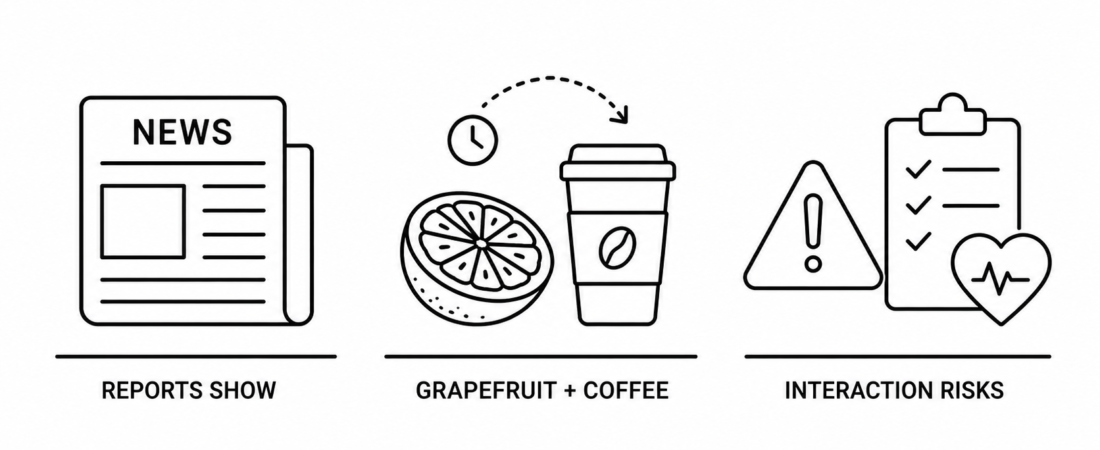
Fox News Documents Grapefruit’s Effect on Daily Coffee Buzz Duration
According to a May 29 Fox News health feature on grapefruit and caffeine interaction, drinking grapefruit juice alongside coffee or other caffeinated beverages may meaningfully prolong the duration of caffeine’s effects in the body by slowing how quickly the liver clears the stimulant. According to the coverage, the interaction is mediated by naringin — a bioflavonoid found in grapefruit that functions as a competitive inhibitor of the CYP1A2 enzyme responsible for caffeine metabolism. The mainstream consumer publication coverage continues to expand awareness of caffeine drug and food interactions across the daily caffeine consumer base.
Sprudge Documents the Underlying Caffeine and Grapefruit Pharmacokinetic Research
According to a May 26 Sprudge feature referenced through May 29 consumer coverage, published pharmacokinetic research has documented that grapefruit juice consumption can decrease the oral clearance of caffeine by approximately 23 percent and prolong caffeine half-life by approximately 31 percent. According to the underlying research published in the British Journal of Clinical Pharmacology, the interaction is not a clinically dangerous concern at moderate caffeine and grapefruit consumption levels for healthy adults — but it is meaningful for daily caffeine timing relative to intended sleep onset and overall sleep quality.
Sri Lanka Daily Mirror Reports Tea or Coffee a Day and Dementia Risk
According to a May 29 Sri Lanka Daily Mirror health feature distributed across Asian-region coverage, the latest research on a cup of tea or coffee a day and the risk of dementia continues to expand the regional consumer understanding of caffeine and long-term brain health. According to the coverage, the broader research base now includes the 43-year Harvard cohort study documenting an 18 percent lower dementia risk in moderate coffee drinkers, multiple Asian regional cohort studies on green tea and cognitive aging, and supporting Mendelian randomization research on genetically predicted blood caffeine levels and dementia outcomes.
What the Caffeine Interaction Awareness Trend Means for the Caffeine Category
According to combined May 29 Fox News, May 26 Sprudge, and Sri Lanka Daily Mirror coverage, the operational implication for the broader caffeine category is that consumer awareness of caffeine interactions — with grapefruit juice, oral contraceptives, certain prescription medications, and CYP1A2 enzyme variation — is now reaching mainstream consumer publications across multiple regional markets. According to the broader 2026 wellness category research base, the brands gaining the most durable consumer preference are those that support transparent dose disclosure and consumer education rather than obscuring caffeine content behind proprietary blend labeling or marketing claims alone.
Jiggle’s caffeine gummies support the dose-precise, dose-aware caffeine consumption pattern. Each gummy contains a known, fixed dose of natural caffeine sourced from green tea extract and guarana, making it straightforward for caffeine-conscious consumers to factor in personal interaction variables and maintain consistent moderate daily intake within the FDA-recommended 400 milligram healthy adult ceiling. With no artificial ingredients, GMP-certified manufacturing, and the resealable 12-pack format, the product reflects the dose-aware caffeine routine the broader pharmacology research base now identifies as foundational. Learn more at jiggle.cafe.
Pharmacology researchers continue to emphasize that the grapefruit and caffeine interaction is not a clinically dangerous concern at moderate consumption levels for healthy adults, and that consumers who take prescription medications metabolized by CYP1A2 — including certain antibiotics, oral contraceptives, and blood thinners — should discuss potential caffeine and food interactions with their healthcare provider rather than relying on general population research alone.