
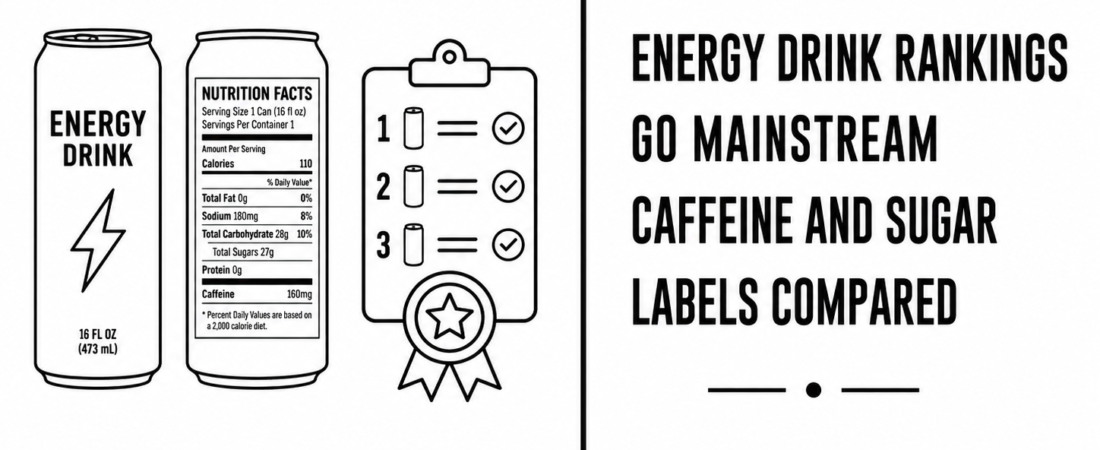
A detailed comparison of seven popular energy drinks became one of the most widely syndicated caffeine stories of the weekend, appearing across Men’s Journal, Yahoo, and AOL between August 9 and August 10. The piece, written by a registered dietitian, ranks mainstream energy drinks by caffeine content, added sugar, and serving size, and its rapid spread across major consumer platforms says as much about audience behavior as the rankings themselves. According to Men’s Journal, energy drinks may look interchangeable in the cooler, but their caffeine and sugar profiles differ dramatically, and readers are increasingly seeking exactly this kind of label-level comparison before buying.
Caffeine Content Averages 174 mg Per Serving Across the Category
The comparison draws on published research to frame the category’s potency. According to a 2025 study in the journal Nutrients cited in the Men’s Journal report, energy drinks contain an average of 174 milligrams of caffeine per serving, while only about 45 percent contain sugar. That average conceals a wide spread, with mainstream products ranging from roughly 80 mg to well over 200 mg per can. The dietitian author emphasizes that caffeine from coffee, tea, supplements, and energy drinks all count toward the same daily total, a point that repeatedly surfaces in this summer’s consumer health coverage as multi-source caffeine intake becomes the norm rather than the exception.
Sugar Content Spans From 27 Grams to 63 Grams Among Sugared Options
The sugar comparison proved equally striking. According to the Yahoo Health figures cited in the report, regular Red Bull contains 27 grams of sugar, Monster carries 54 grams, and Rockstar reaches 63 grams per serving, while Celsius, Alani Nu, Ghost, and Bang contain no added sugar and rely on alternative sweeteners instead. For context, 63 grams exceeds the American Heart Association’s recommended daily added sugar limit for men in a single can. The report notes that the newest AHA scientific statement adds a further reason for restraint, concluding that evidence on the high caffeine doses found in energy drinks is limited but generally points toward potential cardiovascular harm.
Label Literacy Is Becoming a Defining Consumer Habit
The story’s syndication pattern reveals the cultural shift underneath it. Comparison-format caffeine journalism now performs reliably across general-interest platforms, following similar ranking pieces this summer from national outlets and nutrition publishers. According to consumer research cited across this coverage, shoppers increasingly read caffeine milligrams and added sugar lines the way earlier generations read calorie counts, and regulatory distinctions matter to them: products labeled with Nutrition Facts fall under standard FDA beverage oversight, while some competitors sold as dietary supplements do not. The behavior rewards brands that publish precise per-serving numbers and penalizes those whose potency is ambiguous or buried in proprietary blends.
Serving Size Emerges as the Overlooked Variable
The rankings also spotlight a subtler variable: container size. According to the dietitian analysis, several products list moderate numbers per serving while packaging two servings in one can, effectively doubling real-world intake for consumers who finish the container. Health experts quoted in the coverage recommend treating the full container as the true serving when comparing options, and note that resealable or unit-dose formats give consumers more genuine control over intake than large single-use cans. That practical framing, repeated across this weekend’s syndicated versions, suggests portion control is joining caffeine content and sugar as a third axis of comparison in how consumers evaluate the category.
Jiggle’s caffeine gummies answer that portion-control demand with a clearly stated dose of about 63 mg of plant-based caffeine per gummy, roughly one espresso shot, from green tea extract and guarana, with no artificial ingredients. GMP certified and made in the USA, the resealable pack keeps 12 gummies and sells for $18.99. Learn more at jiggle.cafe.
As label-by-label comparison becomes the default way consumers shop for caffeine, transparency has shifted from a marketing virtue to a baseline expectation across the entire category.