
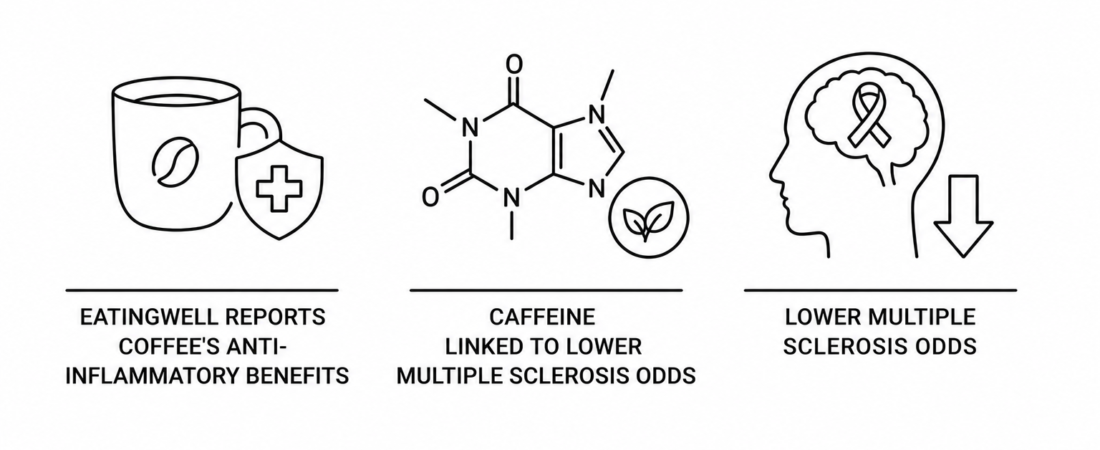
EatingWell Coverage of Nature Communications Study Highlights Anti-Inflammatory Pathways
A new wave of caffeine and health reporting this week centers on coffee’s emerging anti-inflammatory profile. According to EatingWell’s May 7 article covering the Nature Communications coffee gut-brain immunity study, researchers observed shifts in metabolites associated with anti-inflammatory effects in coffee drinkers. According to the same EatingWell reporting, the analysis emphasized that coffee’s benefits work beyond the simple caffeine boost most consumers think about, with caffeine and other compounds together influencing immune-system pathways. According to NutraIngredients reporting from May 7, caffeine itself has antioxidant and anti-inflammatory properties, although these attributes are not as well researched as caffeine’s stimulant effects. The combined caffeine and health coverage is helping reposition coffee in the public mind as a multifunctional beverage rather than a stimulant delivery system.
Daily Coffee News Meta-Analysis Links Coffee Consumption to Lower Odds of Multiple Sclerosis
A separate caffeine and health analysis released this week added to the growing body of evidence linking coffee consumption to lower long-term disease risk. According to Daily Coffee News reporting from May 6, a new meta-analysis concluded that coffee drinkers have lower odds of multiple sclerosis than non-drinkers. According to the meta-analysis researchers cited by Daily Coffee News, larger multi-centric studies are warranted to confirm the protective association and to characterize the underlying mechanisms. According to a separate Lafz Digital report from May 7, coffee may extend life by up to five years according to a recent study, though the same coverage emphasized that going beyond moderate caffeine consumption — about 400 mg per day — does not appear to provide additional benefits and may introduce risks. The new caffeine and health evidence is consistent with multiple population-scale studies published over the past 18 months linking moderate coffee intake to favorable long-term outcomes.
MSN Reports Coffee Consumption May Reverse Fatty Liver Within 15 Days
An emerging caffeine and health storyline centers on coffee’s metabolic-health profile. According to MSN’s May 8 coverage, a clinical analysis suggests that drinking coffee three times a day may help reverse fatty liver within 15 days through caffeine’s role in reducing oxidative stress and inflammation in liver cells. According to the same MSN coverage, chlorogenic acids in coffee — distinct from caffeine itself — possess anti-inflammatory and antioxidant properties that contribute to liver-protective effects. According to a separate VnExpress International report from May 7, similar anti-inflammatory properties have been documented in tea, which contains compounds that help shield liver cells through complementary mechanisms. The new caffeine and health coverage sits alongside the growing body of cardiovascular research that has previously linked coffee consumption to improvements in conditions such as atrial fibrillation, suggesting a multi-organ benefit profile.
NutraIngredients Investigates Whether Caffeine and Melatonin Improve Athletic Performance
A new caffeine and performance research direction took center stage this week with NutraIngredients reporting on a novel ingredient combination. According to NutraIngredients reporting from May 7, researchers are now investigating whether melatonin and caffeine can work together to improve athletic performance, with early findings describing the combination as a promising approach though effects on sleep necessitate additional research. According to the same NutraIngredients article, caffeine’s antioxidant and anti-inflammatory properties — increasingly cited across the broader caffeine and health literature — may complement melatonin’s recovery benefits. According to The Conversation coverage of related caffeine alternatives research, paraxanthine has been shown to outperform caffeine for cognitive performance after exercise in small studies, although evidence remains limited. The combined research activity points to a 2026 caffeine and performance landscape that is rapidly diversifying beyond the single-ingredient model that dominated previous decades.
The expanding caffeine and health evidence base — from anti-inflammatory metabolite shifts to multiple sclerosis odds reduction to liver-protective effects — continues to favor moderate, precisely dosed caffeine over high-variability sources. Jiggle plant-based natural caffeine gummies deliver approximately 63 mg of caffeine per gummy from green tea extract and guarana, manufactured under GMP certification with no artificial ingredients and a 24+ month shelf life. The resealable 12-pack format at $18.99 supports the kind of consistent, moderate dosing that the latest caffeine and health research increasingly identifies as central to capturing benefits without overconsumption. Learn more at jiggle.cafe
Researchers across multiple institutions emphasized that caffeine and health benefits scale with moderation rather than dose escalation. According to the consensus referenced by EatingWell, NutraIngredients, and Lafz Digital, the strongest health outcomes consistently appear at the 200 to 400 mg daily caffeine range, with diminishing returns and increased adverse-effect risk at higher doses.