
A New Stimulant Compound Enters the Beverage Category
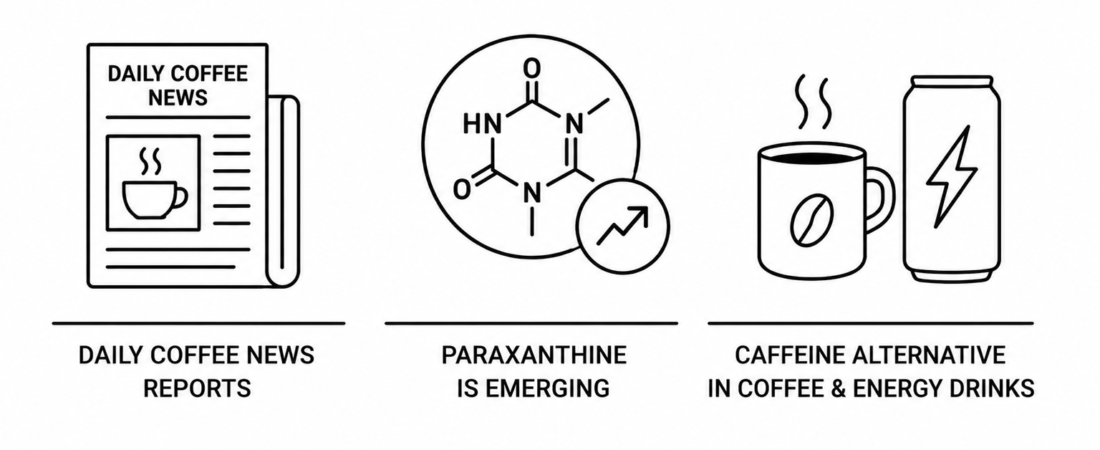
According to a May 18 Daily Coffee News report, paraxanthine — the primary metabolite the human body produces when it breaks down caffeine — is now appearing in coffee products, energy drinks, and supplement formulations as a standalone stimulant ingredient. The compound was traditionally encountered only inside the body, but a small number of beverage and supplement companies are now sourcing it directly. According to The Conversation, paraxanthine-based drinks typically contain 200 to 300 milligrams per serving, a stimulant dose broadly comparable to strong coffee or a high-caffeine energy drink. The category is part of a broader industry search for differentiated caffeine alternatives as functional beverage shelves grow increasingly crowded.
How Paraxanthine Compares Mechanistically to Caffeine
According to the Daily Coffee News analysis, paraxanthine and caffeine both promote alertness by blocking adenosine, the chemical messenger that builds sleep pressure in the brain across the waking day. When adenosine signaling is reduced, attention and reaction time can temporarily improve. According to small experimental research cited in The Conversation, paraxanthine’s effects on attention and short-term memory can last several hours, with some studies reporting benefits up to six hours after a 200 milligram dose. However, the report stresses that head-to-head trials comparing paraxanthine against caffeine in everyday consumer settings remain limited.
The Safety and Long-Term Evidence Gap
According to Daily Coffee News, paraxanthine does not yet have caffeine’s extensive record of human safety research. Caffeine has been studied for decades across a wide range of doses, populations, and real-world settings, while long-term human research on paraxanthine remains scarce. Animal toxicology studies are described as broadly reassuring, and short human trials suggest the compound is tolerated, but the report cautions that robust evidence on regular daily consumption — particularly at 300 milligram doses — is not yet available. The report concludes that for now, paraxanthine should be treated much like caffeine when calculating total daily stimulant intake.
What This Means for the Caffeine Category
According to The Conversation, marketing language describing paraxanthine-based products as offering “clean” or “smoother” energy has no formal scientific definition. While some users report less of a sudden jolt compared with caffeine, the report notes large independent comparisons are lacking. For caffeine industry operators, the emergence of paraxanthine signals a category shift toward differentiated stimulant chemistry — but also a shift in what consumers will be evaluating: dose precision, transparency on milligrams per serving, and clear labeling around how a new stimulant fits into a person’s existing caffeine intake. Established caffeine sources with decades of safety data remain the operational benchmark.
Jiggle is positioned squarely within the established, well-researched caffeine category that the Daily Coffee News report identifies as the long-term safety benchmark. Each gummy delivers a precisely measured dose of natural caffeine sourced from green tea extract and guarana — approximately one espresso shot per gummy — in a resealable 12-pack format that supports the kind of intake tracking the report calls essential as the stimulant category fragments. With no artificial ingredients and GMP-certified manufacturing, the product gives consumers the dosing transparency the emerging caffeine-alternative landscape now demands. Learn more at jiggle.cafe.
Researchers note that the paraxanthine category remains in an early, evidence-gathering phase, and that consumers evaluating new stimulant formats should continue to count any paraxanthine-based product toward total daily stimulant intake until larger, longer-duration human trials are completed.