
APC Microbiome Ireland Decodes the Gut-Brain Coffee Connection
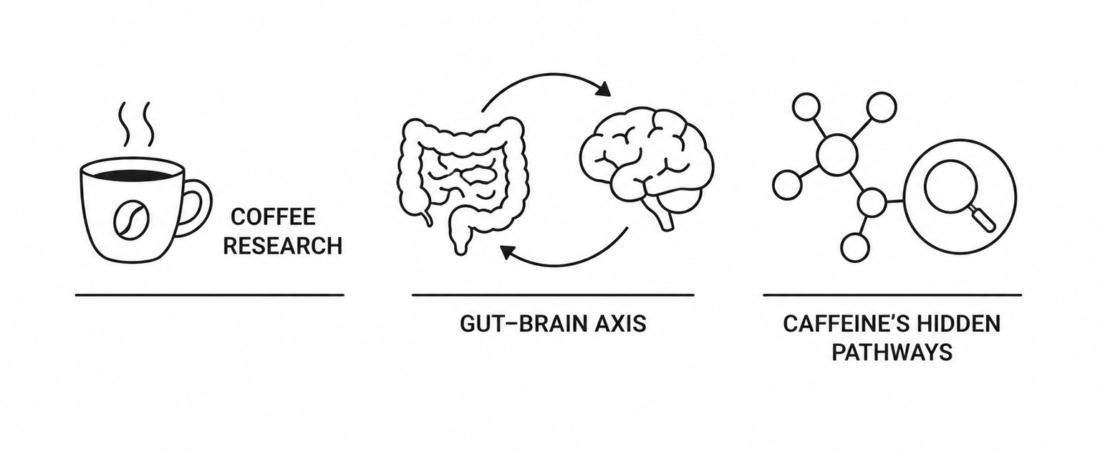
A landmark caffeine science study published this month in Nature Communications has fundamentally rewritten the conversation around how coffee delivers its cognitive and emotional benefits, revealing pathways that extend far beyond the simple stimulant effect of caffeine itself. According to researchers at APC Microbiome Ireland, a leading research center at University College Cork, both caffeinated and decaffeinated coffee actively reshape the gut microbiome in ways that influence mood, stress resilience, and cognition. According to the published findings in Nature Communications volume 17, coffee drinkers showed significantly increased relative abundance of Cryptobacterium and Eggerthella species, demonstrating that caffeine intake meaningfully alters microbial communities. According to lead investigator commentary, the study represents the first detailed examination of how coffee interacts with the bidirectional communication network linking the digestive system and the brain. This caffeine science breakthrough places gut-microbiome modulation alongside adenosine-receptor blockade as a primary mechanism through which caffeine consumption supports daily focus and emotional regulation.
Caffeinated and Decaffeinated Coffee Deliver Distinct Caffeine Benefits
One of the most striking caffeine science revelations from the new study is that caffeinated and decaffeinated coffee produce overlapping but distinct physiological benefits. According to ScienceDaily’s coverage of the University College Cork research, caffeinated coffee specifically reduced anxiety and sharpened focus, while decaffeinated coffee delivered surprising improvements in learning, memory, and sleep quality. According to the Nature Communications data, caffeinated coffee drinkers showed measurable decreases in perseverance scores and negative urgency on validated impulsivity assessments, while decaffeinated drinkers showed reductions in positive urgency and improvements on the Pittsburgh Sleep Quality Index. According to the trial’s secondary outcome measurements, both groups improved on the ModRey episodic memory test, suggesting that the cognitive benefits of caffeine consumption work through both caffeine-dependent and caffeine-independent pathways. For consumers focused on dose precision, this caffeine science evidence underscores why knowing your exact caffeine intake matters more than ever, since the molecule itself drives a specific subset of the benefits attributed to coffee.
Why Caffeine Dose Precision Now Matters More Than Ever
The Nature Communications findings have profound implications for the entire caffeine industry, which has long marketed coffee benefits as monolithic. According to the study authors, the differential effects of caffeinated versus decaffeinated coffee mean that consumers seeking specific outcomes — focus and anxiety reduction versus memory and sleep — should consider their caffeine source carefully. According to corroborating commentary from psypost.org, recent research has consistently shown that 400 mg caffeine doses can disrupt sleep up to twelve hours before bedtime, while smaller, precisely measured caffeine doses produce predictable cognitive lift without these costs. According to the FDA’s published guidance referenced throughout the field, healthy adults are advised to keep total daily caffeine intake at or below 400 mg. This caffeine science evidence positions precise dosing — not blunt cup-counting — as the foundation of any modern caffeine strategy, particularly for working professionals who need reliable, consistent cognitive performance from their caffeine consumption.
This emerging caffeine science is exactly what informed the development of Jiggle. Each Jiggle plant-based natural caffeine gummy delivers approximately 63 mg of caffeine sourced from green tea extract and guarana — a precisely portioned dose that lets consumers harness the focus and anxiety-reducing benefits highlighted in the Nature Communications gut-brain research without the variability and overconsumption risks of cup-by-cup brewing. With no artificial ingredients, GMP certification, and 24+ month shelf life, Jiggle gives modern professionals control over their caffeine intake at a level that traditional coffee simply cannot match. Available in resealable 12-packs at $18.99, Jiggle is engineered for the era of precise caffeine science. Learn more at jiggle.cafe.
From Lab to Daily Routine: Translating Caffeine Science into Practical Use
Translating these caffeine science findings into a daily routine requires consumers to think differently about their caffeine consumption. According to the Nature Communications publication, the gut-brain axis effects emerged with habitual coffee intake of approximately four cups per day, but the cognitive and anxiety-reducing effects attributable to caffeine itself were achieved at much lower doses. According to coverage by ScienceDaily, the researchers emphasized that coffee benefits operate through multiple complementary pathways, meaning consumers do not need megadoses of caffeine to capture meaningful benefits. According to the broader 2026 caffeine science consensus published in AJMC’s recent sleep review, total daily caffeine consumption of 200 to 300 mg from precisely measured sources delivers the bulk of cognitive benefit while preserving sleep architecture. For people who want the focus, anxiety reduction, and gut-brain support that caffeine science now confirms, the answer is no longer about more caffeine — it is about better caffeine timed and dosed with intention.