
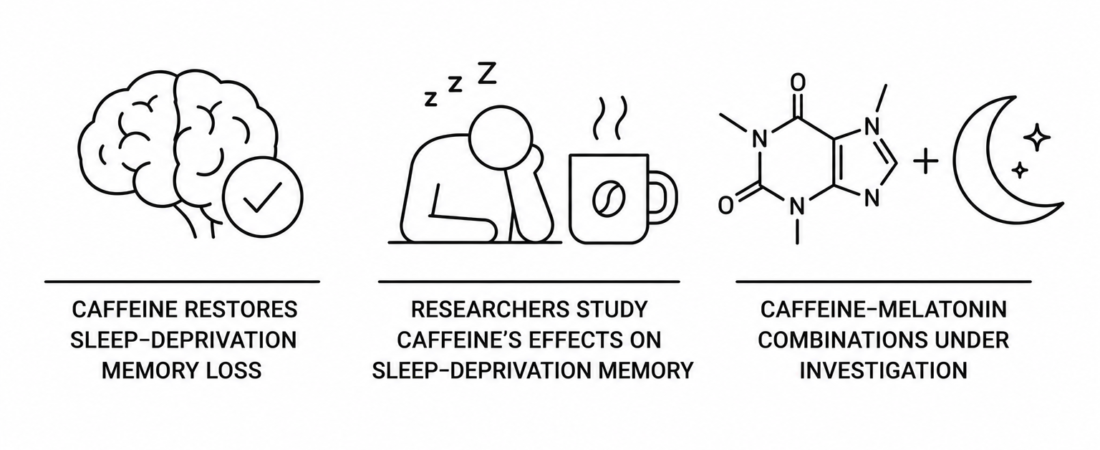
NUS Medicine Findings Suggest Caffeine Selectively Repairs Memory Circuits
Workplace productivity researchers have been quick to highlight the practical implications of new caffeine and cognitive performance research from Singapore. According to MindBodyGreen’s May 7 coverage of the NUS Medicine study, sleep deprivation specifically disrupts neural circuits involved in social memory — the ability to recognize and distinguish familiar individuals — and caffeine reversed many of these effects. According to the same MindBodyGreen reporting, the caffeine effect was pathway-specific rather than a generalized stimulant boost, suggesting consistent caffeine intake may have selective protective effects on memory circuits relevant to professional performance. According to ScienceAlert’s coverage of the same study, the researchers framed the findings as evidence that caffeine’s benefits may extend beyond simply helping people stay awake into the territory of targeted cognitive protection. For knowledge workers and shift workers operating under sleep-restricted conditions, the new caffeine and cognitive performance research strengthens an already substantial evidence base.
Paraxanthine Study Shows Cognitive Function Gains After 10-Kilometer Runs
Beyond caffeine itself, the broader nootropic stimulant landscape produced new caffeine and cognitive performance evidence relevant to workplace productivity. According to a 2024 Texas A&M University study published in the Journal of the International Society of Sports Nutrition, paraxanthine ingestion before exercise improved prefrontal cortex function, attenuated attentional decline, mitigated cognitive fatigue, and improved reaction time and vigilance compared to caffeine alone. According to the same Texas A&M research, adding caffeine to paraxanthine did not provide additional cognitive benefits, suggesting paraxanthine may serve as a viable nootropic alternative in caffeine and cognitive performance contexts. According to a more recent study published December 23, 2025 in the same journal, acute paraxanthine ingestion also increased energy, focus, and satiety — enhancing postprandial cognitive performance in young adults. The evidence base for stimulant-driven cognitive performance is now broader than at any prior point.
Workplace Caffeine and Productivity Research Continues to Validate Moderate Dosing
Established caffeine and productivity research continues to find new editorial purchase as workplace performance becomes a defining concern of the 2026 economy. According to the foundational PubMed-indexed Caffeine at Work study, caffeine consumers reported significantly greater increases in alertness over the working day and a significantly smaller slowing of reaction time compared to lower-caffeine consumers. According to the same Caffeine at Work analysis, after controlling for confounding factors, higher caffeine consumption was associated with about half the risk of frequent or very frequent cognitive failures and a similar reduction in risk for accidents at work. According to ScienceDirect’s review of caffeine’s effects on cognitive, physical, and occupational performance, low to moderate caffeine doses of approximately 40 mg to 300 mg deliver measurable improvements in alertness, vigilance, attention, and reaction time. The combined caffeine and productivity evidence positions moderate caffeine as one of the most validated workplace performance tools available.
Melatonin-Caffeine Combinations Open a New Frontier for Performance Research
An emerging caffeine and performance research direction may reshape how productivity-focused caffeine consumers think about cognitive optimization. According to NutraIngredients reporting from May 7, researchers are now investigating whether melatonin and caffeine can work together to improve athletic performance, describing the combination as a promising approach. According to the same NutraIngredients coverage, the caffeine-melatonin combination’s effects on sleep necessitate additional research before mainstream productivity applications can be recommended. According to The Conversation’s caffeine alternatives coverage, the broader stimulant-research community is increasingly focused on identifying combinations and alternatives that match caffeine’s cognitive performance benefits with improved tolerability. According to the U.S. Army Medical Research and Development Command’s published 2B-Alert Web 2.0 utility study, computer-based fatigue-management systems can identify safe and effective caffeine interventions that maximize stimulating benefits, suggesting future caffeine and productivity research will increasingly emphasize personalized dosing protocols.
The accumulating caffeine and productivity research consistently points toward moderate, precisely portioned caffeine as the foundation of sustainable cognitive performance. Jiggle plant-based natural caffeine gummies — sourced from green tea extract and guarana, manufactured under GMP certification, free of artificial ingredients, and packaged in resealable 12-packs at $18.99 with a 24+ month shelf life — deliver approximately 63 mg of caffeine per gummy. The dosage falls inside the 40 mg to 300 mg cognitive-benefit range identified by ScienceDirect’s caffeine and cognitive performance review, supporting the kind of consistent intake patterns that the latest caffeine and productivity research increasingly emphasizes. Learn more at jiggle.cafe
Workplace performance researchers caution that caffeine and productivity benefits depend heavily on individual genetic variability, sleep quality, and timing relative to bedtime. According to the cumulative evidence referenced by NutraIngredients, MindBodyGreen, and ScienceDirect, the highest-quality caffeine and cognitive performance gains in 2026 still depend on matching caffeine intake to personal tolerance and the demands of the specific cognitive task at hand.