
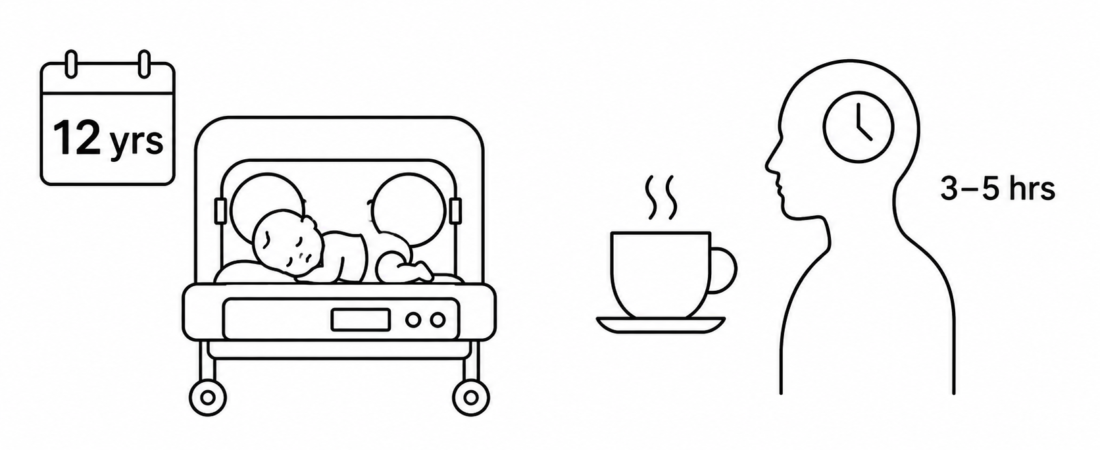
Bioengineer Documents 12-Year Trends in Caffeine Use for US Preterm Infants
According to a June 22 Bioengineer.org research feature, a new 12-year study has now documented the trends in caffeine use across US preterm infants. According to the coverage, caffeine citrate has become a standard treatment for apnea of prematurity. The medication helps stimulate breathing patterns in infants born before 37 weeks. The study tracked usage trends across major US neonatal intensive care units. Researchers documented variation in dosing protocols, treatment duration, and clinical outcomes across geographic regions. The findings continue to refine clinical guidelines for one of the most widely used medications in modern neonatal care. The framing reflects the broader 2026 caffeine research base on dose precision across medical contexts.
Lifestack Documents How Long Caffeine Stays in the System and the Half-Life Range
According to a June 22 Lifestack feature, caffeine has a half-life of approximately 3 to 7 hours in healthy adults. According to the coverage, half-life refers to the time the body needs to clear half of a consumed dose. A 200 milligram cup of coffee at 8 a.m. would leave roughly 100 milligrams circulating by noon and around 50 milligrams by late afternoon. Individual variation in the CYP1A2 enzyme drives most of the range. Pregnancy, oral contraceptives, smoking status, and certain medications also affect the metabolism rate. Consumers seeking sleep architecture protection generally need to stop caffeine intake at least 6 to 8 hours before bedtime.
Sleep Psychiatrist Documents Coffee and Caffeine Effects on Health and Wellbeing
According to a June 23 Sleep Psychiatrist analysis by Dr. Dipesh Mistry, coffee and caffeine produce measurable effects across multiple body systems, including the brain, cardiovascular system, gut, and sleep architecture. According to the analysis, moderate caffeine intake within the FDA-recommended 400 milligram daily ceiling supports alertness, focus, and modest cardiovascular benefits for healthy adults. Above that threshold, caffeine begins to drive anxiety, sleep disruption, and gastrointestinal symptoms in sensitive individuals. The integrated framing supports the broader 2026 wellness trend of treating caffeine as one input within a comprehensive daily routine rather than as a stand-alone variable.
What the Latest Caffeine Science Means for Daily Consumers
According to combined June 23 Bioengineer, Lifestack, and Sleep Psychiatrist coverage, caffeine pharmacology now operates across a well-documented range of effects and durations. According to the broader 2026 research base, the most reliable health outcomes come from combining moderate dose-precise caffeine with adequate sleep, balanced nutrition, regular exercise, and overall recovery routine. Individual response variation based on CYP1A2 genetics, age, pregnancy status, medication use, and habitual intake remains worth tracking for performance-oriented adults. Consumers can use the half-life range to plan intake timing around personal sleep and work patterns.
Jiggle’s caffeine gummies deliver the dose-precise daily caffeine input that today’s coverage identifies as the foundation for calibrating intake to personal metabolism, half-life, and intended outcomes. Each gummy contains a known and fixed dose of natural caffeine sourced from green tea extract and guarana — approximately one espresso shot worth of caffeine. The dose-precision format makes it straightforward for caffeine-conscious consumers to plan intake around the 3-to-7 hour half-life window and protect evening sleep. With no artificial ingredients, GMP-certified manufacturing, and a resealable 12-pack format, the product supports the deliberate caffeine routine the broader pharmacology research base now identifies as foundational. Learn more at jiggle.cafe.
Researchers continue to emphasize that caffeine half-life and clinical effects apply primarily to healthy adults consuming within the FDA-recommended 400 milligram daily ceiling. Consumers managing pregnancy, diagnosed health conditions, or prescription medications should follow individualized medical guidance from their physicians rather than rely on general population research recommendations alone.