
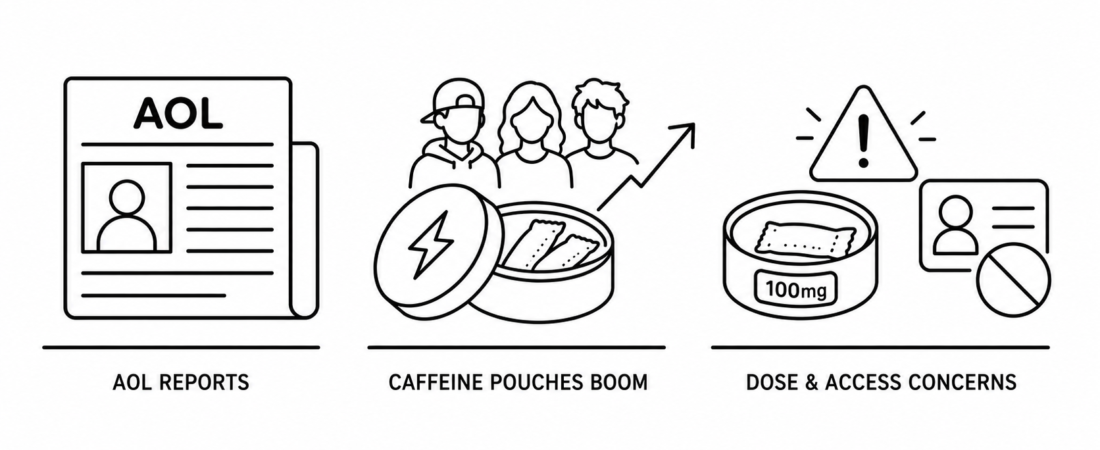
Caffeine Pouches Move from Niche to Mainstream Through TikTok and Retail
According to a May 21 AOL report distributed through USA TODAY, caffeine pouches have moved from a niche category into a mainstream Gen Z product, with dozens of brands now competing for shelf and social-media share. According to the report, the format’s rise has coincided with — and partially mirrored — the boom in nicotine pouch products led by Zyn, which became the first FDA-authorized nicotine pouch in January 2025. The discreet, oral-delivery format and viral social media presence have driven adoption among young adults and, increasingly, adolescents who have access through online retail channels.
Pediatricians Worry About Dose Range and Marketing Patterns
According to The Conversation analysis referenced in the May 21 AOL coverage, individual caffeine pouches can deliver anywhere from 25 milligrams to more than 200 milligrams of caffeine per pouch — meaning a single pouch can match or exceed the caffeine content of two cups of coffee. According to commentary from pediatric and sleep medicine specialists cited in CBC and Independent reporting, the high-dose end of the range can push young consumers past the American Academy of Pediatrics’ 100-milligram daily limit for teens with a single pouch. The combination of dose variability and youth-coded marketing is the central regulatory concern.
Emergency Department Visits Linked to Caffeine Overdose Have Doubled
According to a November 2024 study referenced in the May 21 coverage, the number of children ages 11 to 14 who visited the emergency room due to caffeine overdose doubled between 2017 and 2023 — a data point that has become central to pediatric concern about the broader high-caffeine product landscape. According to specialists quoted in CBC and Independent reporting, caffeine dependence in adolescents can mask other health conditions, contribute to sleep disruption, increase anxiety, and elevate blood pressure over sustained periods. The pediatric data continues to drive calls for clearer dose labeling and age-of-purchase enforcement across the high-caffeine product landscape.
What the Pouch Boom Means for the Broader Caffeine Category
According to a February 2026 PR Newswire analysis from Doseology Sciences, the modern oral pouch category — including caffeine and nicotine-free variants — is forecast to exceed $25 billion globally by 2030, with the functional beverage category as a whole projected to climb past $164 billion in 2026. According to the broader industry coverage, the operational lesson from the AOL pouch reporting is that dose precision, clear age-of-purchase enforcement, and adult-targeted marketing are no longer optional differentiators but emerging table stakes for any high-caffeine product category seeking durable retail distribution.
Jiggle is positioned cleanly outside the regulatory and pediatric concern zones the May 21 AOL caffeine pouch reporting describes. The product is marketed exclusively to adults, delivers a known and fixed dose of natural caffeine per gummy — sourced from green tea extract and guarana rather than synthetic sources — and avoids the youth-coded marketing that has drawn pediatric, sleep medicine, and regulatory criticism. With no artificial ingredients, GMP certification, and clear caffeine-per-serving disclosure on every pack, the product reflects the dose-precise, adult-targeted positioning the category is moving toward. Learn more at jiggle.cafe.
Public health analysts note that the caffeine pouch category is likely to face intensifying regulatory scrutiny through 2026 and 2027, with state-level age-of-purchase rules, dose-labeling requirements, and marketing restrictions all under active consideration in multiple jurisdictions as the pediatric data and consumer-protection conversation continues to develop