
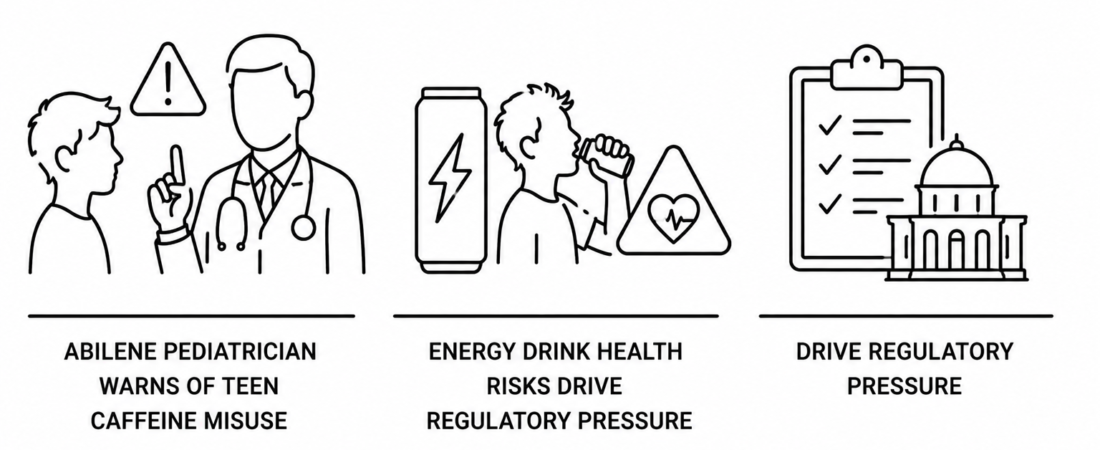
Abilene Pediatrician Highlights Teen Caffeine Misuse and Sleep Disruption
According to a May 22 AOL report featuring an Abilene-area pediatrician, the misuse of caffeine and energy drinks among teenagers is now linked to a measurable pattern of sleep disruption, academic performance issues, and emergency department visits. According to the pediatrician’s commentary in the AOL coverage, energy drink consumption in middle and high school students is contributing to a daily cycle in which caffeine is used to compensate for sleep deficit that caffeine itself is partially causing. The pediatric concern continues to expand from specialty medical journals into mainstream local news coverage across the United States.
Caffeine Overdose ER Visits Remain on a Documented Upward Trend
According to a November 2024 study referenced through May 22 caffeine overdose coverage, the number of children ages 11 to 14 who visited the emergency room due to caffeine overdose doubled between 2017 and 2023. According to the underlying data, the trend has continued through 2024 and 2025, with adolescent caffeine overdose cases now appearing in pediatric guidance documents from multiple medical institutions. The American Academy of Pediatrics maintains a suggested 100-milligram daily caffeine limit for teenagers, a threshold that can be exceeded by a single high-dose caffeine pouch or energy drink.
Loma Linda University Reiterates No-Energy-Drinks Pediatric Standard
According to a May 21 Loma Linda University News report referenced through ongoing May 22 coverage, pediatric specialists continue to reiterate that children and adolescents should not consume energy drinks under any circumstances. According to Dr. Marc Mazor, quoted across the Loma Linda coverage, energy drink ingredients can trigger restlessness, shaking hands, stomachaches, headaches, nervousness, and irregular heart rhythms in pediatric consumers. The guidance aligns with longstanding American Academy of Pediatrics policy and is now being reinforced through state-level public-health communication efforts.
The Spruce Eats Dietitian Reviews Alani Nu Caffeine and Adaptogen Content
According to a May 21 The Spruce Eats dietitian-reviewed feature on Alani Nu, the popular pink-can energy drink contains 200 milligrams of caffeine per serving — twice the American Academy of Pediatrics teen limit — alongside adaptogens, B vitamins, and other functional ingredients. According to the review, the dietitian commentary frames Alani Nu as broadly acceptable for healthy caffeine-tolerant adults consumed in moderation, but inappropriate for adolescent consumers. The Spruce Eats review is part of a broader May 22 pattern of mainstream caffeine-content dietitian reviews moving into general consumer publications.
Jiggle is positioned cleanly outside the pediatric and adolescent regulatory concern zones the May 22 AOL, Loma Linda University, and The Spruce Eats coverage describe. The product is marketed exclusively to adults, delivers a known and clearly disclosed dose of natural caffeine per gummy — sourced from green tea extract and guarana rather than the synthetic high-dose formulations driving the pediatric ER trend — and avoids the youth-coded marketing that has drawn intensifying regulatory criticism. With no artificial ingredients, GMP certification, and dose transparency, the product reflects the adult-targeted positioning the broader category is moving toward. Learn more at jiggle.cafe.
Public health analysts continue to emphasize that the pediatric caffeine overdose trend is being driven primarily by high-dose energy drinks, caffeine pouches, and concentrated pre-workout products, and that adult-targeted, dose-disclosed caffeine products in moderate doses are likely to remain outside the active regulatory pressure zone as the policy environment continues to evolve.