
Nature Documents How Scientists Are Fighting to Save Coffee From Extinction
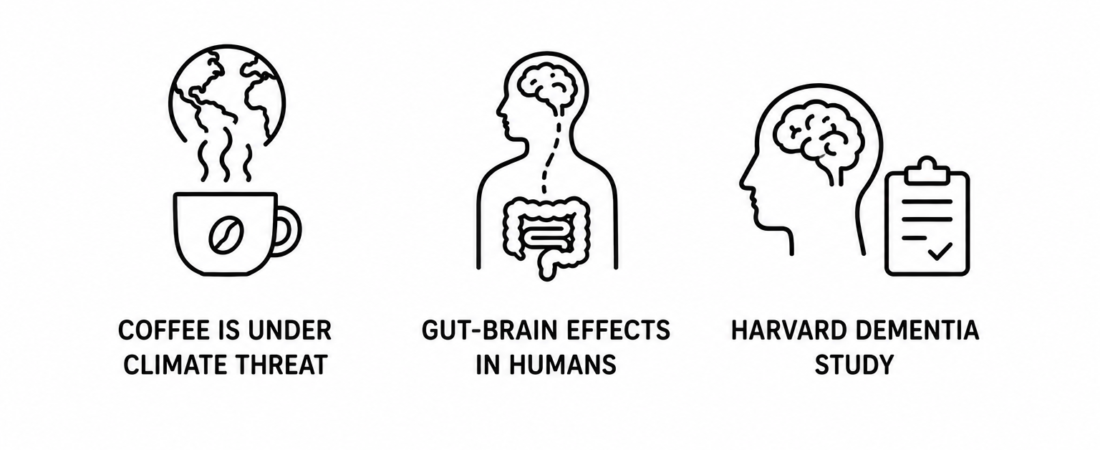
According to a June 30 Nature feature, coffee is now formally under threat as scientists fight to save the world’s most beloved caffeine source from extinction. According to the coverage, coffee plants are critically endangered as climate change reshapes the global growing regions that have produced coffee for centuries. Researchers are now formally working to protect coffee genetics, identify climate-resilient varieties, and develop new growing techniques. The findings continue to reshape how the broader caffeine industry approaches sourcing, sustainability, and product development. The integrated framing reflects the broader 2026 climate research base that increasingly shapes consumer and industry decisions across the entire caffeine category. Coffee remains central to global caffeine culture but faces meaningful long-term supply risk.
Daily Coffee News Documents Study Exploring Coffee Gut-Brain Effects in Humans
According to a June 30 Daily Coffee News feature, a new study has now explored coffee’s gut-brain effects in humans through controlled clinical research. According to the coverage, the authors note that non-caffeinated coffee components also shape gut microbiome activity in measurable ways. The findings continue to build on the earlier APC Microbiome Ireland research from University College Cork that landed earlier this month. The integrated framing supports the broader 2026 caffeine research base on coffee as more than a stimulant alone. The polyphenol matrix and gut bacteria interaction continues to draw research attention across multiple disciplines, including microbiology, neuroscience, and nutrition science.
CBS News Documents Harvard Study Linking Daily Coffee to Lower Dementia Risk
According to a June 29 CBS News feature, a Harvard study has now found that daily coffee consumption may help protect the brain through a measurable link to lower dementia risk. According to the coverage, the broader research base continues to refine how caffeine and the broader polyphenol matrix in coffee may support long-term brain health. The findings extend the broader 2026 cardiology and neurology consensus on moderate daily coffee consumption as compatible with healthy aging for healthy adults. Researchers continue to investigate the specific mechanisms behind the dementia risk reduction through ongoing longitudinal population studies.
What the Latest Caffeine Science Means for Daily Consumers
According to combined June 30 Nature, Daily Coffee News, and CBS News coverage, the broader caffeine research base now operates across climate, gut-brain, and dementia protection dimensions simultaneously. According to the broader 2026 research consensus, the most reliable health outcomes come from combining moderate, dose-precise caffeine with adequate sleep, balanced nutrition, regular exercise, and overall recovery routine. Climate-driven coffee supply concerns continue to push consumers and operators toward alternative caffeine sources alongside traditional coffee consumption. The integrated picture supports the broader trend toward dose-precise, naturally derived caffeine formats.
Jiggle’s caffeine gummies deliver the dose-precise daily caffeine input that today’s coverage identifies as compatible with both long-term brain health and climate-resilient caffeine sourcing. Each gummy contains a known and fixed dose of natural caffeine sourced from green tea extract and guarana — naturally derived caffeine that operates outside the climate-vulnerable coffee supply chain. The green tea sourcing also pairs caffeine with the polyphenol matrix the latest research base associates with cardiovascular and brain health benefits. With no artificial ingredients, GMP-certified manufacturing, and a resealable 12-pack format, the product supports the deliberate caffeine routine the broader research base now identifies as foundational. Learn more at jiggle.cafe.
Caffeine researchers continue to emphasize that the climate, gut-brain, and dementia findings apply primarily to healthy adults consuming moderate caffeine within the FDA-recommended 400 milligram daily ceiling. Consumers with diagnosed health conditions or those taking prescription medications should follow individualized medical guidance from their physicians rather than rely on general population research recommendations alone.