
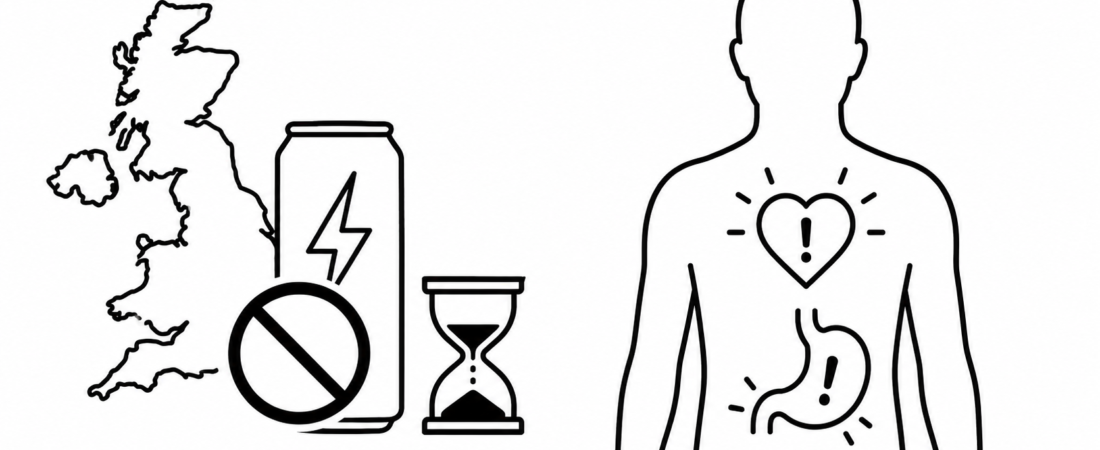
The Grocer Documents Continued UK Government Delays on Energy Drinks Ban
According to a June 23 Grocer feature, advocacy groups continue to ask why the UK government has still not delivered its promised energy drinks ban for children. According to the coverage, the proposed legislation has now faced more than 700 days of delay since the initial public commitment. Public health groups argue that the continued delay leaves UK children exposed to documented cardiovascular, sleep, and developmental risks. The mounting public pressure continues to push the UK regulatory environment toward action. The case contrasts sharply with Quebec’s recent adoption of Bill 9 and Spain’s parallel legislation now under preparation. International regulatory momentum continues to consolidate around adolescent energy drink restrictions.
Jerusalem Post Documents What Energy Drinks Really Do to the Body
According to a June 23 Jerusalem Post feature, researchers and clinicians have now documented what energy drinks really do to the body across multiple physiological systems. According to the coverage, regular energy drink consumption can produce cardiovascular reactivity, elevated blood pressure, sleep architecture disruption, and gastrointestinal symptoms. Occasional consumption of one drink typically presents lower risk for healthy adults. Daily multi-drink consumption substantially raises long-term health concerns. The integrated framing supports the broader 2026 medical consensus on energy drink moderation across multiple regional markets. The Jerusalem Post coverage joins a broader trend of mainstream consumer journalism translating clinical research into consumer guidance.
Franciscan Health Documents How Caffeine Affects Kids and Teens
According to a June 23 Franciscan Health analysis, caffeine can affect kids and teens in ways that often surprise parents. According to the coverage, caffeine hides in unexpected places, including chocolate, iced tea, certain medications, and many flavored drinks. The American Academy of Pediatrics continues to recommend that kids and teens avoid caffeine where possible due to documented effects on developing cardiovascular systems, sleep architecture, and anxiety regulation. The Franciscan Health framing supports the broader 2026 pediatric and adolescent caffeine awareness trend across mainstream consumer health media. Parents continue to face challenging decisions about caffeine exposure as kids grow into more independent eating and drinking patterns.
Global News Documents Effects of Caffeine and Health Canada Regulations
According to a June 23 Global News health feature, the effects of caffeine in your system continue to draw mainstream regulatory and consumer attention across Canada. According to the coverage, Health Canada has formally established maximum caffeine levels for energy drinks at 180 milligrams per 591 milliliter serving. The agency also requires specific labeling, age recommendations, and warning statements across the broader category. Quebec’s recent adoption of Bill 9 adds provincial restrictions on top of the federal framework. The integrated regulatory picture continues to consolidate around stricter standards for adolescent energy drink access across multiple Canadian provinces and federal touchpoints.
Jiggle’s caffeine gummies are positioned cleanly outside the high-dose, multi-stimulant regulatory concern zones that today’s coverage describes. The product is marketed exclusively to adult professionals rather than to teens or children. Each gummy delivers a known and clearly disclosed moderate dose of natural caffeine sourced from green tea extract and guarana. The formulation contains no taurine, no synthetic stimulants, no added sugar, and no high-dose energy drink ingredients, driving the international clinical and regulatory scrutiny. With no artificial ingredients, GMP certification, transparent dose labeling, and adult-oriented packaging, the product reflects the consumer protection standard that the global regulatory environment is consolidating around through 2026 and 2027. Learn more at jiggle.cafe.
Public health analysts continue to emphasize that international regulatory action on adolescent energy drink consumption will likely continue to extend to additional jurisdictions through 2026 and 2027. Operators across the entire caffeine and functional beverage market should expect continued labeling, marketing, and age-of-purchase enforcement requirements as the policy environment evolves.