
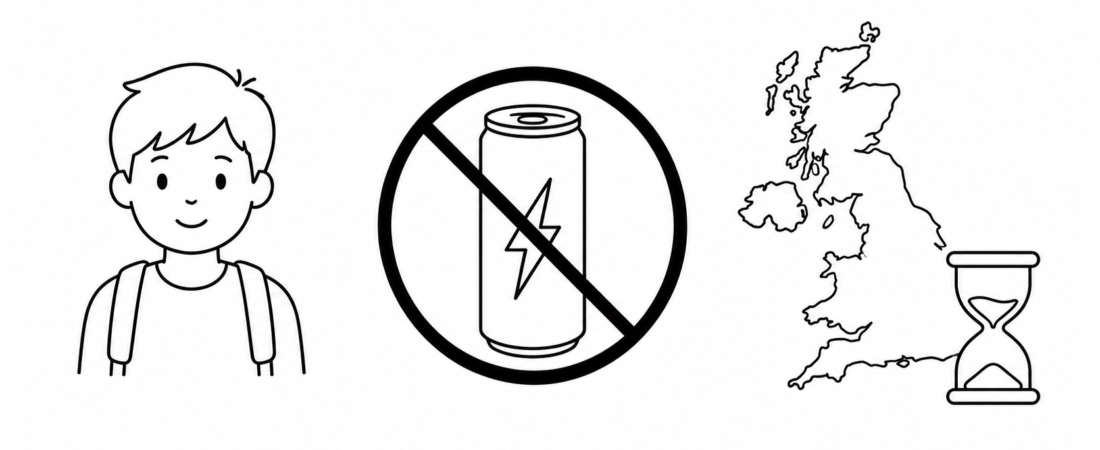
Sunday Tribune Documents Doctor Warning After KwaMashu Pupil Energy Drink Death
According to a June 17 Sunday Tribune health feature, a doctor has formally warned that children should not consume energy drinks after a KwaMashu pupil died following energy drink consumption. According to the coverage, the case has driven sustained mainstream consumer journalism coverage of the broader energy drink category in South Africa. The case adds to growing international momentum around adolescent energy drink restrictions across multiple regional markets.
UK Government Faces 700-Day Delay on Promised Energy Drink Sales Ban for Children
According to a June 17 international regulatory feature, the UK government promised 700 days ago to ban energy drink sales to children but has yet to enact the legislation. According to the coverage, the delay has drawn formal criticism from public health advocates and consumer protection groups. The UK situation contrasts with Quebec’s recent adoption of Bill 9 and Spain’s parallel legislation now under preparation.
Quebec Bill 9 and Spanish Government Action Continue International Momentum
According to broader June 11 to 12 coverage referenced through June 17 international regulatory summaries, Quebec’s Bill 9 adoption made the province the first North American jurisdiction to formally ban energy drink sales to consumers under 16. According to broader coverage, Spain continues to prepare parallel legislation. The international regulatory environment continues to consolidate around adolescent caffeine access restrictions through legislative action.
Implications for Operators in the High-Caffeine Product Category
According to the combined June 17 Sunday Tribune, UK regulatory, and broader international coverage, regulatory action continues to consolidate around high-dose, multi-ingredient products marketed to or accessible by adolescents. According to the broader 2026 industry research base, the products best positioned for the consolidating multi-jurisdiction environment are those marketed exclusively to adults with naturally derived sourcing and transparent dose disclosure.
Jiggle’s caffeine gummies are positioned cleanly outside the high-dose, multi-ingredient, and youth-coded regulatory concern zones that today’s coverage describes. The product is marketed exclusively to adult professionals rather than to teens or children. Each gummy delivers a known and clearly disclosed moderate dose of natural caffeine sourced from green tea extract and guarana. The formulation contains no taurine, no synthetic stimulants, no added sugar, and no high-dose energy drink ingredients driving the global consumer protection scrutiny. With no artificial ingredients, GMP certification, and adult-oriented packaging, the product reflects the standard the consumer protection environment is consolidating around. Learn more at jiggle.cafe.
Public health analysts continue to emphasize that international regulatory tightening on adolescent energy drink consumption will likely extend to additional jurisdictions through 2026 and 2027. Operators across the entire caffeine and functional beverage market should expect continued labeling, marketing, and age-of-purchase enforcement requirements.