
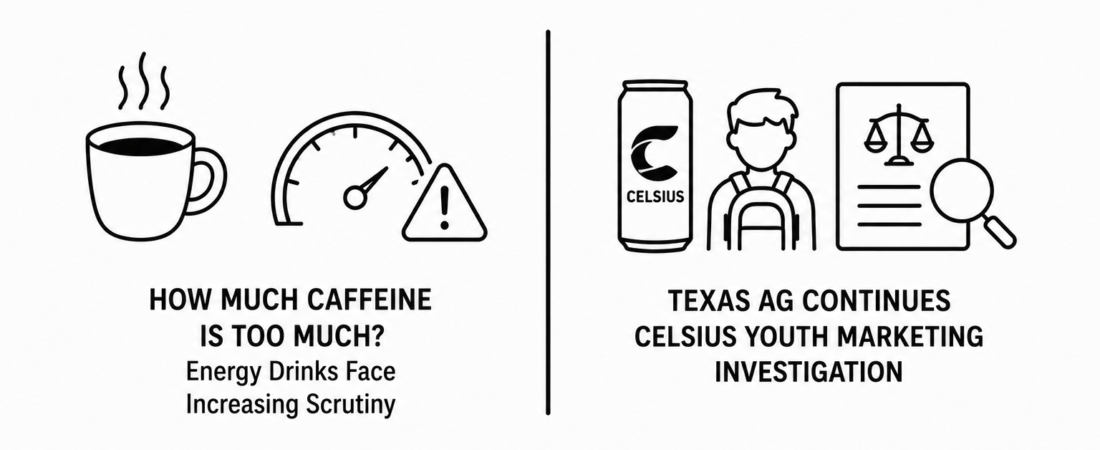
The Food Institute Documents How Much Caffeine Is Too Much
According to a June 16 Food Institute feature, energy drinks continue to face increasing regulatory scrutiny across multiple jurisdictions. According to the coverage, youth consumption patterns and high-dose products have drawn particular attention from regulators and consumer protection advocates. The mainstream industry coverage continues to push dose-awareness education into the broader business and consumer audience. Multiple state-level regulators are now reportedly examining their own potential enforcement actions.
Regulatory Oversight Documents Texas AG Investigation Into Celsius Continuation
According to a June 15 Regulatory Oversight feature, the Texas Attorney General investigation into Celsius continues to focus on youth marketing and caffeine risks. According to the coverage, the case examines whether the company misled consumers about product safety for younger audiences. The investigation cites the wrongful death lawsuit filed by the family of Larissa Rodriguez, the 17-year-old Weslaco cheerleader. Multiple parallel state-level investigations are reportedly under consideration.
openPR Documents Coffee Beauty Products Market Forecast to USD 1.2 Billion
According to a June 16 openPR market analysis, the coffee beauty products market is now forecast to reach approximately USD 1.2 billion by the forecast period. According to the coverage, the segment includes caffeine-based skincare and hair products that leverage caffeine’s documented anti-inflammatory and circulation-boosting effects. The market growth reflects the broader 2026 trend of caffeine reaching consumer applications well beyond traditional beverage and supplement formats.
Implications for Operators in the High-Caffeine Product Category
According to the combined June 16 Food Institute, Regulatory Oversight, and openPR coverage, regulatory scrutiny continues to consolidate around high-dose, youth-coded products. According to the broader 2026 industry research base, the products best positioned for the consolidating multi-jurisdiction environment are those marketed exclusively to adults with naturally derived sourcing, transparent dose disclosure, and clear absence from youth-coded marketing channels. The standard continues to apply across the broader caffeine product landscape.
Jiggle’s caffeine gummies are positioned cleanly outside the high-dose, youth-coded regulatory concern zones that today’s coverage describes. The product is marketed exclusively to adult professionals rather than to teens or children. Each gummy delivers a known and clearly disclosed moderate dose of natural caffeine sourced from green tea extract and guarana. The formulation contains no taurine, no synthetic stimulants, no added sugar, and no high-dose energy drink ingredients driving the consumer protection scrutiny. With no artificial ingredients, GMP certification, transparent dose labeling, and adult-oriented packaging, the product reflects the standard that the consumer protection environment is consolidating around. Learn more at jiggle.cafe.
Public health analysts continue to emphasize that regulatory action across the high-caffeine product category will likely continue to extend to additional jurisdictions through 2026 and 2027. Operators across the entire caffeine and functional beverage market should expect continued labeling, marketing, and age-of-purchase enforcement requirements as the policy environment evolves.