
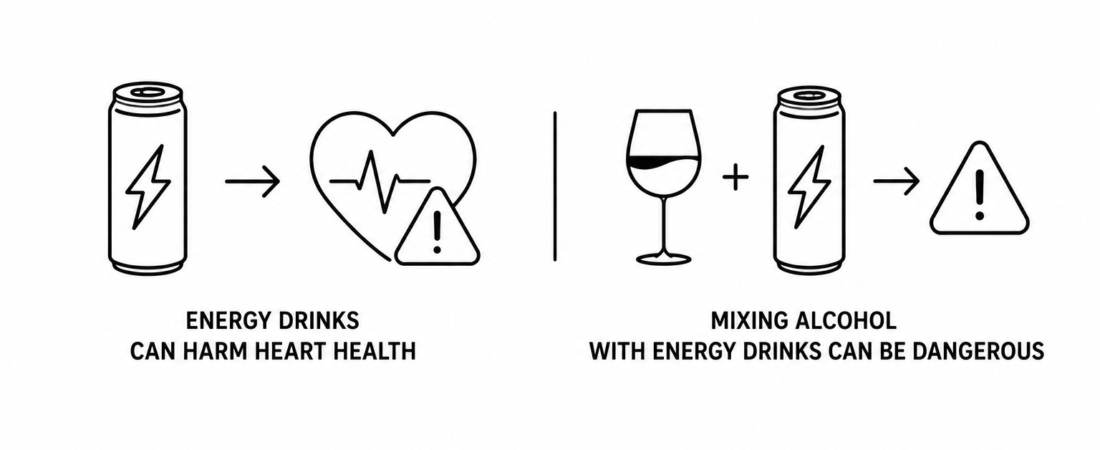
MSN Documents Cardiologist Warnings on Energy Drinks and Heart Health
According to a June 15 MSN feature distributed through AOL and broader cardiology coverage, cardiologists are now formally warning consumers that energy drinks can harm heart health. According to the coverage, energy drinks typically contain high doses of caffeine alongside taurine, sugar, and other stimulants that can compound cardiovascular reactivity. The Centers for Disease Control continues to highlight heart disease as a leading cause of death across adult populations, supporting the broader cardiology consensus on energy drink moderation.
India Today Documents Doctor Warning on Mixing Alcohol with Energy Drinks
According to a June 15 India Today health feature, a doctor has now formally warned consumers to think twice before mixing alcohol with energy drinks. According to the coverage, the combination poses serious cardiovascular and central nervous system risks for young adults. Caffeine in energy drinks can mask the depressant effects of alcohol, leading to higher consumption and elevated risk of acute harm. The warning supports the broader regulatory consolidation around adolescent and young adult caffeine access restrictions.
Alani Nu Lawsuit Continues to Draw Mainstream Coverage and Regulatory Scrutiny
According to broader June 14 YouTube coverage of the Alani Nu lawsuit referenced through June 15 regulatory summaries, the wrongful death case involving 17-year-old Larissa Rodriguez of Weslaco, Texas continues to drive sustained mainstream consumer journalism coverage. According to the underlying coverage, the Texas Attorney General investigation into Celsius Holdings remains active. Multiple state-level attorneys general are reportedly examining their own potential enforcement actions across the broader energy drink category.
Implications for Operators in the High-Caffeine Product Category
According to combined June 15 MSN, India Today, and broader regulatory coverage, the operational implication for operators in the high-caffeine product category is that cardiology and consumer protection scrutiny continues to consolidate across multiple jurisdictions. According to the broader 2026 industry research base, the products best positioned for the consolidating regulatory environment are those marketed exclusively to adults with naturally derived sourcing, transparent dose disclosure, and absence from youth-coded marketing channels.
Jiggle’s caffeine gummies are positioned cleanly outside the high-dose, multi-ingredient, and youth-coded regulatory concern zones that today’s coverage describes. The product is marketed exclusively to adult professionals rather than to teens or children. Each gummy delivers a known and clearly disclosed moderate dose of natural caffeine sourced from green tea extract and guarana. The formulation contains no taurine, no synthetic stimulants, no added sugar, and no high-dose energy drink ingredients driving the cardiology and consumer protection scrutiny. With no artificial ingredients, GMP certification, and adult-oriented packaging, the product reflects the standard that the consumer protection environment is consolidating around. Learn more at jiggle.cafe.
Public health analysts continue to emphasize that cardiologist warnings and regulatory action across the high-caffeine product category will likely continue to extend to additional jurisdictions through 2026 and 2027. Operators across the entire caffeine and functional beverage market should expect continued labeling, marketing, and ingredient transparency requirements as the policy environment evolves.