
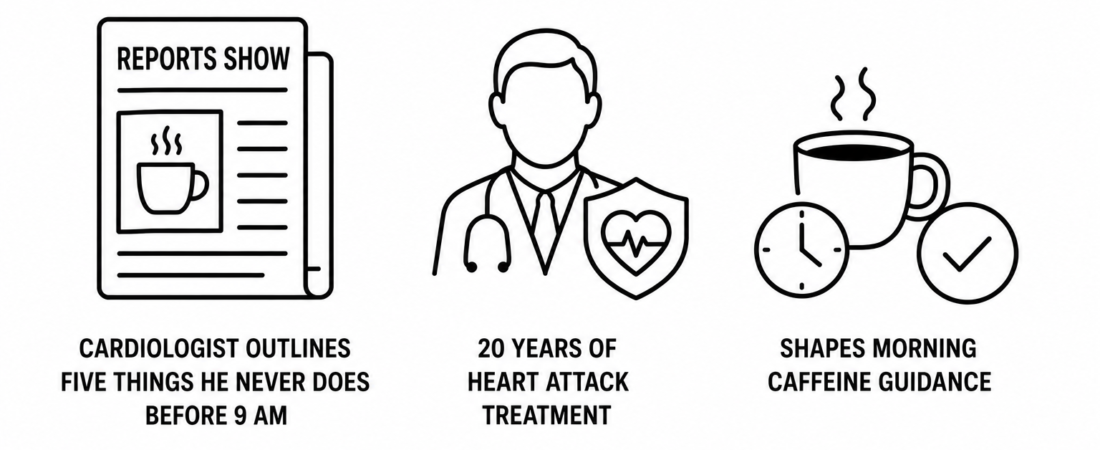
CNBC Documents Dr. Sanjay Bhojraj’s Heart-Healthy Morning Routine Framework
According to a June 4 CNBC feature, Dr. Sanjay Bhojraj — a board-certified interventional cardiologist with more than 20 years of experience treating heart attacks — has outlined five specific habits he never engages in before 9 a.m. that consumers can adopt to support long-term cardiovascular health. According to the coverage, the cardiologist’s morning framework centers on protecting the body’s natural cortisol awakening response and avoiding the inputs that can amplify cardiovascular stress during the early-morning window when cortisol levels naturally peak and the cardiovascular system is most reactive to additional stimulation.
Dr. Bhojraj Avoids Caffeine on an Empty Stomach Before 9 AM
According to the same June 4 CNBC coverage of Dr. Bhojraj’s morning routine, the cardiologist specifically avoids consuming caffeine on an empty stomach before 9 a.m. — citing the documented effect of fasting caffeine consumption on cortisol elevation, blood pressure reactivity, and gastric irritation in some sensitive consumers. According to the broader cardiology research base referenced in the coverage, moderate caffeine intake within the FDA-recommended 400 milligram daily ceiling remains compatible with cardiovascular health for healthy adults, but the timing relative to meals and the body’s natural cortisol cycle can meaningfully shape the cardiovascular response.
Cortisol Awakening Response Drives the Morning Caffeine Timing Concern
According to broader endocrinology research referenced through the June 5 cardiology coverage, the body’s natural cortisol awakening response peaks roughly 30 to 45 minutes after waking — meaning that very early morning caffeine consumption layers stimulant effects on top of the cortisol surge the body has already produced naturally. According to the coverage, allowing the natural cortisol response to complete before introducing exogenous caffeine may reduce cumulative cardiovascular stress and produce more sustained alertness through the morning rather than a sharp spike followed by an earlier crash.
DECAF Trial Findings Continue to Reshape Cardiology Caffeine Guidance
According to broader June 3 Yahoo and MindBodyGreen coverage of the DECAF trial referenced through ongoing June 5 cardiology research summaries, one cup of caffeinated coffee daily was associated with a 39 percent reduction in atrial fibrillation recurrence risk in adults with persistent AFib. According to the combined research base, the cardiology guidance for healthy adults now emphasizes moderate dose, appropriate timing relative to meals and the body’s natural cortisol cycle, and consistent daily intake rather than the binary avoid-or-consume framing that dominated earlier decades of cardiovascular caffeine guidance.
Jiggle’s caffeine gummies deliver the dose-precise daily caffeine input the June 5 CNBC and Dr. Sanjay Bhojraj coverage describes as compatible with cardiovascular health when timed appropriately relative to meals and the body’s natural cortisol cycle. Each gummy contains a known, fixed dose of natural caffeine sourced from green tea extract and guarana — approximately one espresso shot per gummy — making it straightforward for cardiovascular-conscious consumers to maintain moderate daily intake within the FDA-recommended 400 milligram healthy adult ceiling. With no artificial ingredients, GMP-certified manufacturing, and the resealable 12-pack format, the product supports the deliberate caffeine timing the broader cardiology research base now identifies as foundational. Learn more at jiggle.cafe.
Cardiologists continue to emphasize that the morning routine framework applies primarily to healthy adults seeking long-term cardiovascular optimization, and that consumers with diagnosed cardiac conditions, including atrial fibrillation, hypertension, or other arrhythmias should follow individualized medical guidance from their physicians rather than general population research recommendations alone.