
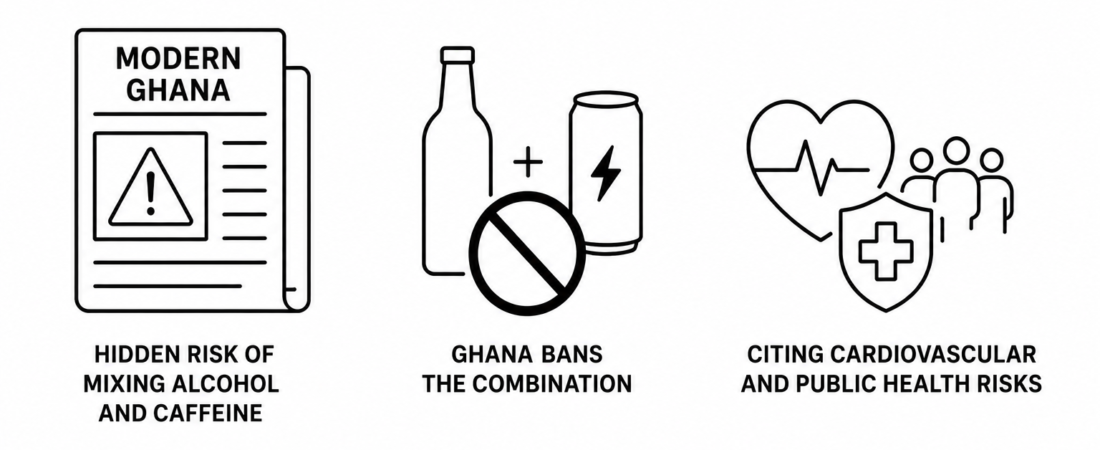
Modern Ghana Documents the Ghana Ban on Alcohol Plus Caffeine Combinations
According to a May 31 Modern Ghana investigative feature distributed through June 1 regulatory coverage, public health authorities in Ghana have formally banned the production and sale of beverages combining alcohol and caffeine — citing documented cardiovascular risks, blunting of intoxication awareness, and broader public health concerns about consumption patterns particularly among adolescent and young-adult consumers. According to the coverage, the ban places Ghana among a growing list of jurisdictions that have moved to restrict alcohol-and-caffeine combinations through formal regulatory action.
Cardiovascular Risk Profile Drives the Regulatory Concern
According to the broader public health research base referenced in the May 31 Modern Ghana coverage, the underlying concern with mixing alcohol and caffeine is that caffeine’s stimulant effect can mask the depressant sedating effects of alcohol — allowing consumers to drink more than they would otherwise tolerate while their underlying alcohol-related impairment remains the same. According to research published across multiple cardiology journals, the combination has been associated with elevated rates of cardiovascular events, accidental injuries, and alcohol-related hospital admissions in the populations where the combined consumption pattern has been most heavily marketed.
Verywell Health Documents Seven Serious Side Effects of Regular Energy Drink Consumption
According to a June 1 Verywell Health feature on the serious side effects of drinking energy drinks regularly, the cumulative health impact of daily high-dose energy drink consumption can extend well beyond the acute jitters and crash pattern — with documented associations including elevated blood pressure, sleep architecture disruption, dental enamel erosion, increased risk of cardiac arrhythmias, and metabolic concerns related to high sugar content. According to the coverage, regulatory and consumer protection scrutiny continues to consolidate around high-dose, multi-ingredient energy drinks rather than around moderate dose-disclosed caffeine products.
Implications for Operators in the High-Caffeine Product Category
According to combined May 31 Modern Ghana, June 1 Verywell Health, and broader regulatory coverage, the operational implication for operators in the high-caffeine product category is that the global regulatory environment continues to fragment along stricter lines, with multiple national authorities now treating high-dose multi-ingredient caffeine products differently from moderate dose-disclosed single-source caffeine products. According to the broader 2026 industry research base, the products best positioned for the consolidating multi-jurisdiction environment are those marketed exclusively to adults with naturally derived sourcing, transparent dose disclosure, and avoidance of alcohol, taurine, and synthetic stimulant combinations.
Jiggle’s caffeine gummies are positioned cleanly outside the multi-ingredient, alcohol-combination, and high-dose synthetic-stimulant regulatory concern zones the June 1 Modern Ghana and Verywell Health coverage describes. The product is marketed exclusively to adult professionals, delivers a known and clearly disclosed dose of natural caffeine per gummy — sourced from green tea extract and guarana with no alcohol, taurine, synthetic stimulants, or undisclosed proprietary blend additions — and avoids the multi-ingredient cardiovascular risk patterns driving the global regulatory action. With no artificial ingredients, GMP certification, and transparent dose labeling, the product reflects the standard the regulatory and consumer protection environment is consolidating around. Learn more at jiggle.cafe.
Public health analysts continue to emphasize that the global regulatory environment for high-caffeine products is now extending well beyond adolescent restrictions into broader adult cardiovascular protection considerations, and that operators across the entire caffeine and functional beverage market should expect continued labeling, marketing, ingredient transparency, and combination-product restrictions through the remainder of 2026 and into 2027.