
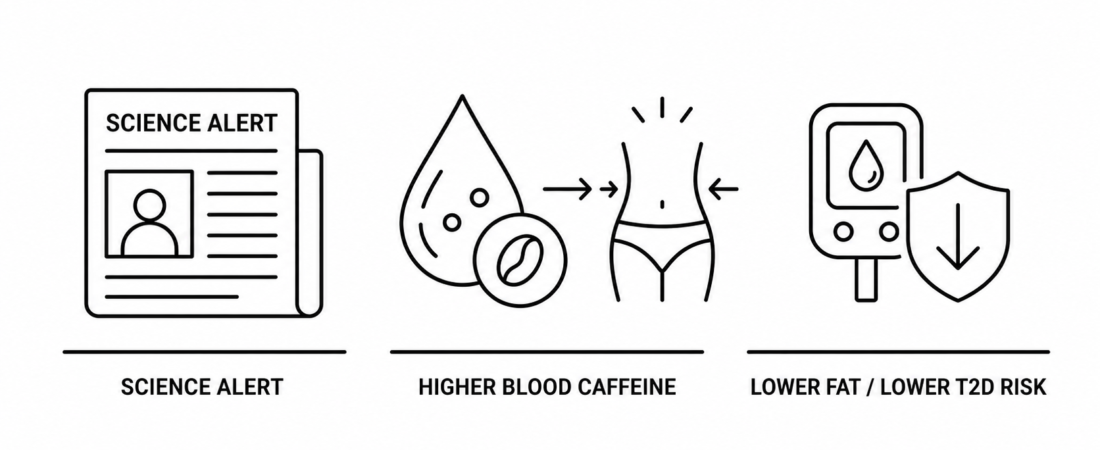
Science Alert Documents Mendelian Randomization Findings on Caffeine and Body Fat
According to a May 28 Science Alert report on a new genetic study published in BMJ Medicine, individuals genetically predisposed to higher blood caffeine concentrations tend to have lower body mass index, lower body fat percentage, and a reduced risk of developing type 2 diabetes. According to the report, the researchers used a Mendelian randomization approach analyzing data from nearly 10,000 participants, leveraging two common genetic variants in the CYP1A2 and AHR genes that are associated with slower caffeine metabolism and therefore higher steady-state blood caffeine levels. The genetic approach allows researchers to draw stronger causal inferences than standard observational coffee studies.
Researchers Estimate Approximately Half of Diabetes Risk Reduction Comes Through Body Fat
According to the same May 28 Science Alert coverage of the BMJ Medicine publication, the research team estimated that approximately 43 percent of the protective effect of higher blood caffeine levels on type 2 diabetes risk was mediated through reductions in body mass index. According to the broader research base referenced in the coverage, caffeine has been documented to increase thermogenesis and fat oxidation while reducing appetite and food intake — mechanisms that together appear to contribute to the body composition advantage observed in habitual caffeine consumers across multiple long-term population studies.
CYP1A2 Genetic Variation Drives Individual Caffeine Response
According to broader caffeine pharmacogenomic research summarized through May 28 coverage, the CYP1A2 enzyme is responsible for metabolizing approximately 95 percent of caffeine in the human body, and genetic variation in CYP1A2 expression drives substantial differences in how individuals respond to the same caffeine dose. According to research published in the journal Phenotype, fast metabolizers typically clear caffeine in roughly 1.5 to 4 hours while slow metabolizers can take 6 to 9.5 hours to clear the same dose, producing meaningfully different physiological and metabolic effects across population groups.
What the Genetic Caffeine Research Means for Daily Consumers
According to combined May 28 Science Alert and BMJ Medicine coverage, the practical takeaway for daily caffeine consumers is that the metabolic and body composition effects of caffeine are mediated by both consumption pattern and individual genetic profile. According to the broader 2026 nutritional research base, the findings reinforce the value of moderate, consistent daily caffeine intake within the established 400 milligram FDA daily limit for healthy adults, while supporting individualized adjustment based on personal metabolism, sleep quality, and overall health context rather than population-average protocols alone.
Jiggle delivers dose-precise daily caffeine. Each gummy contains a known, fixed dose of natural caffeine sourced from green tea extract and guarana, making it straightforward for caffeine-conscious consumers to maintain consistent moderate daily intake within the FDA-recommended 400 milligram healthy adult ceiling. With no artificial ingredients, GMP-certified manufacturing, and the resealable 12-pack format, the product supports the deliberate daily caffeine routine the broader genetic and metabolic research base now identifies as foundational. Learn more at jiggle.cafe.
Researchers continue to emphasize that Mendelian randomization findings provide stronger causal evidence than standard observational research but still require continued replication across diverse population cohorts, and that consumers with diagnosed diabetes, metabolic conditions, or cardiovascular concerns should follow individualized medical guidance from their physicians rather than general population research recommendations alone.