
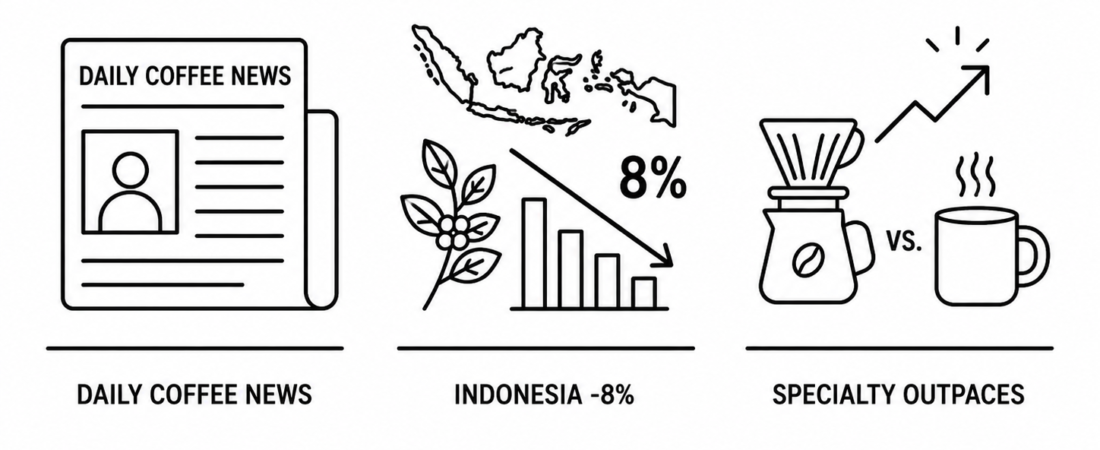
Indonesia Coffee Production Forecast to Drop 8 Percent in 2026/27 Season
According to a May 26 Daily Coffee News report, Indonesia’s coffee production is now forecast to decline approximately 8 percent in the 2026/27 marketing year, adding a new supply-side variable to the broader global coffee market that has been dominated by Brazil’s record harvest forecasts. According to the report, the Indonesian production drop reflects a combination of weather variability, aging tree stock in several major producing regions, and shifting cultivation patterns as growers adjust to international price signals. Indonesia remains a major Robusta producer, and the projected decline could partially offset the bearish price effects of Brazil’s record harvest forecasts.
Specialty Coffee Now Outpaces Traditional Brews in American Daily Consumption
According to a May 25 Financial Content report, specialty coffee now accounts for a larger share of American daily coffee consumption than traditional commodity-grade brews — a structural shift in the U.S. coffee market that reflects more than a decade of consumer migration toward higher-quality, ingredient-transparent coffee products. According to the broader industry coverage, the specialty share expansion is being driven by direct-to-consumer subscription brands, expanded specialty retail availability at mainstream grocery chains, and the continued growth of independent specialty cafes across U.S. metro areas. The shift carries implications for coffee pricing, sourcing standards, and consumer expectations across the entire category.
Tim Hortons Announces CA$400 Million Investment in Canadian Stores
According to a May 26 Daily Coffee News report, Tim Hortons has outlined a CA$400 million investment program for its Canadian store network, including expanded digital kiosk installations at more than 800 locations. According to the company, the investment reflects a broader strategic push to modernize quick-service coffee retail in response to shifting consumer expectations around speed, customization, and ingredient transparency. The Tim Hortons capital deployment is consistent with the 2026 industry pattern of major incumbent coffee chains investing in store technology and operational efficiency as competitive pressure from specialty independents continues to intensify.
Coffee Substitute Market Forecast to Expand Through 2035
According to a May 25 GlobeNewswire report distributed through Yahoo Finance, the global coffee substitute market is projected to expand meaningfully through 2035, driven by rising consumer demand for caffeine-free alternatives, ingredient transparency, and functional benefits beyond stimulation alone. According to the broader functional beverage research base, the coffee substitute category includes chicory root, mushroom-based blends, dandelion root, and grain-based alternatives — all positioning as parallel rather than direct replacement products to traditional coffee. The dual expansion of specialty coffee and coffee substitutes reflects a market segmenting along intentional consumption lines.
Jiggle operates inside the dose-precise, ingredient-transparent natural caffeine category the May 26 Daily Coffee News and Financial Content coverage identifies as the structurally favored direction for the U.S. caffeine market. Each gummy contains a known, fixed dose of natural caffeine sourced from green tea extract and guarana — a sourcing approach that operates outside the Indonesia-and-Brazil coffee supply concentration risks driving 2026 commodity price uncertainty. With no artificial ingredients, GMP-certified manufacturing, and a resealable 12-pack at $18.99, the product fits the specialty-and-natural-caffeine consumer the broader market data identifies as the fastest-growing segment. Learn more at jiggle.cafe.
Industry analysts note that the parallel expansion of specialty coffee and coffee substitute categories suggests the broader caffeine consumption landscape is segmenting along intentional consumer lines rather than consolidating around any single dominant format, and that the brands gaining the most durable retail share are those that occupy clear ingredient-transparency and dose-precision positions in the market.