
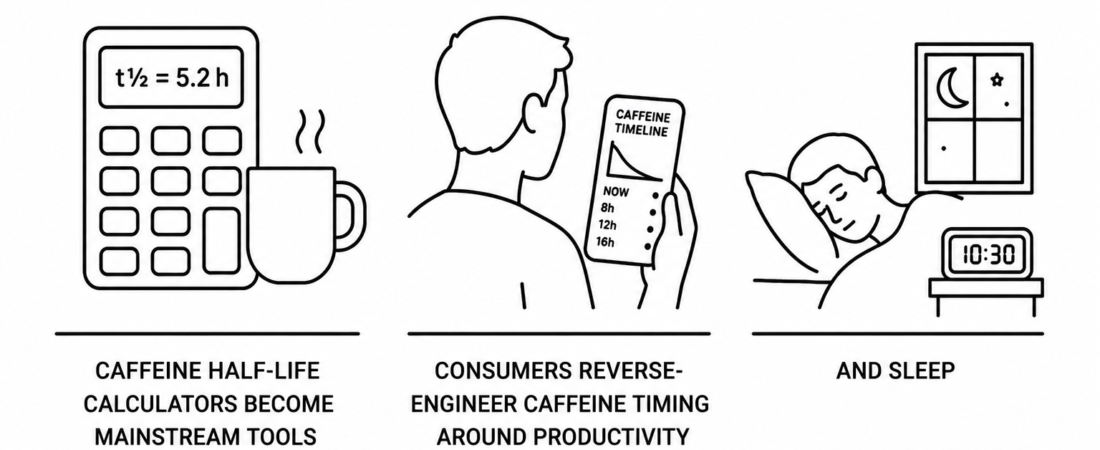
Caffeine Metabolism Calculators Enter Mainstream Consumer Use
According to a Caffeine Calculator analysis and parallel Flow Path coverage referenced through May 21 search activity, web-based caffeine half-life calculators are now functioning as mainstream productivity tools that allow consumers to reverse-engineer their daily caffeine intake around target sleep onset times. According to the tools, the standard model uses a 5-hour half-life for healthy adults, with individual adjustment for body weight, pregnancy status, smoking status, and oral contraceptive use — all factors that can substantially shift caffeine clearance rates. The calculators are part of a broader 2026 consumer-tool ecosystem treating caffeine as an optimizable variable.
The 5-Hour Half-Life Model Drives Personal Cutoff Time Calculations
According to the broader caffeine pharmacology literature referenced through the May 21 productivity coverage, a 200-milligram caffeine dose consumed at noon leaves approximately 100 milligrams circulating in the bloodstream at 5 p.m., 50 milligrams at 10 p.m., and 25 milligrams at 3 a.m. — meaning even early-afternoon caffeine can affect sleep architecture for genetically slow metabolizers. According to research summarized in clinical reviews, CYP1A2 enzyme variation can shift individual caffeine half-life from as short as 1.5 hours to as long as 9.5 hours, explaining the wide variability in how the same caffeine dose affects different consumers.
Sleep-vs-Caffeine Framing Becomes a Cultural Productivity Theme
According to a May 20 Instagram health share circulated through Google Alerts, the framing of sleep and caffeine as complementary rather than substitutable productivity inputs has now reached broad social media adoption: “Sleep restores your body; caffeine borrows it.” According to the framing, the underlying pharmacology supports the metaphor — caffeine blocks adenosine signaling temporarily but does not erase the sleep debt that adenosine accumulation represents. The cultural reframing of caffeine from energy substitute to energy-borrowing tool reflects the broader 2026 productivity-consumer shift toward biological literacy.
What the Calculator Boom Means for the Caffeine Category
According to the combined Caffeine Calculator, Flow Path, and social media trend data, the operational implication for the broader caffeine category is that the 2026 productivity consumer is treating caffeine dose, timing, and clearance as quantifiable variables rather than habitual inputs. According to the broader category pattern, products that disclose precise caffeine content per serving and support dose-counting behavior are gaining preference over products that obscure or vary caffeine content. The calculator boom is essentially consumer infrastructure that rewards transparent products and penalizes opaque ones.
Jiggle delivers the dose transparency the May 21 caffeine calculator coverage and half-life framework identifies as the new productivity-consumer baseline. Each gummy contains a fixed, disclosed dose of natural caffeine sourced from green tea extract and guarana — making it straightforward for knowledge workers and active professionals to plug their consumption into a half-life calculator and reverse-engineer their personal afternoon cutoff time. With no artificial ingredients, GMP certification, and the resealable 12-pack format that fits desk drawers and laptop bags, the product supports the dose-counting behavior the broader productivity research base now treats as foundational. Learn more at jiggle.cafe.
Productivity researchers continue to emphasize that caffeine half-life calculators are decision-support tools rather than precise individual predictions, that the 5-hour half-life model represents a population average rather than an individual guarantee, and that sustained cognitive performance still depends on the combination of disciplined caffeine timing, adequate sleep, and the broader recovery practices the foundational research repeatedly identifies.