
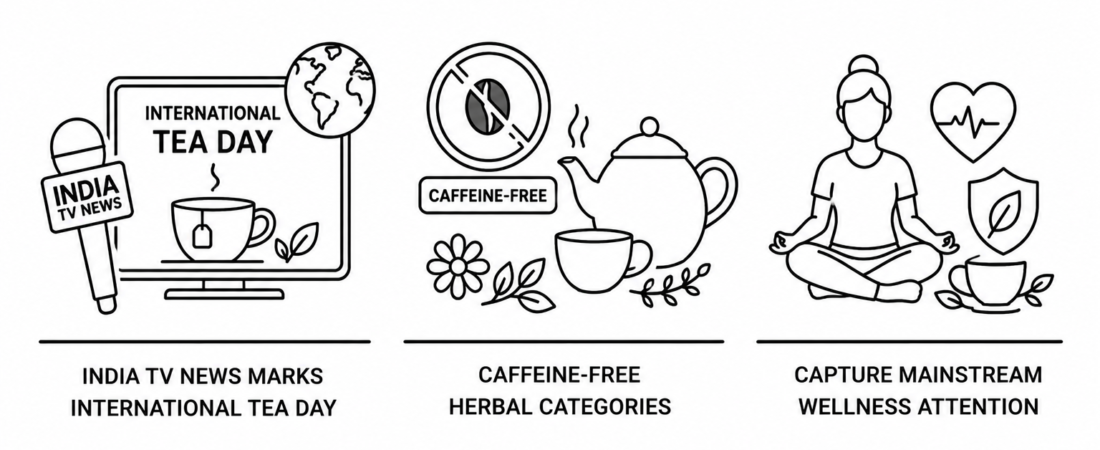
International Tea Day Brings Caffeine-Free Herbal Coverage Into Focus
According to a May 21 India TV News health feature published in observance of International Tea Day, herbal tea consumption is being reframed as a daily wellness practice that operates alongside — rather than in opposition to — caffeinated beverage habits. According to the report, ginger tea, hibiscus tea, chamomile tea, peppermint tea, and tulsi tea are now appearing in mainstream consumer wellness coverage with documented antioxidant, anti-inflammatory, and digestive-support properties. The framing reflects a broader 2026 consumer shift toward beverage layering: caffeinated coffee or tea earlier in the day, herbal blends in the afternoon and evening.
teapigs Unveils Caffeine-Free Herbal Lineup
According to a May 20 BevNET report, U.K.-based tea brand teapigs has unveiled a new herbal tea lineup featuring caffeine-free blends targeting the evening and wellness-occasion consumer. According to the coverage, the launch reflects retailer-level demand for caffeine-free options that fit alongside existing tea and coffee portfolios rather than replacing them. The teapigs launch is part of a broader 2026 pattern in which mainstream tea brands are extending their offerings into the herbal and caffeine-free categories — a structural recognition that the modern caffeine consumer also wants intentional caffeine-free moments built into their daily routine.
Lao Dong Coverage Highlights Green Tea’s Cardiovascular Profile
According to a May 20 Lao Dong Newspaper health feature, regular green tea consumption is associated with improved cardiovascular markers including modest reductions in LDL cholesterol, supported blood vessel function, and antioxidant activity from epigallocatechin gallate (EGCG). According to the report, the recommended consumption pattern emphasizes morning and early-afternoon timing to avoid sleep disruption — consistent with the caffeine-sensitivity behavioral shift documented in May 18-19 IOL coverage. The green tea cardiovascular profile is being studied as one of the more durable beverage-and-health associations in the broader 2026 caffeine research landscape.
Consumer Behavior Continues to Shift Toward Intentional Daily Layering
According to the combined India TV News, BevNET, and Lao Dong coverage, the 2026 consumer is increasingly treating caffeinated and caffeine-free beverages as complementary tools within a single daily routine rather than as competing categories. According to the reporting pattern, the implication for both caffeine and herbal brands is that the consumer expects portfolio thinking: clear positioning around time of day, intended use case, and complementary ingredient layering. The brands gaining the most retail traction are those that help consumers structure their day rather than only offering a single occasion-replacement product.
Jiggle fits naturally into the intentional daily-layering pattern the May 21 International Tea Day coverage describes — providing a precisely dosed caffeine input for the morning and early-afternoon focus blocks where the wellness consumer wants energy, paired with the consumer’s own choice of caffeine-free herbal options for evening hours. Each gummy contains a known, fixed dose of caffeine sourced from green tea extract and guarana, with no artificial ingredients and GMP-certified manufacturing. The resealable 12-pack format makes dose-counting through the day straightforward, supporting the kind of deliberate routine architecture the modern wellness consumer is building. Learn more at jiggle.cafe.
Wellness analysts note that the parallel growth of intentional caffeine consumption and intentional caffeine-free consumption reflects a single underlying consumer pattern — daily routine architecture — and that the brands capturing share through the rest of 2026 will be those that help consumers structure rather than replace existing rituals.