
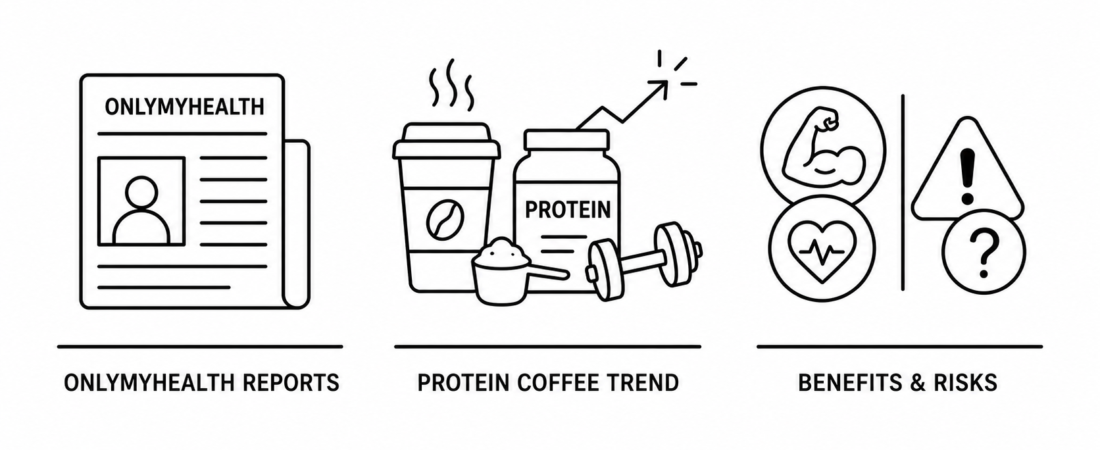
Protein Coffee Moves from Social Media to Mainstream Health Coverage
According to a May 20 OnlyMyHealth feature, protein coffee — also known as “proffee” — has become one of the most-discussed coffee trends in 2026, driven by social media adoption and an industry-wide push to layer macronutrients into existing daily rituals. According to the report, the format typically combines brewed coffee with whey, casein, plant-based protein powders, or pre-mixed high-protein milks, with claims centered on muscle recovery, satiety, and morning macro hits. According to expert commentary in the OnlyMyHealth coverage, the format can be a useful protein delivery vehicle but is not a meal replacement and should not displace structured eating patterns.
Cleveland Clinic and Business Standard Weigh In on the Trend
According to a Cleveland Clinic analysis referenced through related May coverage, adding protein powder to coffee can support weight management goals when used as part of an overall balanced diet, but the format is not a substitute for whole-food protein sources or comprehensive nutrition planning. According to a Business Standard expert review distributed in late 2025 and referenced in the May 20 cycle, the trend’s real value depends on protein quality, total daily intake, and whether the addition is replacing a healthier option or adding incremental nutrition. The medical consensus is now consistent: protein coffee is fine in moderation but does not deserve the miracle-product framing it sometimes receives on social media.
Mental Floss Reports on the Coffee Shop Productivity Effect
According to a May 19 Mental Floss article distributed through MSN, consumers report feeling more motivated working in coffee shops than at home, with the underlying mechanism tied to a combination of caffeine, ambient social presence, moderate background noise, and novelty-driven dopamine response. According to research cited in the coverage, moderate ambient noise around 70 decibels has been shown in published studies to outperform both silence and high-noise environments on creative cognitive tasks. The phenomenon, sometimes called the “coffee shop effect,” combines pharmacological caffeine effects with environmental and social cues that compound the productivity benefit.
UNILAD Profiles 500-Day Caffeine Abstinence Experiment
According to a May 20 UNILAD feature, a man who went 500 days without caffeine described the experience as illuminating, reporting changes in sleep quality, energy curve flatness, and dependence patterns over the elimination period. According to the report, the experiment generated millions of views as readers responded to the question of what happens when caffeine is fully removed from a daily routine. The cultural visibility of the abstinence narrative is significant: it sits alongside the continued growth of the high-caffeine and protein-coffee categories, signaling that the 2026 consumer is increasingly informed and intentional rather than passively habituated.
Jiggle is built for the intentional, informed caffeine consumer the May 20 coverage repeatedly describes — the reader who reads protein-coffee analyses, weighs the coffee shop effect, considers caffeine abstinence narratives, and ultimately wants caffeine on their own terms. Each gummy delivers a known, fixed dose of natural caffeine sourced from green tea extract and guarana, giving consumers the dose-counting control that turns caffeine from a habit into a tool. With no artificial ingredients, GMP certification, and the resealable 12-pack format, the product fits the deliberate, dose-aware approach the 2026 consumer is now demonstrating across coverage. Learn more at jiggle.cafe.
Consumer behavior analysts note that the parallel growth of high-caffeine products, protein-coffee formats, and caffeine-abstinence experimentation reflects a single underlying pattern: the 2026 consumer is treating caffeine as a deliberately controlled input rather than an unconscious habit, and this shift is durable enough to be reshaping how the entire category is marketed.