
Caffeine Pouches Enter the Mainstream Energy Conversation
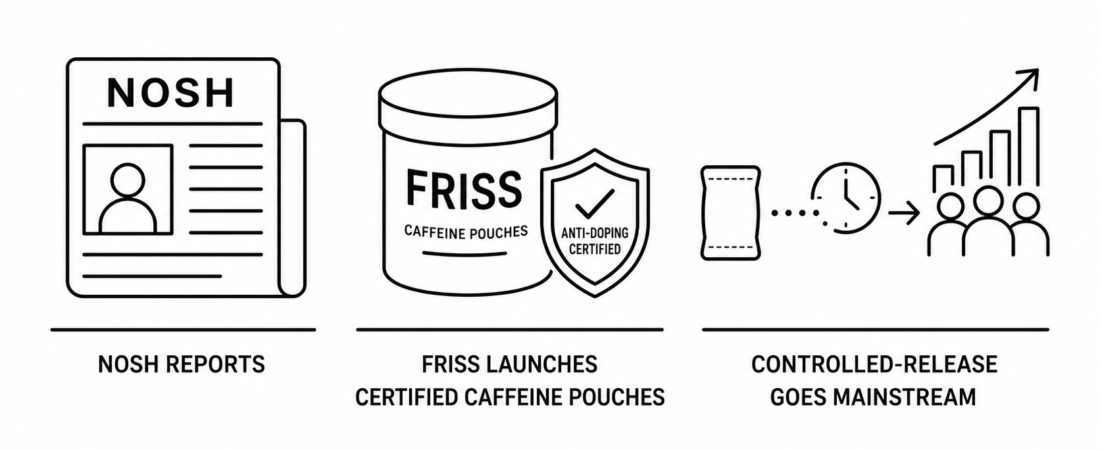
According to coverage tracked through May 20 Nutraceutical Business Review and parallel NOSH and PR Newswire reports, FRISS has launched what the company describes as the first international anti-doping certified, third-party tested caffeine pouch brand. According to the company, each pouch delivers a precisely controlled dose with a steady, sustained release — designed to avoid the spike-and-crash pattern associated with traditional energy drinks. The pouch is sold at $10 per can through GetFriss.com and contains zero sugar and zero calories. The launch represents the entry of the pouch format, long established in nicotine, into the consumer caffeine category.
Performance Partnerships Signal Athletic Positioning
According to FRISS’s announcement reported through PR Newswire, the brand has already secured partnerships with Ferrari-backed endurance racing team AF Corse USA and six-time Olympic gold medalist Ryan Lochte, signaling explicit positioning within the high-performance athletic segment. According to the same coverage, the anti-doping certification was a deliberate strategic choice intended to differentiate against unregulated stimulant products that have historically been disqualified from professional sport. The performance positioning extends a broader pattern in which functional caffeine products are competing for the same dose-controlled consumer that supplements and nootropics also target.
CoffeeTalk Maps the Emerging Coffee Alternatives Market
According to a May 20 CoffeeTalk analysis on the emerging coffee alternatives market, the broader “non-traditional caffeine” category is now being defined by four key product families: mushroom-based blends, chicory and dandelion roots, herbal adaptogens, and yerba mate. According to the analysis, the category is growing as a parallel rather than a replacement category — consumers are not abandoning coffee but layering coffee alternatives into specific times of day or specific use cases. The CoffeeTalk data is consistent with the broader 2026 functional beverage thesis: caffeine and caffeine alternatives are converging into a single, segmented behavioral category rather than competing as opposites.
What the Format Shift Signals for Operators
According to the combined NOSH, CoffeeTalk, and Nutraceutical Business Review coverage, the operational pattern across the caffeine alternative landscape is consistent: precision dosing, ingredient transparency, and clear positioning around specific use cases (focus, athletic performance, energy without sleep disruption). According to FRISS’s controlled-release framing and the broader alternatives market mapping, the new competitive baseline is no longer “more caffeine” but “the right caffeine, in the right format, at the right time.” The pouch, gummy, and powdered formats are all gaining share against the can format that dominated the prior decade.
Jiggle delivers the same dose-controlled, format-precise positioning the May 20 FRISS launch and CoffeeTalk alternatives analysis identify as the new category baseline — but in a chewable gummy rather than an oral pouch. Each gummy contains caffeine sourced from green tea extract and guarana at a known, fixed dose, with no artificial ingredients and the GMP-certified manufacturing the performance-segment consumer now expects. The resealable 12-pack format at $18.99 fits desk drawers, gym bags, and travel kits, supporting the use-case-specific consumption pattern the broader alternatives market is converging on. Learn more at jiggle.cafe.
Category analysts note that the entry of pouch, gummy, and powder formats into the caffeine alternatives space is unlikely to displace the broader ready-to-drink can category in the near term, but is expected to continue capturing share among consumers who prioritize portability, dose precision, and ingredient transparency over flavor and ritual.