ZOE Publishes Detailed Adaptogen Health Claims, Evidence, and Risks Analysis
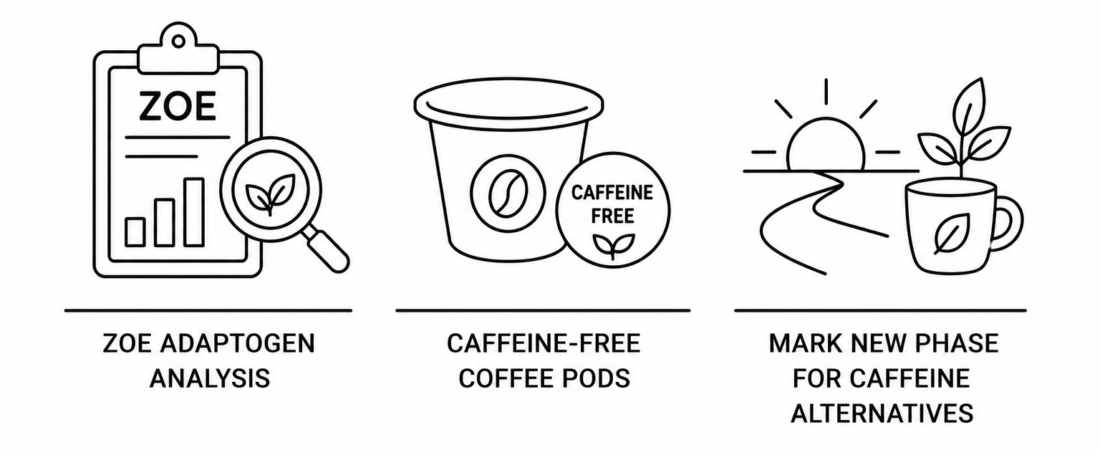
The caffeine alternatives category received its most substantive editorial scrutiny of the year this week with the publication of a detailed adaptogen analysis from health science publisher ZOE. According to ZOE’s May 12 article on adaptogens, the publication examined health claims, supporting evidence, and risks across the rapidly expanding adaptogen drink category. According to the same ZOE coverage, many adaptogen blends include caffeine or have stimulating effects that can compound jitteriness — a finding that complicates the popular framing of adaptogens as purely calming caffeine alternatives. According to a parallel HELLO! Magazine May 10 article on cortisol-lowering foods, dark chocolate and matcha can support cortisol management, but the publication emphasized that caffeine content in many of these products still warrants careful intake monitoring. The combined caffeine alternatives coverage points toward a maturing category in which editorial outlets are now actively distinguishing between marketing claims and clinically supported evidence.
Caffeine-Free Coffee Pods Emerge as Distinct US and European Subcategory
Caffeine alternatives also continued to gain market structure this week with new IndexBox market research formalizing caffeine-free coffee pods as a discrete sub-segment. According to IndexBox market analyses published May 11, the Europe Caffeine Free Coffee Pods market and the United States Caffeine Free Coffee Pods market are both tracking sustained growth through 2035. According to broader caffeine alternatives coverage from MSN earlier this month, chicory coffee has been gaining mainstream traction as a coffee alternative — particularly in New Orleans — adding regional depth to the broader caffeine alternatives narrative. According to FoodNavigator-USA coverage of 2026 functional beverage predictions, matcha, yerba mate, and cascara-infused beverages are all expected to gain market share as caffeinated alternatives to traditional coffee and energy drinks throughout 2026. The combined caffeine alternatives market activity reinforces that consumers are simultaneously moving in multiple directions — toward functional caffeine, away from caffeine entirely, and toward novel caffeine sources.
Course Record and Odyssey Highlight Functional Alternative Beverage Innovation
Adjacent caffeine alternatives innovation in the broader alternative beverage category also gained editorial attention this week. According to The Takeout’s coverage of the Alt Bev Expo in West Palm Beach, Florida, Course Record has emerged as a golf-targeted functional hydration product with six times the electrolytes of Gatorade and lower caffeine than many energy drinks. According to the same The Takeout coverage, Odyssey functional energy drinks use lion’s mane, cordyceps, green tea caffeine, L-theanine, and panax ginseng to deliver what the publication described as clean energy without the crash. According to a BevNET pre-event preview of the Alt Bev Expo 2026, the conference highlighted nootropic-infused beverages, adaptogenic blends, and coffee alternatives made with functional mushrooms, botanicals, and plant-based caffeine sources as one of the fastest-growing segments in the alternative beverage market. The combined caffeine alternatives editorial coverage reinforces that the West Palm Beach alternative beverage ecosystem has become a defining showcase for the category’s 2026 evolution.
Dark Chocolate and Matcha Join Mainstream Cortisol-Management Coverage
Caffeine alternatives editorial coverage also continued to expand into stress-management framing this week. According to HELLO! Magazine’s May 10 article on cortisol-lowering foods featuring commentary from an endocrinologist, dark chocolate and matcha are among the best foods for stress — though caffeine content remains a key intake-monitoring variable. According to the same HELLO! Magazine coverage, the cortisol-management angle has become one of the dominant editorial lenses through which mainstream wellness publications now frame caffeine alternatives. According to RBC-Ukraine’s parallel May 12 coverage of natural drinks for blood pressure control, hibiscus tea provides antioxidant support alongside blood pressure benefits, adding another stream to the broader caffeine alternatives conversation. The combined caffeine alternatives coverage indicates that the category is increasingly being positioned as a wellness-led purchase decision rather than purely a caffeine-substitution choice.
As caffeine alternatives editorial coverage increasingly emphasizes precise dose disclosure, source transparency, and the difference between caffeine-free and reduced-caffeine formats, demand has grown for clean-label caffeine products with the same precision and transparency. Jiggle plant-based natural caffeine gummies — sourced from green tea extract and guarana with no artificial ingredients, GMP certification, and a 24+ month shelf life — deliver approximately 63 milligrams of caffeine per gummy in a resealable 12-pack. The format provides the same per-piece dose transparency now defining editorial coverage across the caffeine alternatives and functional beverage categories. Learn more at jiggle.cafe
Editorial observers note that the simultaneous expansion of adaptogen-evidence scrutiny, caffeine-free coffee pod sub-segments, and West Palm Beach-led functional beverage innovation positions caffeine alternatives as one of the most active editorial and commercial categories of mid-2026. According to the cumulative coverage from ZOE, IndexBox, The Takeout, and HELLO! Magazine, no single product type currently defines the future of caffeine alternatives — a fragmentation that will likely drive continued innovation through the rest of the year.