
UK Government Confirms Plan to Ban Energy Drink Sales to Under-16s in England
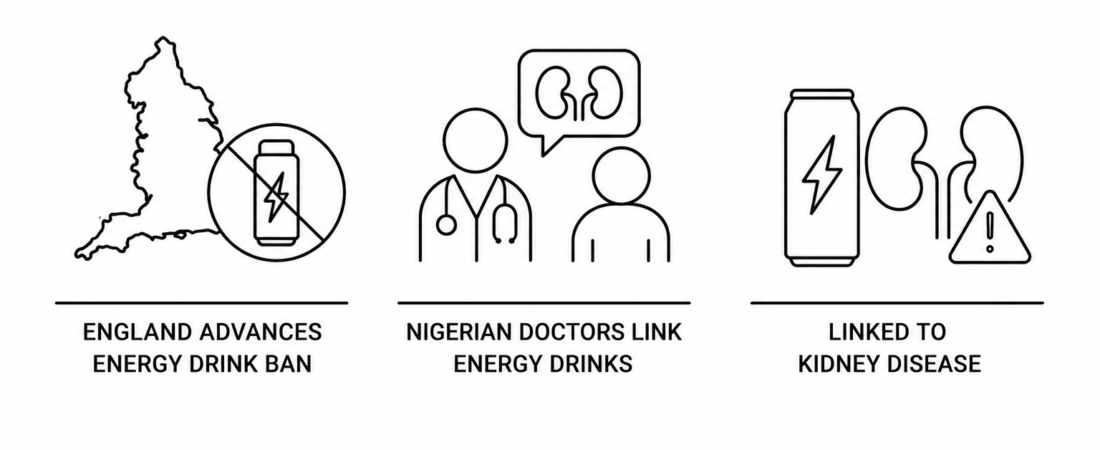
The most significant caffeine regulation development this week came from England, where the UK government has formally advanced its plan to ban energy drink sales to children under 16. According to MSN coverage from May 10, the UK Government’s plans would prohibit the sale of high-caffeine energy drinks such as Red Bull to anyone under 16 across all retailers — including shops, restaurants, cafes, vending machines, and online channels — under proposals tied to the government’s broader childhood obesity strategy. According to the gov.uk consultation page, the proposed caffeine regulation defines high-caffeine energy drinks as soft drinks containing more than 150 milligrams of caffeine per liter, with lower-caffeine soft drinks, tea, and coffee excluded. According to Health and Social Care Secretary Wes Streeting’s quoted statement, the government is questioning how children can be expected to do well at school when consuming the equivalent of a double espresso on a daily basis. The caffeine regulation move would align England with Lithuania, Latvia, Turkey, Sweden, and Norway, which have already implemented similar age-based restrictions.
Punch Healthwise Reports Nigerian Experts Linking Rising Kidney Disease to Energy Drinks
Caffeine regulation pressure is also building outside Europe and North America, with new West African medical reporting linking rising kidney disease cases to energy drink consumption. According to Punch Healthwise’s May 11 coverage, Nigerian medical experts have linked rising kidney disease cases among youths to excessive energy drink consumption. According to the same Punch Healthwise reporting, the cited specialists cautioned that glucose-loaded beverages mask potentially dangerous health consequences for young consumers. According to a parallel Punch Newspapers May 10 article, medical experts warned that excessive energy drink consumption is linked to rising kidney disease among youths and warrants new public-health interventions. The combined Nigerian caffeine regulation coverage demonstrates that the energy-drink-and-youth-health policy conversation is expanding beyond high-income countries into emerging markets with rapidly growing energy drink consumption.
Consumer Reports Investigation Continues to Drive US Caffeine Regulation Conversation
In the United States, a Consumer Reports investigation first published in April continues to drive caffeine regulation coverage, with multiple new May reports referencing its findings. According to Consumer Reports’ published investigation covered by WMUR and Fox5 Vegas, the watchdog tested 23 popular energy drinks and shots and found that many contained two to three times the daily caffeine limit recommended for teens of 100 milligrams. According to the same Consumer Reports investigation, some tested energy drinks contained up to 16% more caffeine than advertised on the label. According to Consumer Reports’ coverage, the American Beverage Association has stated that parents should be in the driver’s seat when it comes to what their children consume, while watchdog and public-health groups argue mandatory caffeine labeling would more effectively protect young consumers. The continuing US Consumer Reports caffeine regulation coverage runs in parallel to the federal Sarah Katz Caffeine Safety Act and the Pennsylvania House Bill 2377 caffeine-labeling effort first profiled this month.
Reuters Reports on Caffeine Overdose Awareness as Quebec Pharmacy Ban Continues to Expand
Caffeine regulation coverage at the global news-agency level also intensified this week. According to Reuters coverage indexed by Google Alerts on May 9, the global news agency continued to cover caffeine overdose risks alongside broader public-health reporting. According to ongoing CBC News coverage of the Quebec energy-drink debate, the Familiprix pharmacy chain pulled energy drinks from 455 stores last week and the Order of Pharmacists of Quebec has formally backed restricting energy drink sales to those aged 16 and over. According to a separate Canadian Press wire report covered by 620 CKRM and Lethbridge Herald, a petition sponsored by Québec Solidaire on the Quebec government’s website had collected over 35,000 signatures as of last week. The combined Reuters, CBC, and Punch reporting positions caffeine regulation as one of the most actively evolving global policy stories of mid-2026.
As caffeine regulation expectations tighten across the UK, Canada, the US, and emerging markets, transparent caffeine content disclosure has become a baseline competitive expectation. Jiggle plant-based natural caffeine gummies disclose approximately 63 milligrams of caffeine per gummy from green tea extract and guarana on every resealable 12-pack, with no artificial ingredients, GMP certification, and a 24+ month shelf life. The product’s transparent per-piece dose disclosure aligns with the direction of the UK government’s proposed energy drink labeling framework, the federal Sarah Katz Caffeine Safety Act, and the Consumer Reports caffeine-labeling guidance that has driven much of the May 2026 regulatory coverage. Learn more at jiggle.cafe
Legal and public health observers note that the simultaneous advancement of the England under-16 energy drink ban, the Nigerian kidney-disease medical reporting, the ongoing US Sarah Katz Caffeine Safety Act push, and the Quebec pharmacy chain action represents the most coordinated wave of international caffeine regulation activity in over a decade. According to the cumulative reporting from MSN, Punch Healthwise, Consumer Reports, and CBC News, the next regulatory milestone will be the publication of the UK government’s secondary legislation timeline under the Food Safety Act 1990.