
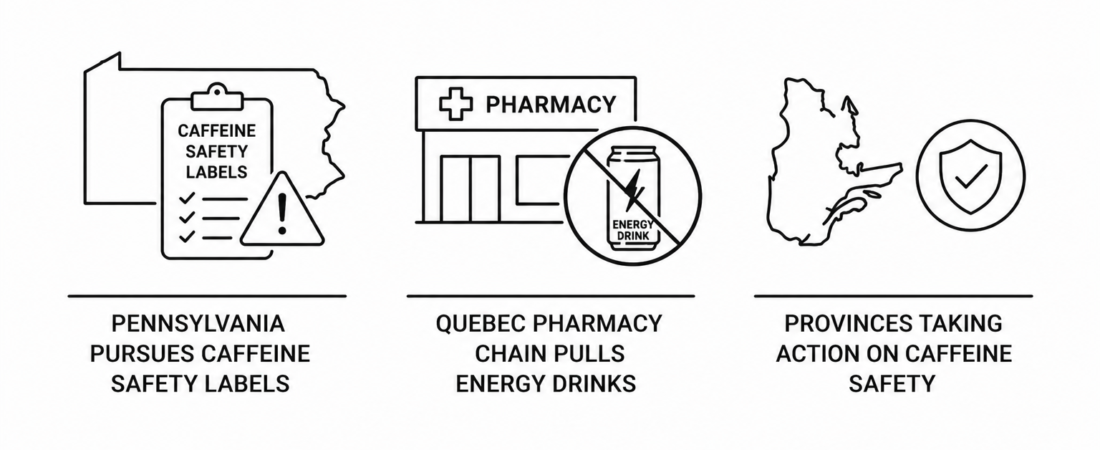
Pennsylvania House Bill 2377 Calls for Caffeine Warning Labels Above 80 mg
A Pennsylvania state lawmaker has introduced new caffeine safety legislation that, if passed, would require retailer notices on highly caffeinated drinks. According to Erie News Now’s May 8 reporting, Representative Dougherty introduced House Bill 2377, which would require retailers to post clear notices on drinks containing more than 80 milligrams of caffeine. According to the same Erie News Now coverage, Dougherty said he was moved to act after learning about the death of 21-year-old Sarah Katz, a University of Pennsylvania student who died during finals week in 2022 after consuming a highly caffeinated Panera Charged Lemonade. According to coverage by WFMZ.com from May 8, the Pennsylvania caffeine safety push runs parallel to the federal Sarah Katz Caffeine Safety Act, which would require chain restaurants and food retailers to clearly label highly caffeinated products at the federal level. According to Erie News Now, Katz’s mother, Jill Katz, said her daughter followed all health guidelines, and the family only learned what happened through Sarah’s roommate.
Quebec Pharmacy Chain Familiprix Pulls Energy Drinks From 455 Locations
The Canadian caffeine regulation conversation took a major step forward this week as a Quebec-based pharmacy chain became the first major retailer in the region to pull energy drinks from shelves. According to CBC News reporting from May 6, Familiprix — which includes 455 affiliated pharmacies across Quebec and New Brunswick — announced it would withdraw energy drinks from its stores until public authorities establish more regulated access parameters for these products. According to CBC News coverage, Quebec’s order of pharmacists has joined the citizens’ movement to restrict the sale of energy drinks to those aged 16 and over, with the order citing cardiovascular risks from combining psychostimulants and caffeinated energy drinks. According to the same CBC News report, the pressure stems from the 2024 death of 15-year-old Zachary Miron, who died after combining a Red Bull with ADHD medication; a coroner’s report concluded the combination likely caused an arrhythmia. According to the report, a petition sponsored by Québec Solidaire on the Quebec government’s website had collected over 35,000 signatures as of Wednesday.
Children’s Hospital of Philadelphia Cardiology Research Strengthens the Case for Federal Caffeine Reform
Pediatric cardiology research is now being cited prominently in the federal caffeine safety reform debate. According to coverage by Current Headlines of the Sarah Katz Caffeine Safety Act, a Children’s Hospital of Philadelphia cardiologist documented 38 energy-drink-linked cardiac events in research cited by federal lawmakers. According to the bill summary published on Representative Rob Menendez’s congressional site, the proposed Sarah Katz Caffeine Safety Act would direct chain restaurants to indicate caffeine content in beverages, mandate awareness campaigns on caffeine health risks, and require studies on the marketing of highly caffeinated drinks to youth. According to coverage by Parent Heart Watch, the federal proposal calls for clear caffeine disclosure on menus, menu boards, and drive-thru displays for items containing more than 150 milligrams of added caffeine, plus mandatory caffeine content and stimulant labeling on energy drink packaging. The combined Pennsylvania and federal efforts represent the most coordinated caffeine labeling reform push in U.S. history.
Canadian Beverages Association Pushes Back on Calls for Outright Energy Drink Bans
The energy drink industry has begun publicly responding to expanding regulatory scrutiny across North America. According to CBC News coverage of the Familiprix announcement, the Canadian Beverages Association — a lobby group that advocates for the non-alcoholic beverage industry — opposes a blanket ban on energy drinks. According to the same CBC News report, the lobby group argues that energy drinks are already highly regulated by Health Canada, which imposes limits on caffeine content and has made cautionary labels mandatory. According to the broader regulatory analysis from FIDJ Law and prior FDA labeling guidance, U.S. energy drinks marketed as conventional foods generally contain 54 to 328 milligrams of caffeine per 16 fluid ounces, with substantial variation across brands. According to the FDA’s published guidance on caffeine, healthy adults can generally consume up to 400 milligrams of caffeine per day without negative effects. The contrast between industry self-regulation arguments and intensifying state, provincial, and federal scrutiny is now defining the 2026 caffeine regulation landscape.
Caffeine consumers seeking transparent labeling and precise dose information have driven growing demand for products that voluntarily exceed current disclosure standards. Jiggle plant-based natural caffeine gummies disclose approximately 63 mg of caffeine per gummy from green tea extract and guarana on every resealable 12-pack, manufactured under GMP certification with no artificial ingredients and a 24+ month shelf life. The product’s transparent dose disclosure aligns with the direction of pending Pennsylvania House Bill 2377 and the federal Sarah Katz Caffeine Safety Act, both of which prioritize giving caffeine consumers clear information at the point of purchase. Learn more at jiggle.cafe
Legal observers note that the simultaneous advancement of state-level legislation in Pennsylvania, federal legislation through the Sarah Katz Caffeine Safety Act, and provincial action in Quebec represents the most coordinated wave of caffeine-focused policy activity since the FDA’s 2014 guidance on pure powdered caffeine. According to the cumulative reporting from Erie News Now, CBC News, and Parent Heart Watch, the rate of regulatory development has accelerated meaningfully in the first half of 2026.