
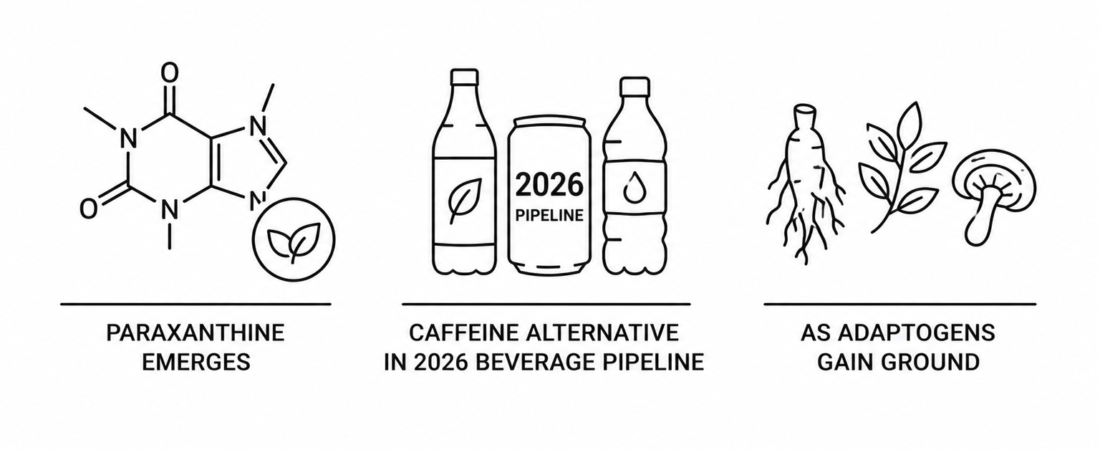
MindBodyGreen Reports Paraxanthine Now Appearing in Energy Drink and Coffee Pipelines
The caffeine alternatives conversation took a sharp turn this week as a major wellness publication detailed the rapid emergence of paraxanthine — a metabolite the body produces when it breaks down caffeine — as an active stimulant in commercial beverages. According to MindBodyGreen’s May 8 article on paraxanthine, the compound is increasingly being added directly to energy drinks and coffee products, with brands marketing it as offering steadier alertness and fewer side effects than caffeine. According to a Healthline report from earlier this year, Kim Kardashian launched a paraxanthine-based energy drink called Update that markets itself as caffeine-free, zero-sugar, zero-calorie, and powered by paraxanthine — illustrating the celebrity adoption now pulling the ingredient into mainstream commerce. According to The Conversation’s coverage of paraxanthine, small studies report improvements in attention, reaction time, and short-term memory compared with placebo, with effects sometimes lasting up to six hours after a 200 mg dose. The new caffeine alternatives wave is one of the most significant ingredient-level shifts of 2026.
Trail & Kale’s 2026 Adaptogen Drink Rankings Highlight a Maturing Category
Adaptogen drinks continue to capture wellness-focused caffeine consumers and have now developed enough competitive depth to support category-wide editorial rankings. According to the Trail & Kale 2026 best adaptogen drinks guide published in early May, the magazine tested nine adaptogen-forward beverages spanning categories from morning ritual replacements to nighttime alcohol alternatives. According to Trail & Kale’s editorial methodology, products were evaluated across functional ingredients, flavor profile, caffeine content, and sustained-energy delivery, with picks including Kin Euphorics in the alcohol-alternative slot. According to Bevsource’s broader category analysis, natural caffeine sources combined with adaptogens such as ashwagandha, lion’s mane, and ginseng are now defining the new generation of energy alternatives that compete directly with traditional caffeinated beverages. The category’s editorial depth signals consumer demand has reached a level where publishers can sustainably build dedicated adaptogen coverage verticals.
TheHealthSite Profiles Five Refreshing Caffeine-Free Soft Drink Alternatives
Mainstream wellness coverage of caffeine alternatives continues to expand rapidly. According to TheHealthSite’s May 8 listing of healthy alternatives to soft drinks, herbal iced tea, kombucha, coconut water, and infused waters are gaining ground as refreshing, natural, and lower-stimulant options compared to traditional caffeinated soft drinks. According to a parallel report referenced in the same publication category, sleep-supportive caffeine alternatives are emerging as a distinct sub-segment, with formulations focused on energy without anxiety or crash. According to MindBodyGreen’s May 7 coverage of caffeine alternatives, several beverage entrants are now marketing themselves explicitly on the basis of energy delivery without the side-effect profile that has driven recent regulatory scrutiny of high-caffeine energy drinks. The proliferation of caffeine alternative editorial content tracks closely with the underlying market data showing rising consumer migration toward functional beverages with cleaner ingredient profiles.
Functional Beverage Innovation Continues to Pair Caffeine With Complementary Ingredients
Even as caffeine alternatives gain ground, the dominant innovation pattern in the broader functional beverage market remains pairing natural caffeine with complementary functional ingredients. According to Trend Hunter’s PHX Pineapple coverage from May 7, new tropical electrolyte refreshments are integrating green-tea-derived natural caffeine with electrolyte support for portable recovery use cases. According to NutraIngredients May 7 coverage, researchers are actively exploring caffeine and melatonin combinations for athletic performance, while DataM Intelligence’s natural caffeine market analysis emphasizes pairings of natural caffeine with L-theanine, adaptogens, electrolytes, botanicals, and vitamins as the dominant differentiation strategy. According to Bevsource’s natural energy drinks analysis, growing gaming culture and cognitive health awareness are pushing caffeine consumers to seek formulations that stimulate focus while supporting mental clarity without harsh side effects. The combined evidence suggests caffeine alternatives and functional caffeine will continue to grow as parallel — not competing — categories.
Within this expanding ecosystem of plant-based caffeine and adaptogen-aligned functional beverages, gummy formats have emerged as one of the fastest-growing portable caffeine subcategories. Jiggle plant-based natural caffeine gummies — sourced from green tea extract and guarana with no artificial ingredients, GMP certification, and a 24+ month shelf life — deliver approximately 63 mg of caffeine per gummy in a resealable 12-pack. The format reflects the same wellness-focused, dose-controlled philosophy now driving editorial interest in adaptogen drinks and emerging caffeine alternatives. Learn more at jiggle.cafe
Industry observers caution that paraxanthine’s safety profile is far less studied than caffeine’s, and CoffeeTalk reporting notes that long-term safety data remains limited with concerns about habitual consumption at higher doses. According to a 2023 toxicology study published in Frontiers in Toxicology, paraxanthine appeared safe in animal models, but coverage from the same publication and Healthline emphasizes that human research is significantly less comprehensive than the body of evidence supporting caffeine itself.