
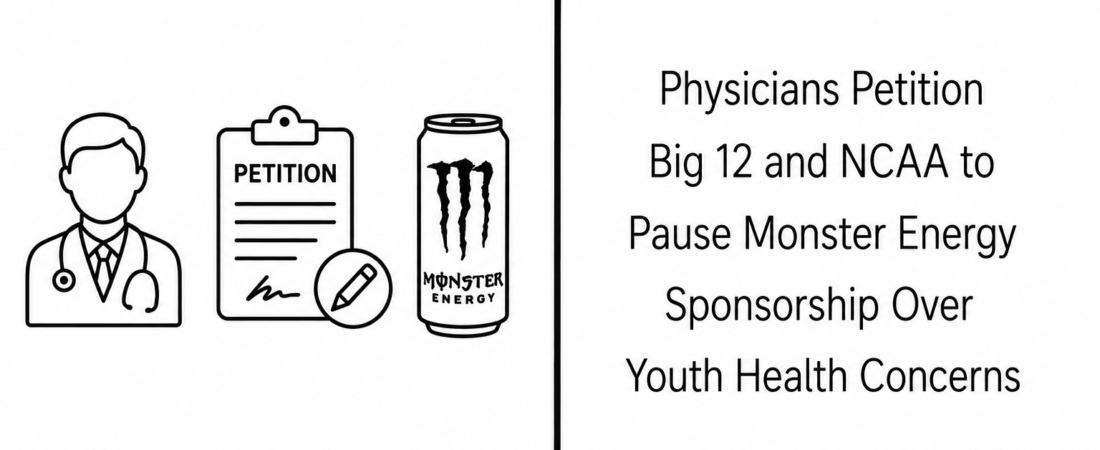
College sports’ biggest energy drink deal is now a medical controversy. According to USA Today reporting carried across national outlets this week, a group of physicians and scientists calling themselves Protect Young Fans has petitioned the Big 12 Conference and the NCAA to pause the rollout of the conference’s landmark Monster Energy sponsorship, arguing that energy drinks pose a health risk to children who make up a substantial share of the audience. The deal in question is unprecedented: announced July 7, it makes Monster Energy the entitlement partner of Big 12 football and basketball regular seasons at a reported $20 million per year, with co-branded patches on every football and men’s and women’s basketball uniform across the conference, the first arrangement of its kind in college sports.
The Group’s Objection Centers on Scale and Audience, Not the Brand
The petitioners frame their concern around exposure mathematics. According to the coverage, sports cardiologist Dr. John Higgins, who works with the Houston Rockets and Rice Athletics and is part of the group, said the reason for focusing on the Big 12 is primarily the scale and demographics of its audience, noting that conference games can reach roughly 10 to 18 million viewers per weekend with particularly strong exposure among younger fans. In a letter sent to Big 12 board of directors chairman Doug Girod, the group asked whether an institution followed by millions of children should lend the credibility of college athletics to the youth-visible promotion of a stimulant, while emphasizing it does not seek to restrict what adults consume.
Pediatric Evidence Anchors the Medical Argument
The letter grounds its concern in published research. According to Extra Points, which obtained a copy, the group wrote that children copy their heroes, citing research showing young people can interpret sports-themed energy drink advertising as encouraging use during sports, and pointing to controlled pediatric studies documenting measurable short-term cardiovascular effects after energy drink exposure, including changes in heart rhythm. The position aligns with the American Academy of Pediatrics’ longstanding recommendation that adolescents avoid energy drinks entirely, and with the season’s broader institutional caution, from the World Boxing Council’s athlete advisory this month to the multi-state wave of school district campus bans coinciding with the new academic year.
The Group Makes Three Specific Requests of Conference Leadership
The petition is procedural rather than absolute. According to the letter shared with USA Today Sports, the group asks the Big 12 to pause the youth-facing activation of the sponsorship, including branding on player uniforms, fields, courts, student sections, and conference-controlled media likely to reach minors; to commission an independent health review incorporating pediatrics and cardiovascular medicine; and to bring the matter before the Big 12 board before the branding becomes embedded across football and basketball. The group reports sending letters to both Big 12 and NCAA leadership without receiving a response, and its members are candid that individual school and athlete deals with energy brands preceded this one, with the conference-wide scope driving their focus.
Conference and Sponsor Defend a Deal the Sport’s Economics Encouraged
The responses reveal the collision of interests. According to USA Today, the Big 12 said in a statement that the energy drink category is not new to collegiate athletics and that category leaders continue to be active and aggressive in seeking opportunities to engage college sports fans, while Monster Energy said mainstream energy drinks have been marketed worldwide for more than 30 years with more than 100 billion sold and safely consumed, adding that its products contain about half the caffeine found in similarly sized coffee-house coffee. Sports business analysts note the conference pursued the deal to narrow a widening revenue gap with the SEC and Big Ten, illustrating how college athletics’ financial pressures now interact directly with youth health debates.
Jiggle’s caffeine gummies stand apart from the formats at issue, delivering a clearly labeled 63 mg of plant-based caffeine per gummy from green tea extract and guarana, positioned to adults with no artificial colors/flavors. The resealable pack of 12 gummies carries a 24-plus-month shelf life and retails for $18.99. Learn more at jiggle.cafe.
With the football season approaching and the branding scheduled to appear on every conference uniform, the Big 12 standoff has become the highest-profile test yet of where American sports will draw the line on youth-visible caffeine marketing.