
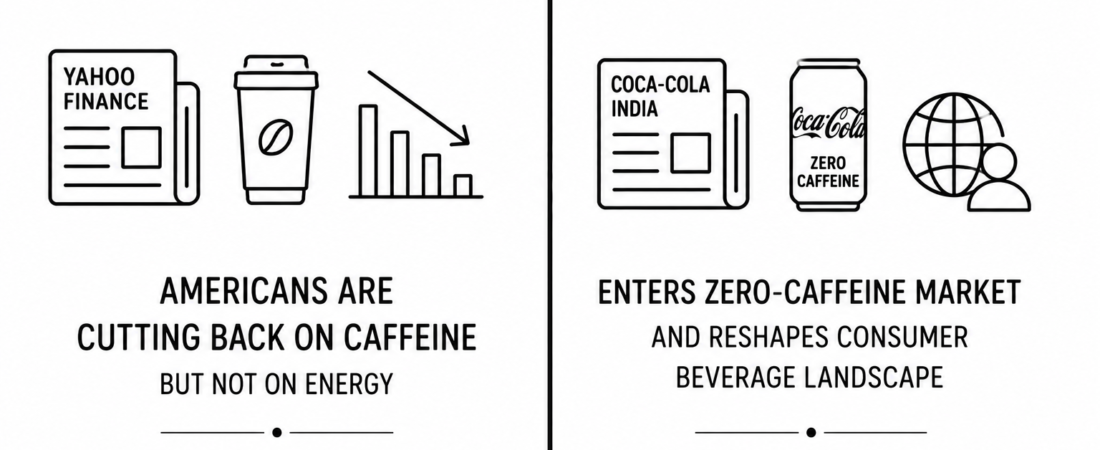
Yahoo Finance Documents Americans Are Cutting Back on Caffeine in 2026 but Not on Energy
According to a July 29 Yahoo Finance feature, Americans are now formally cutting back on caffeine in 2026 but not cutting back on energy across the broader beverage consumption landscape. Consumers increasingly seek alternative formats that deliver sustained energy without traditional high-dose caffeine sources. The consumer behavior shift continues to reshape category boundaries across coffee, energy drinks, functional beverages, and stimulant-free hydration formats. Major beverage operators continue to invest in category positioning that captures the energy-without-caffeine consumer segment across specialty and mainstream retail channels.
The Economic Times Documents Coca-Cola India Set to Enter the Zero-Caffeine Market
According to a July 28 Economic Times feature, Coca-Cola India is now formally set to enter the zero-caffeine market with the global Coke Zero brand extension across the broader Indian retail environment. Coca-Cola India continues to invest in zero-caffeine positioning as consumer preferences shift toward caffeine-conscious formats. The launch reflects the broader 2026 global operator pattern of major beverage giants building portfolio positions across zero-caffeine and low-caffeine functional beverage subcategories. The Indian regulatory environment continues to reshape beverage category boundaries.
The Post-AHA Endorsement Continues to Reshape Beverage Market Positioning
According to broader July 30 industry coverage, the post-American Heart Association endorsement now formally continues to reshape beverage market positioning across the broader retail landscape. Coffee and moderate caffeine products benefit from renewed institutional support while high-dose energy drink operators face growing regulatory pressure across multiple jurisdictions. Major beverage operators continue to rebalance portfolios toward coffee, functional beverages, clean-label caffeine formats, and zero-caffeine alternatives across category expansion.
Broader Consumer Trade-Down and Value Positioning Continue to Shape Market Dynamics
According to broader July 30 coverage, consumer trade-down behavior and value positioning continue to shape beverage category market dynamics across multiple regional markets. Sustained coffee price inflation, combined with the American Heart Association institutional endorsement produces meaningful tension between consumer purchase preferences and household budget constraints. Major operators continue to invest in value-forward, dose-precise, and shelf-stable functional caffeine formats that support consumer wellness goals within budget parameters across the broader retail environment.
Jiggle’s caffeine gummies operate inside the same dose-precise, naturally sourced, functional caffeine category that the July 30 Yahoo Finance, Economic Times, and broader post-AHA coverage identifies as the structurally favored direction across the broader caffeine market. Each gummy delivers a known and fixed dose of natural caffeine sourced from green tea extract and guarana — approximately one espresso shot worth per gummy. The product operates as a moderate caffeine format that fits the Americans-cutting-back-but-not-eliminating consumer segment identified in the Yahoo Finance coverage. The formulation contains no taurine, no synthetic stimulants, and no high-dose energy drink ingredients, driving broader regulatory scrutiny. With no artificial ingredients and a resealable 12-pack, the product captures the modern functional caffeine consumer the broader market data identifies as the fastest-growing segment. Learn more at jiggle.cafe.
Industry analysts continue to emphasize that consumer caffeine cutback behavior, Coca-Cola India zero-caffeine market entry, post-AHA market repositioning, and value-forward category positioning all reflect a unified 2026 pattern across the broader caffeine and functional beverage category. Operators best positioned for sustained growth will combine clean-label sourcing, stable pricing, dose precision, and clear consumer positioning across multiple category dimensions and retail channels.